
Eusylvations
Reflections from the Forest
Synoptic
eusylvations
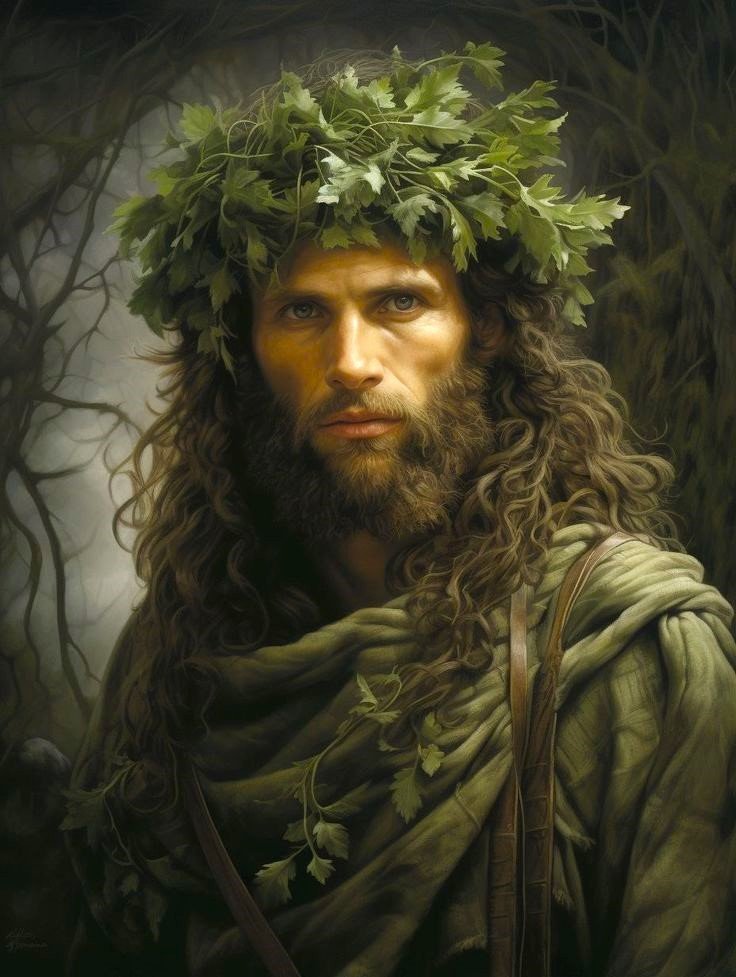
“Out of the depths of a genuine life instinct, not out of reason or pragmatism, springs the great enthusiasm, the great moral decision and the great myth… Accordingly, it is all a matter of seeing correctly where this capacity for myth and this vital strength are really alive today.
“In the modern bourgeoisie, which has collapsed into anxiety about money and property, in this social class morally ruined by skepticism, relativism, and parliamentarism, it is not to be found. The governmental form characteristic of this class, liberal democracy, is only a ‘demagogic plutocracy.’
“Who, then, is the vehicle of great myth today?”
Carl Schmitt, The Crisis of Parliamentary Democracy (1923)
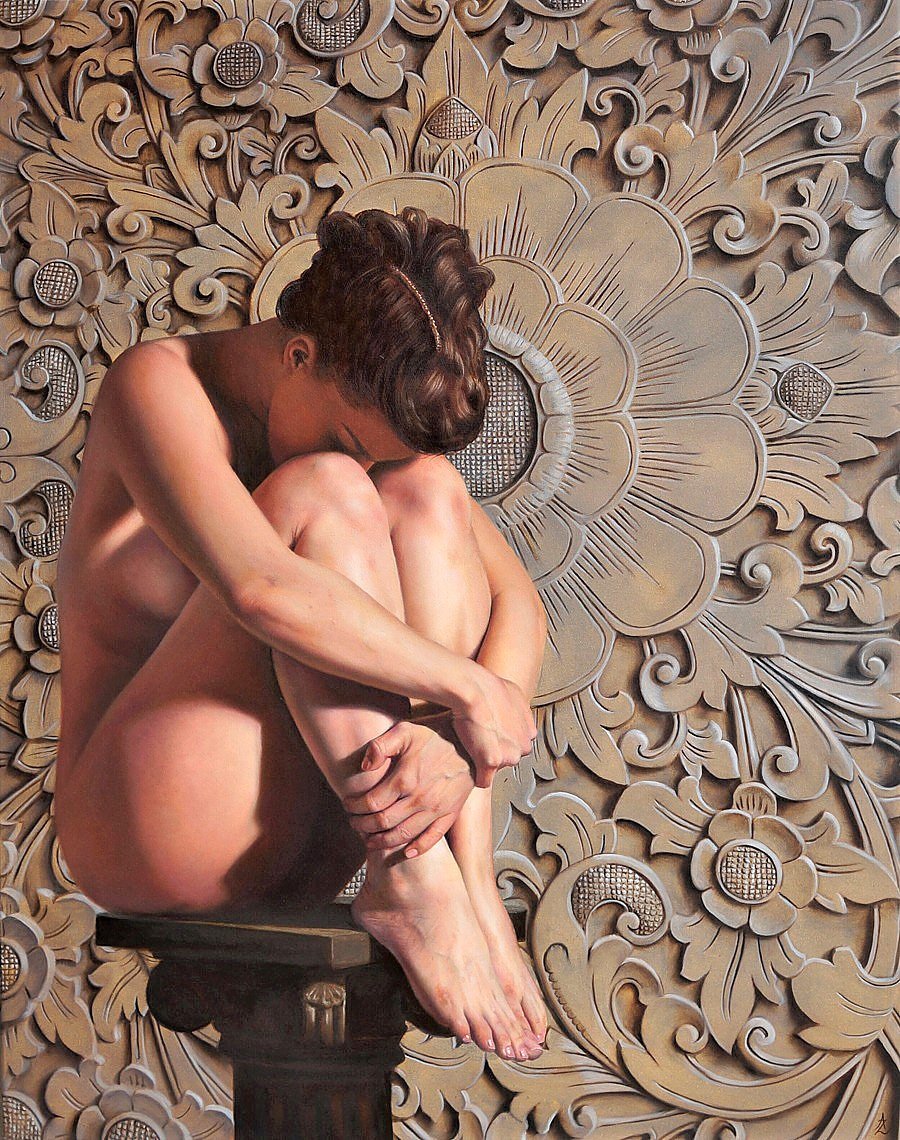
“If you are in earnest about this matter; if you feel that mankind, like yourself, will soon have no other alternative than to search with ever diminishing visual power, hungrily, thirstingly, frantically, bravely, for the rich deep beauties it once possessed, simply because, despite the fact that they brought a profounder and cleaner sort of tragedy in their train than present conditions do, they alone made life possible and desirable; your next question will be:
“What are the values, the particular moral code and table of virtues and vices which are associated with these rich and deep virtues? At what time in the history of mankind have they prevailed? How can they be made to prevail again?”
Anthony Ludovici, A Defence of Aristocracy (1915)
(Painting: “Unfurling” [2020] by Anne-Marie Zanetti)
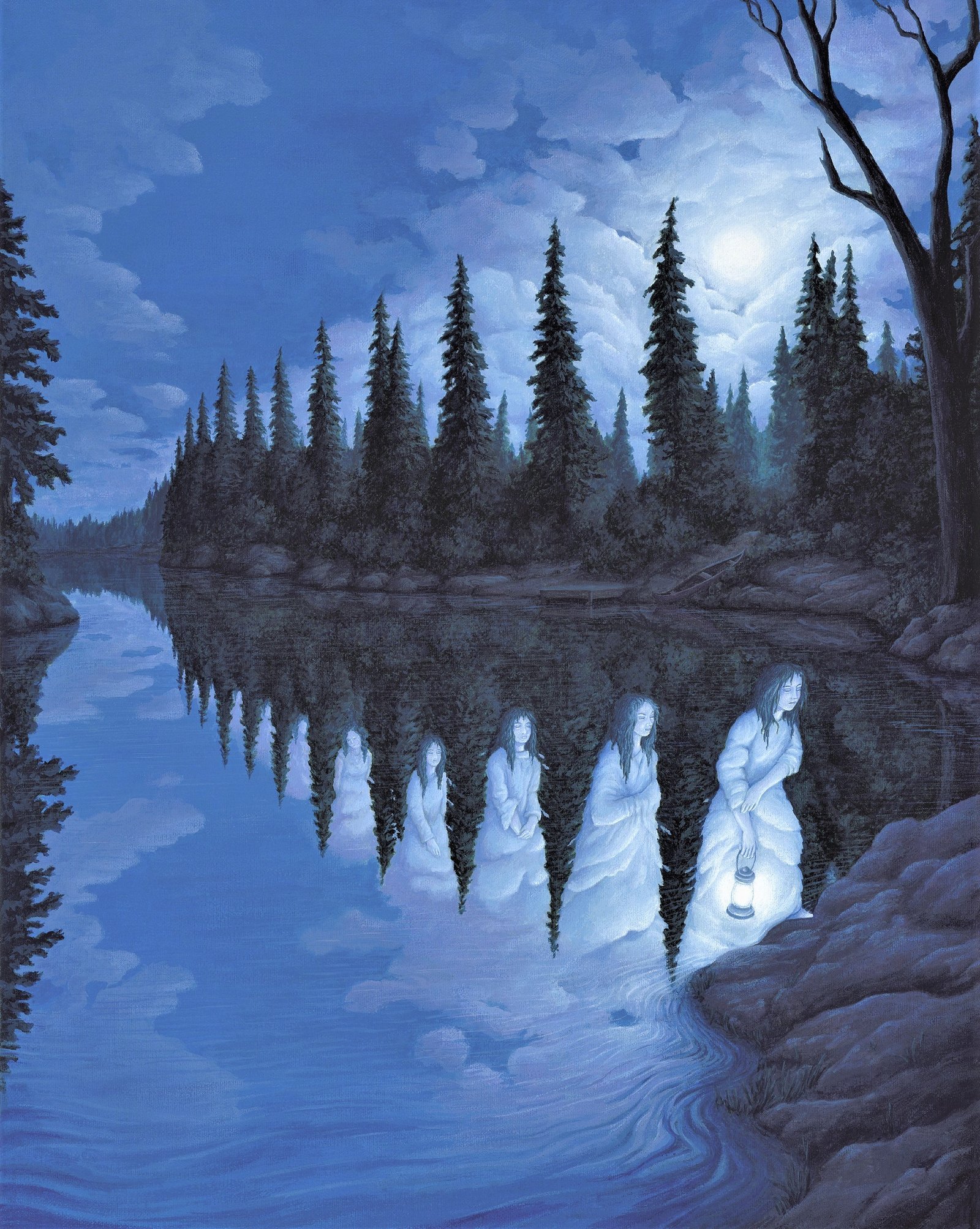
“If we are to prevent megatechnics from further controlling and deforming every aspect of human culture, we shall be able to do so only with the aid of a radically different model derived directly, not from machines, but from living organisms and organic complexes (ecosystems)…
“Balance, wholeness, completeness, continuous interplay between the inner and the outer, the subjective and the objective aspects of existence are identifying characteristics of the organic model; and the general name for an economy based on such a model is an economy of plenitude. Such plenitude is distinct from mere quantitative affluence or unqualified abundance.
“If we dare to forestall the ugly future that the prophets of megatechnics predict, if we reject their sterile bureaucratic utopias, it is because we propose to base our alternative economy on…life itself…as reflected, magnified, and enhanced in the mind of man.”
Lewis Mumford, The Myth of the Machine: Vol. II: The Pentagon of Power (1970)
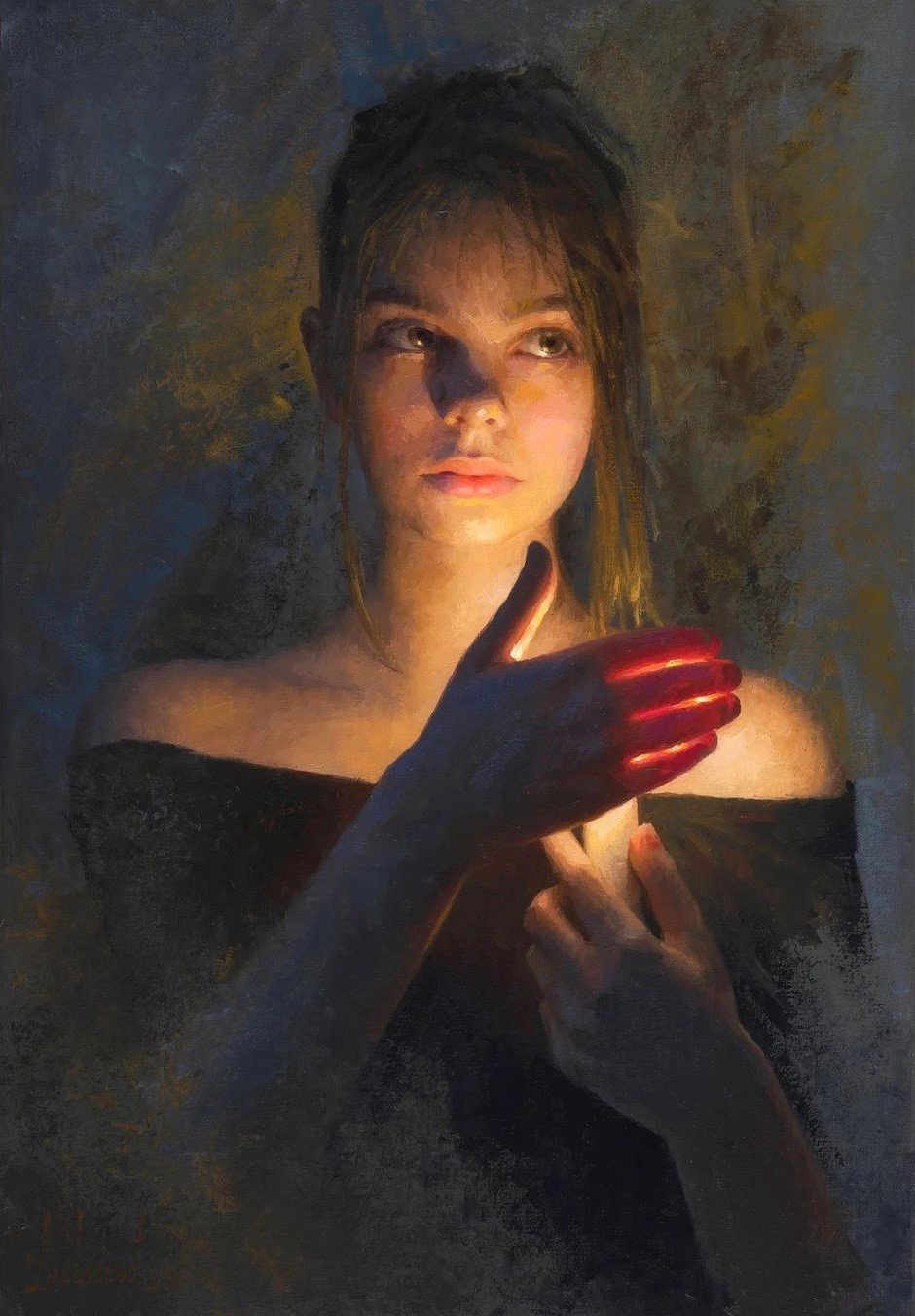
“Don’t curse the darkness, light a candle.”
Confucius
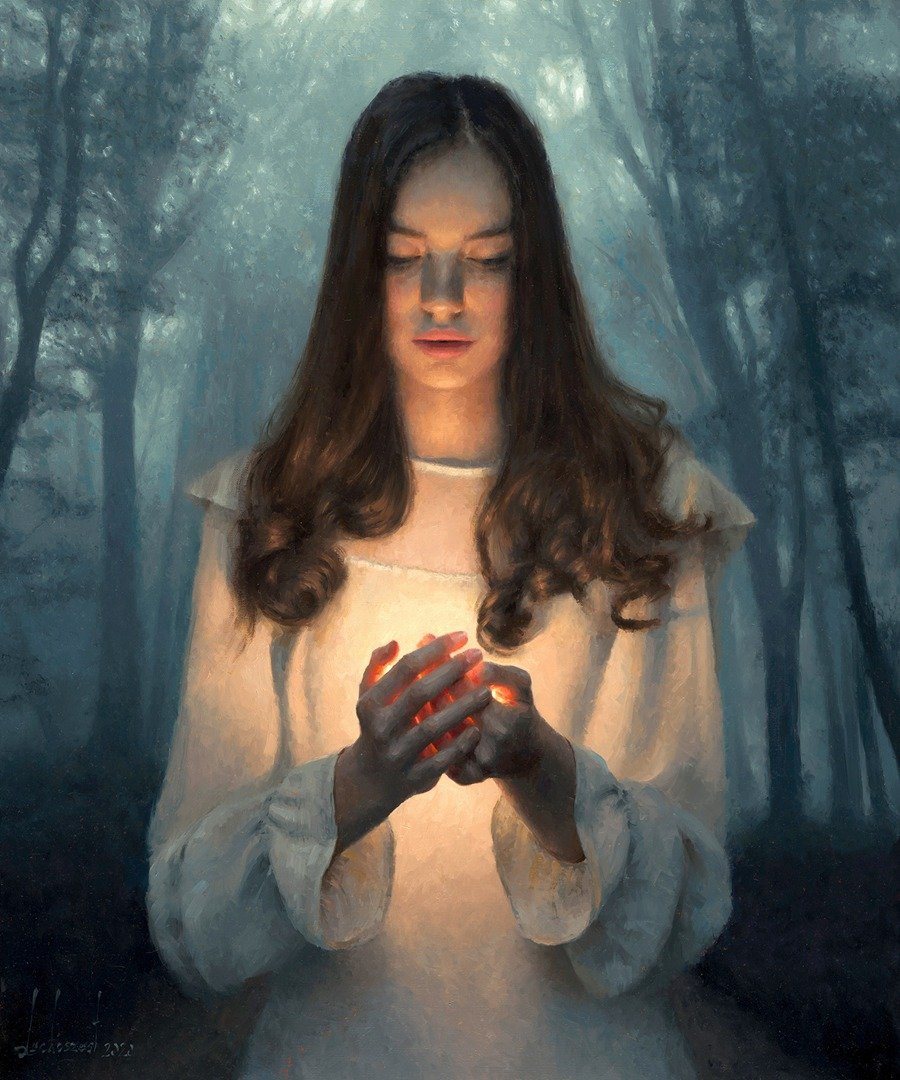
(Painting: “Illumination” [2021] by Damian Lechoszest)

“It is fair to say that a large part of what is usually called the West is suffering from an overwhelming sense of rootlessness…
“In any place that has been touched by large-scale displacements of people…or where people have lost contact with ancestral memory…or where there is a general sense of isolation resulting from either new social habits or technology’s alienating effects…people describe themselves as uprooted…
“The human-as-plant metaphor was never [just] a metaphor. Humans and plants have always been in direct communication via their shared cellular consciousness, which is so intimately and reciprocally attuned that the boundaries between plant and human are dissolved. This theory explains our attraction to plants, our endless botanification of people and anthropomorphization of plants, and our centuries-long insistence on the rootedness of humans.”
Christy Wampole, Rootedness: The Ramifications of a Metaphor (2016)
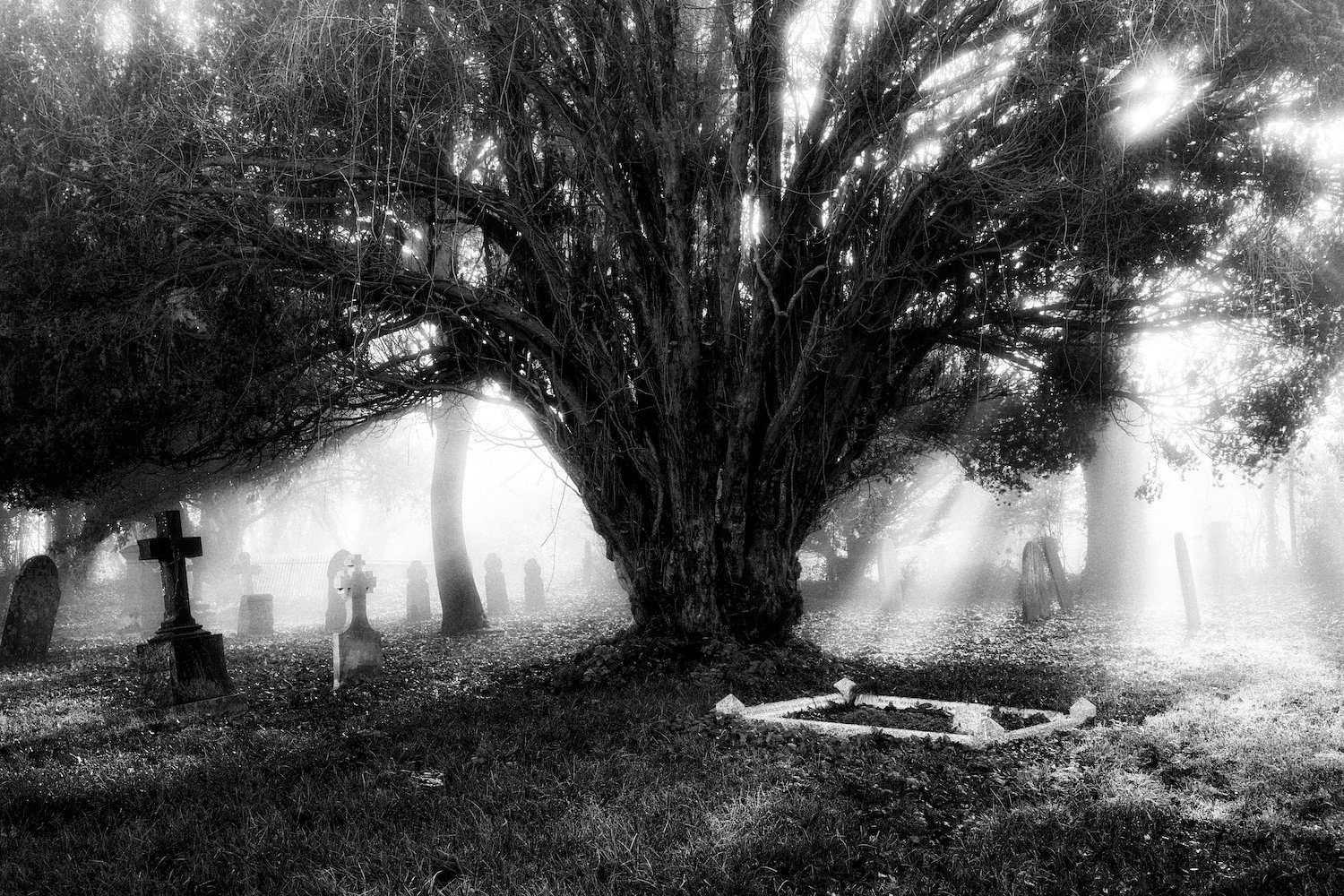
“The yew is generally acknowledged as the British tree capable of longest life. Ancient examples often exceed a thousand years of age. These old sentinels are often found in churchyards, where they provide an evergreen impression of immortality…
“The yew has been a significant feature of the British landscape since long before the last Ice Age. The yew will probably still be a significant landscape tree when the next Ice Age arrives.
“The archaeology of yew wood presents a fascinating picture of an indispensable tree, used as a weapon, a vessel, a linchpin, even as a god. There is evidence that early societies in Britain needed, feared and revered the qualities of this long-lived native evergreen tree over thousands of years.”
Robert Bevan-Jones, The Ancient Yew: A History of Taxus baccata (2002)
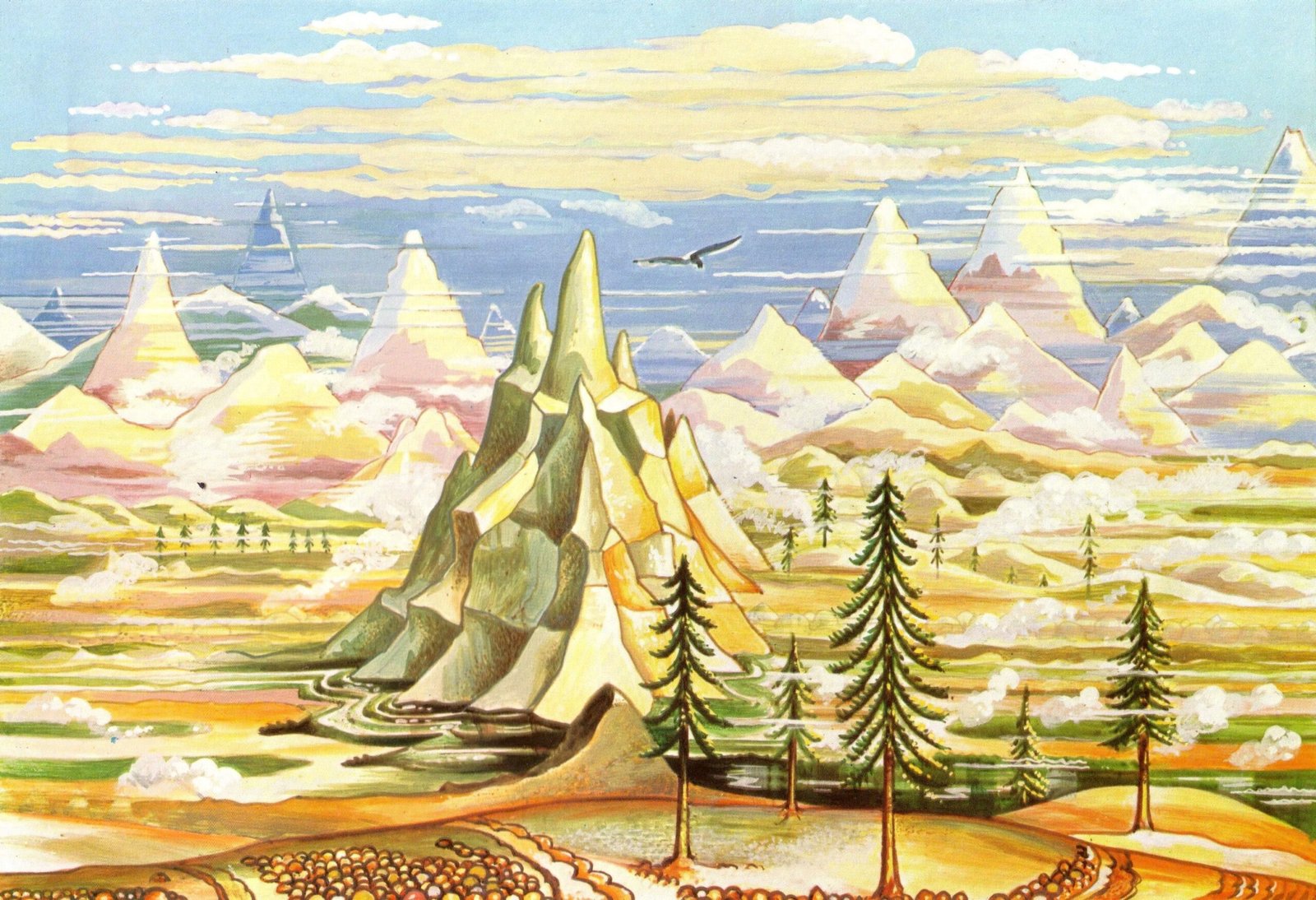
“We cannot recover the old home until we see it from afar.”
attributed to J.R.R. Tolkien
(Painting: “The Misty Mountains looking West” by J.R.R. Tolkien)
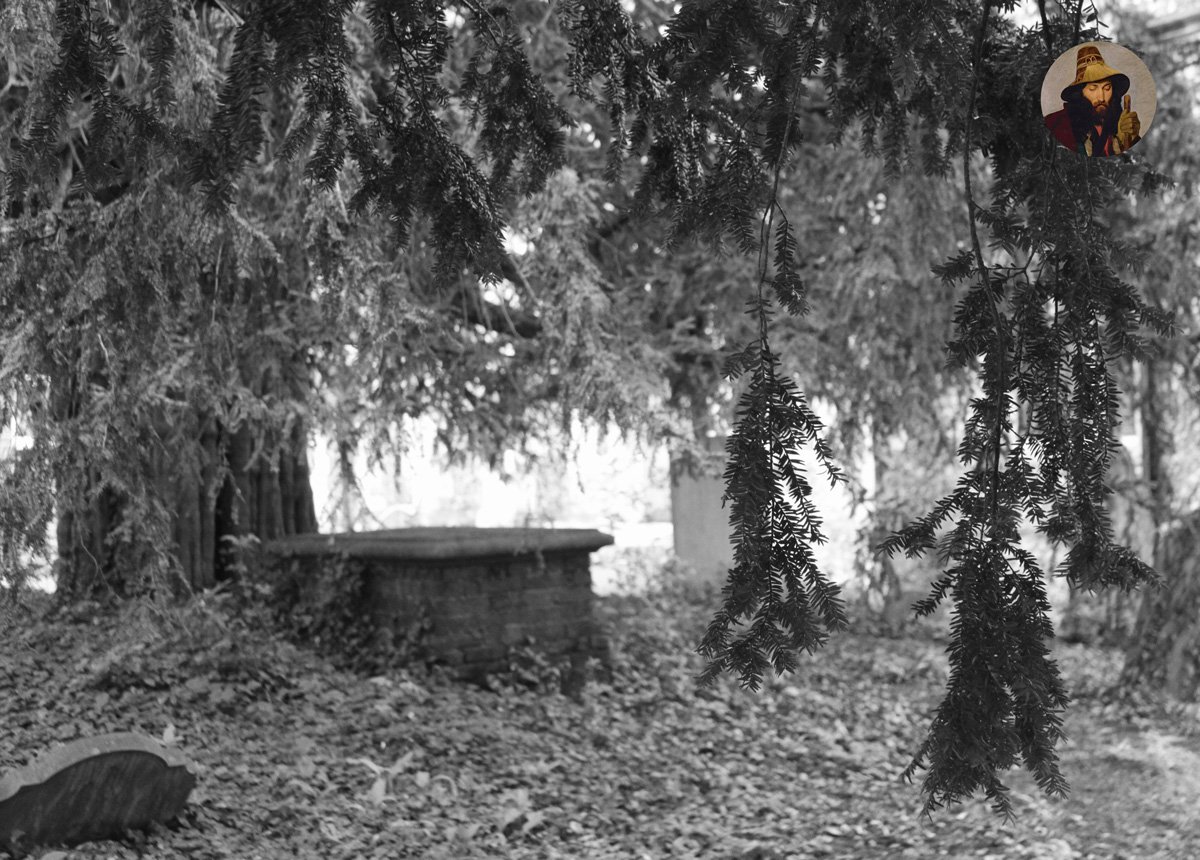
In light of our modern predicament, perhaps we aren’t too dissimilar from a damaged and devitalized tree branch, one that has grown precariously far away from the trunk and is in need of repair and replenishment.
In fulfilling that need, we might imagine ourselves opening up the energy lines that return us to our origins, tracing a path upon the tree that lead back to our roots.
Although such a retracing is necessary, it will likely not be sufficient in generating long-lasting renewal. We need then to connect directly with the soil, plunging our attenuated branch straight into the earth, there to take root.
Is such a thing possible?
In the case of the yew tree, the answer is ‘yes.’ It has a remarkable ability by which branches that come into contact with the soil can form roots, eventually growing into a new tree, all the while keeping in connection with the old one.
We may say verily, then, in a Eusylvanian spirit: ‘root from branch; branch from root.’
RADIX RAMO, RAMUS RADICE
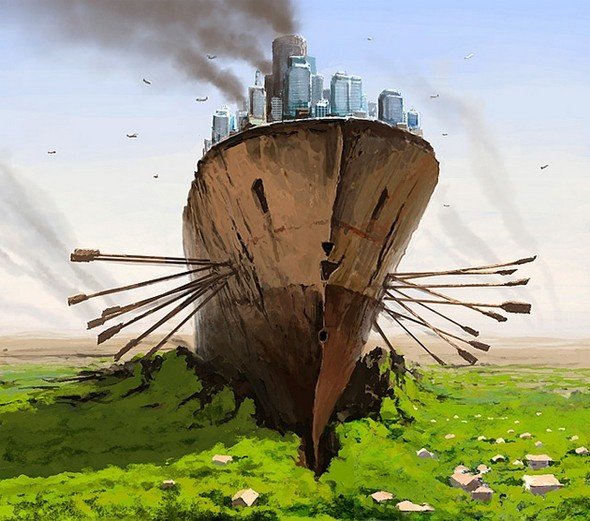
“The historical world in which we find ourselves resembles a fast-moving vehicle, which at one moment presents its comfort aspects, at the next its horror aspects. It is the Titanic, and it is Leviathan.
“Since a moving object attracts the eye, it will remain concealed to most of the ship’s guests that they simultaneously exist in another realm, a realm of perfect stillness. This second realm is so superior as to contain the first within it like a plaything, as merely one of innumerable other manifestations.
“This second realm is the harbor, our homeland, the peace and security that everyone carries within them. We call it the forest.”
Ernst Jünger, The Forest Passage
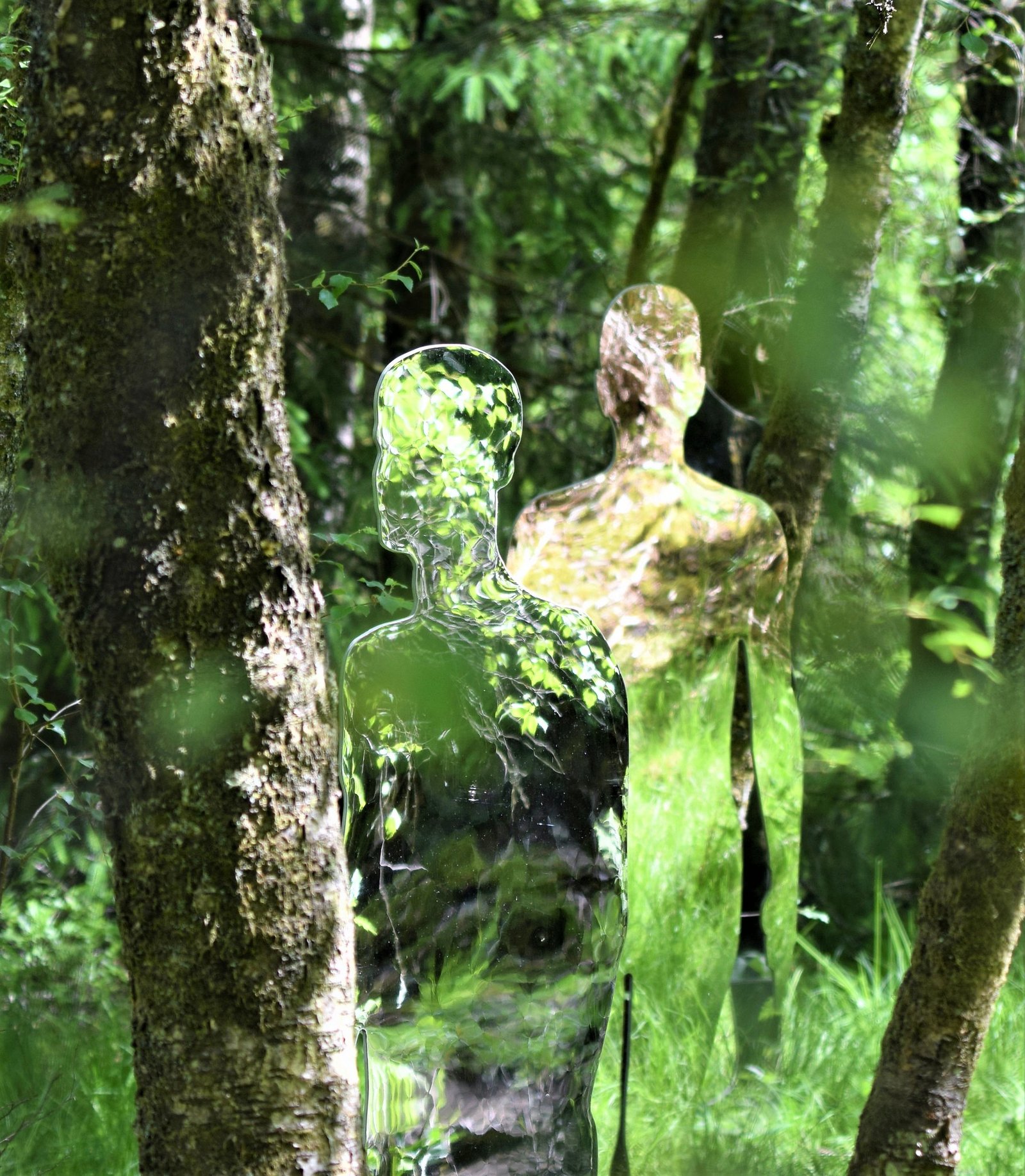
“The forest is not just one symbol among others.
It is…the symbol of symbolism.”
Robert Pogue Harrison, Forests: The Shadow of Civilization
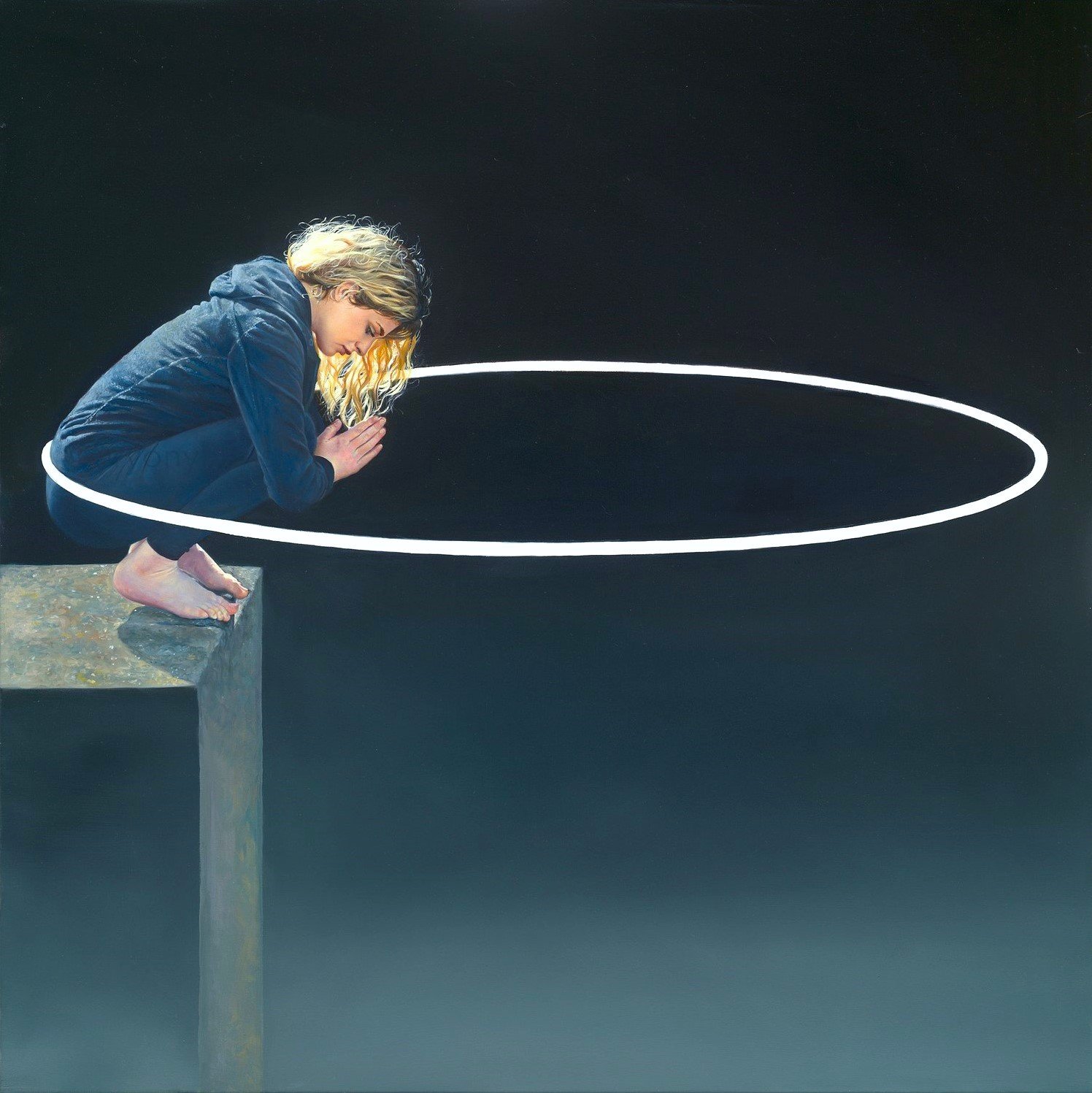
“Sound and foundering relations to the world form the basis of successful and unsuccessful lives, respectively, and thus represent the basic ineluctable criteria of a sociology of our relationship to the world.
“Intense moments of subjective happiness can be understood as forms of resonant experience, while feelings of unhappiness arise particularly when and where we find the world unexpectedly indifferent or even repulsive, though we had counted on its responsive accommodation.
“But the good life is also more than just the maximization of the happy moments (or minimization of unhappy experiences) that it permits.
“It is rather the result of a relationship to the world defined by the establishment and maintenance of stable axes of resonance that allow subjects to feel themselves sustained or even secured in a responsive, accommodating world.”
Hartmut Rosa, Resonance: A Sociology of Our Relationship to the World (2016)
(Painting: “Circle” by Bryony Bensly)
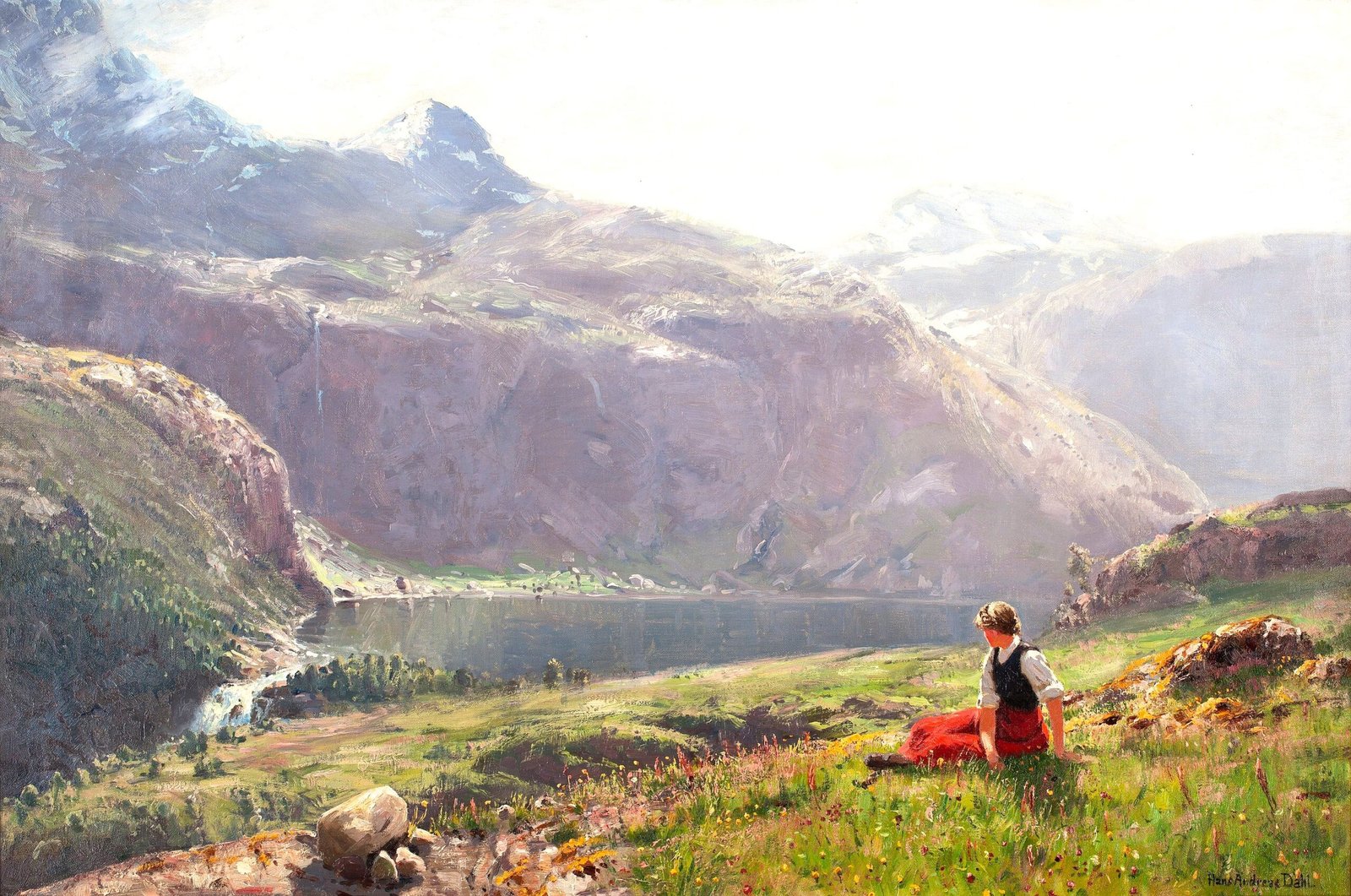
“Home interprets heaven. Home is heaven for beginners.”
Charles H. Parkhurst, “The Perfect Peace” (1885)
(Painting: “Young Girl in a Fjord Landscape” by Hans Dahl)
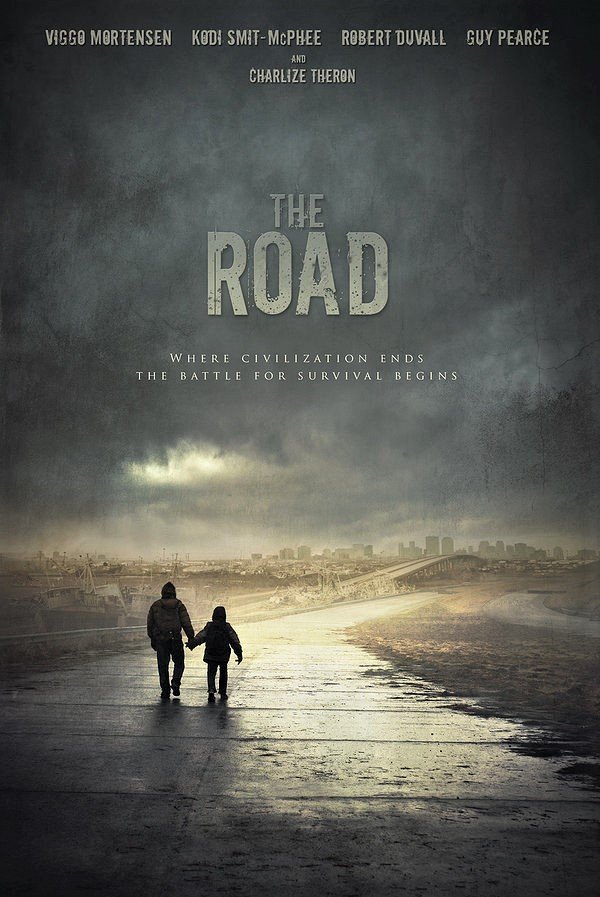
“You have to carry the fire.”
“I don’t know how to.”
“Yes you do.”
“Is it real? The fire?”
“Yes it is.”
“Where is it? I don’t know where it is.”
“Yes you do. It’s inside you. It was always there. I can see it.”
Cormac McCarthy, The Road (2006)
“To formulate a theory about a future society both very modern and not dominated by industry, it will be necessary to recognize natural scales and limits. We must come to admit that only within limits can machines take the place of slaves; beyond these limits they lead to a new kind of serfdom. Only within limits can education fit people into a man-made environment: beyond these limits lies the universal schoolhouse, hospital ward, or prison…
“Once these limits are recognized, it becomes possible to articulate the triadic relationship between persons, tools, and a new collectivity. Such a society, in which modern technologies serve politically interrelated individuals rather than managers, I will call ‘convivial.’”
Ivan Illich, Tools for Conviviality (1973)
“Creativity…is no mere luxury, but an indispensable expression of our essential humanity. It is at once an opportunity for our unhatched abundance to take wing so that we can make something personal and leave our mark. Making your mark is perhaps the most insistent drive that anyone has after the means of life have been supplied…
“I am therefore proposing that we might make the attempt to redress the balance: to reduce our commitment to materialism and increase our commitment to play, to creativity, to the care of our souls—the wonderful and challenging world within and the community around us.
“In a word, I am proposing that we spend a great deal more time searching for and developing what really matters to us and, at the same time, making sure we receive fulfilment proportionate to our expenditure of life energy.”
John Lane, Timeless Simplicity: Creative Living in a Consumer Society (2001)
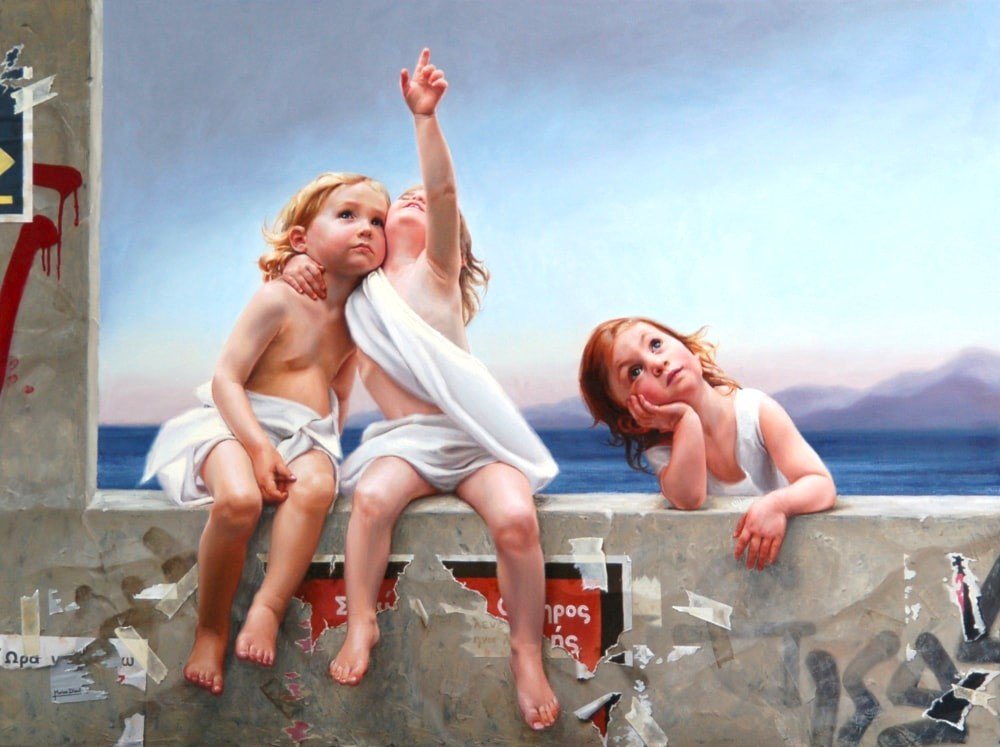
(Painting: “The Rose-Fingered Dawn” by Marina Dieul)
“We don’t need other worlds. We need mirrors.
We don’t know what to do with other worlds. One world is enough.”
Stanisław Lem, Solaris (1961)
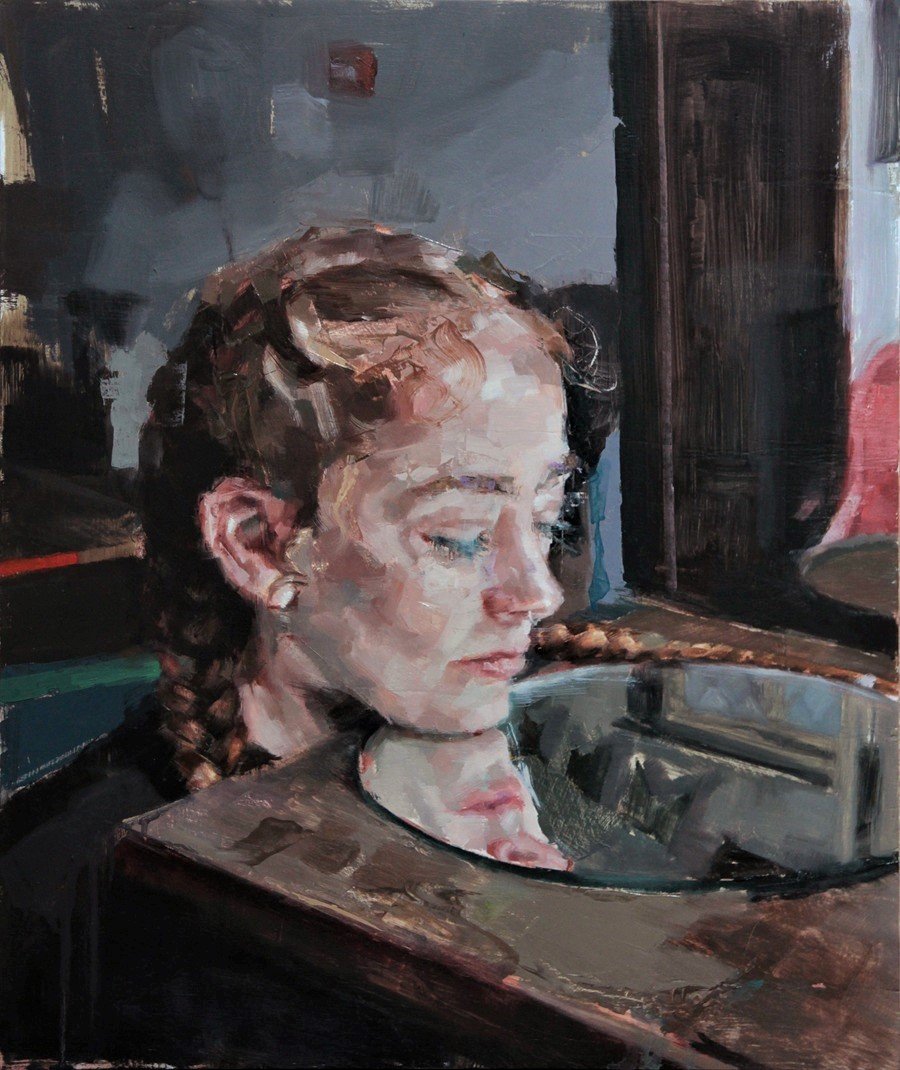
(Painting: “Self-Reflection II” [2021] by Helen Bur)
“All the doors are shut to us. We must find ways to work our way around these doors and reconnect with the new minds of our upcoming generations...
“People in the Western world at the moment are chronically bored. There’s a boredom that has settled upon our people. You can sense it. There’s a spiritual torpor out there…
“The important thing is to get people emotionally. And it’s to appeal to the forces and wellsprings in their mind which are eternal, and which underpin rationality. The power of irrational belief as spiritual codification, of mystical belief, of belief in identity, of the need for communitarianism, and the need to belong, is immensely powerful.”
Jonathan Bowden, “Western Civilization Bites Back” (2012 speech)
(Painting: “Hope” by Damian Lechoszest)
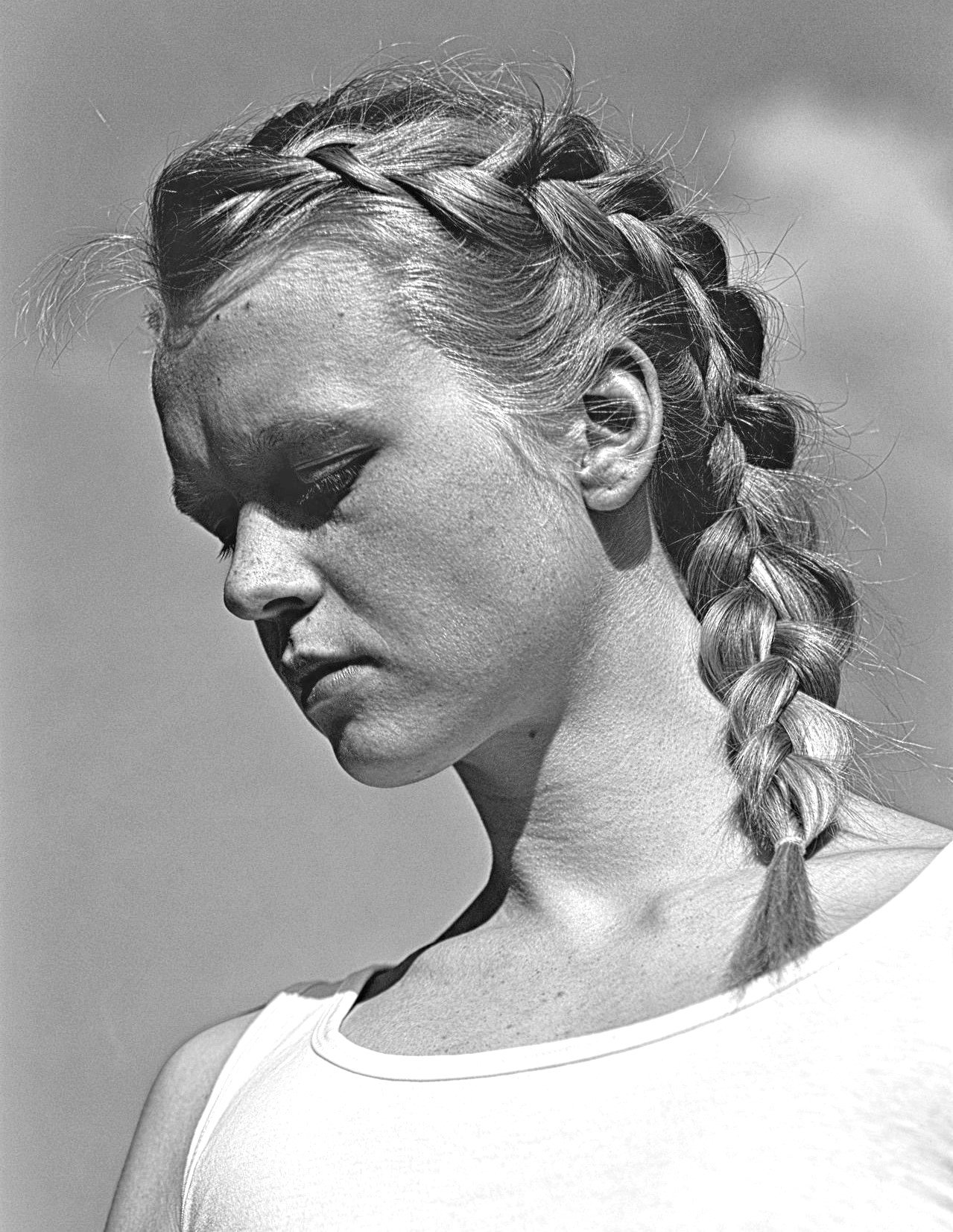
“We must continually change, renew, rejuvenate ourselves,
lest we become hardened.”
Johann Wolfgang von Goethe,
in conversation with Friedrich von Müller, April 24th, 1830

Our ‘forest for the good’—our Eusylvania—is naturally full of many trees, but a special place is reserved for the yew tree: in particular, the ‘common yew’ or taxus baccata found throughout Europe.
It’s a mysterious and ancient tree that dates back fifteen million years: an evergreen with special powers of regeneration that has long conjured ideas of life, death, and rebirth. It’s been tied as well to notions of longevity and endurance, for members of this species can live hundreds and even thousands of years.
No doubt part of the secret of its longevity lies in the high toxicity of almost all of its parts, which capably serve as a means of self-defense against predators that would otherwise assail it. Indeed, taxus and ‘toxic’ are etymologically linked.
The species designation, baccata, refers to the ‘berries’ of this yew. Their bright red color might be seen as a warning of the tree’s many poisons, but their taste is surprisingly sweet…as discovered by anyone who dares to partake of this fruit.
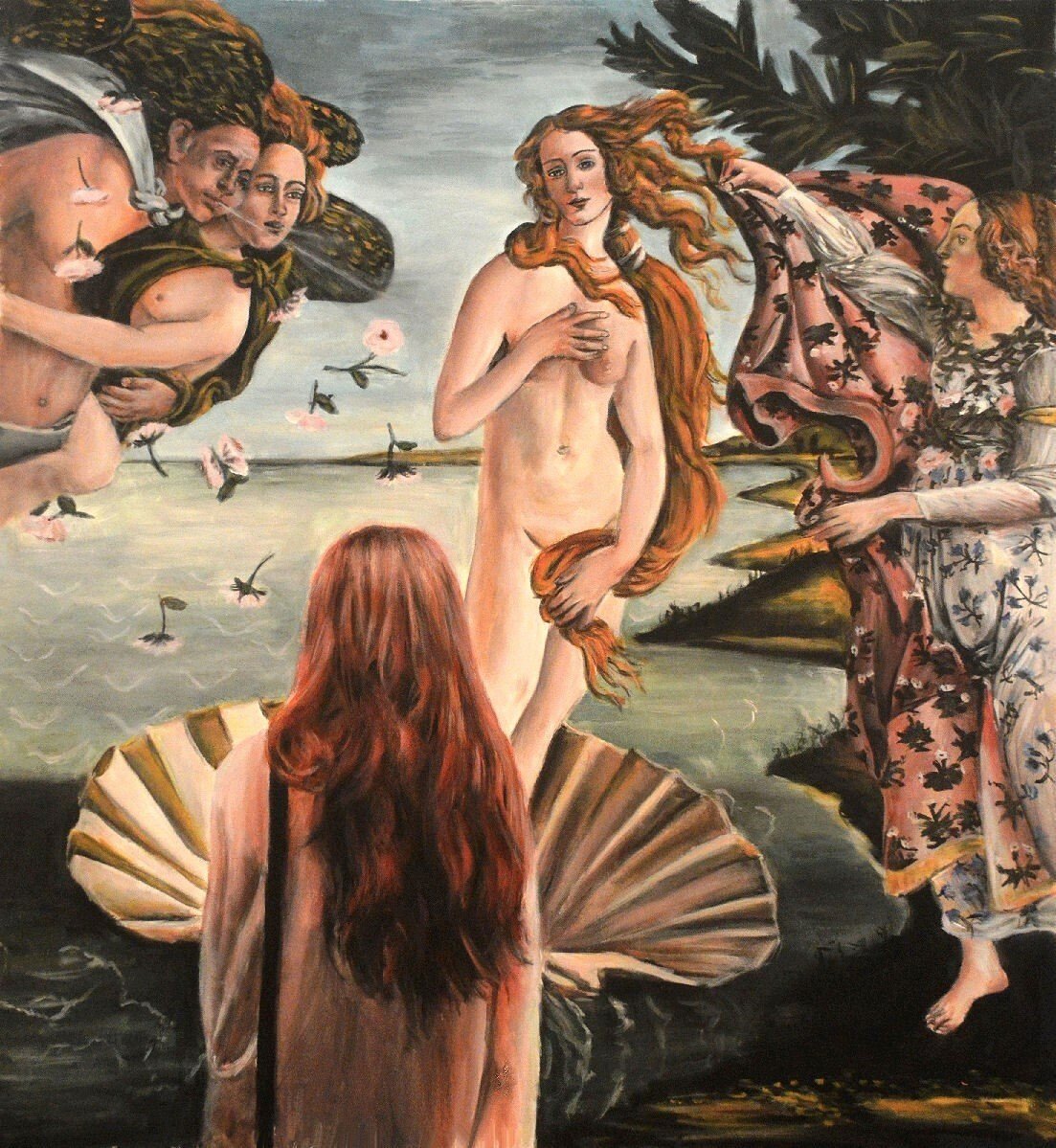
“Human beings long to experience the world as sustaining, nourishing, warming, and accommodating…and they fear being exposed to a silent, merciless world in which they are powerless…
“At the same time, the search for recognition and the quest to avoid disregard motivate and explain human activity. This is true at a fundamental level for all forms of life in nearly all cultures. But as the forms, spheres, and media of recognition have evolved over history and come to differ from culture to culture, spheres and axes of resonance, sensitivities to resonance, and practices of resonance have also diverged…
“What segments of world—i.e. what animals or plants, mountains or rivers, gods or demons, books or scriptures, planets or stars, things or people—are made to speak, in what ways, and in what rituals and practices, differs significantly between cultural traditions.
“Thus the desire for resonance is universal; relations and axes of resonance are particular.”
Hartmut Rosa, Resonance (2016)
(Painting: “Watching The Birth of Venus (Botticelli)” [2019] by Escha van den Bogerd)
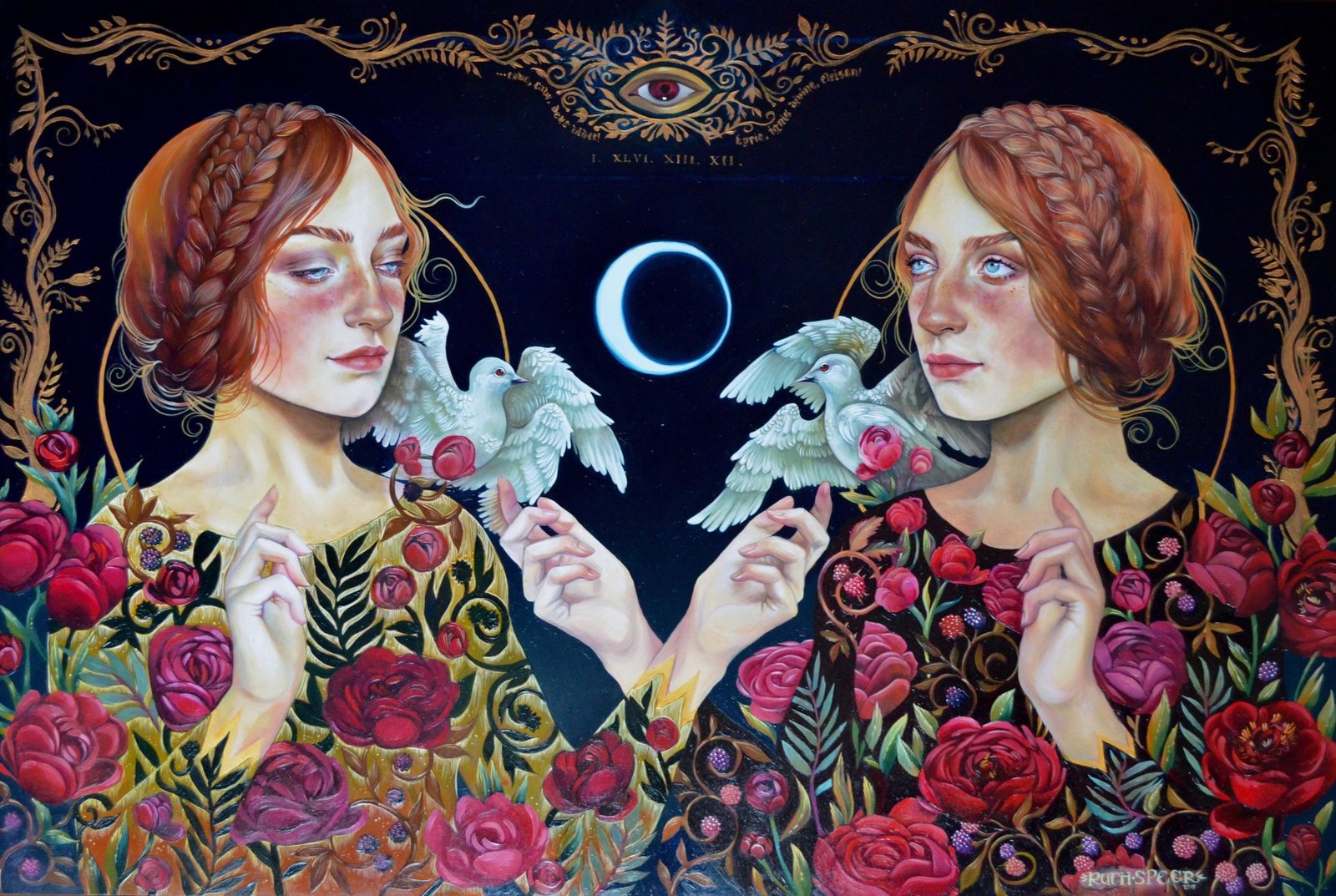
“We will arrive at the universal not by abandoning our particularity but by turning it into a way of reaching others, by virtue of that mysterious affinity which makes situations mutually understandable.”
Maurice Merleau-Ponty, Sense and Non-sense (1948)
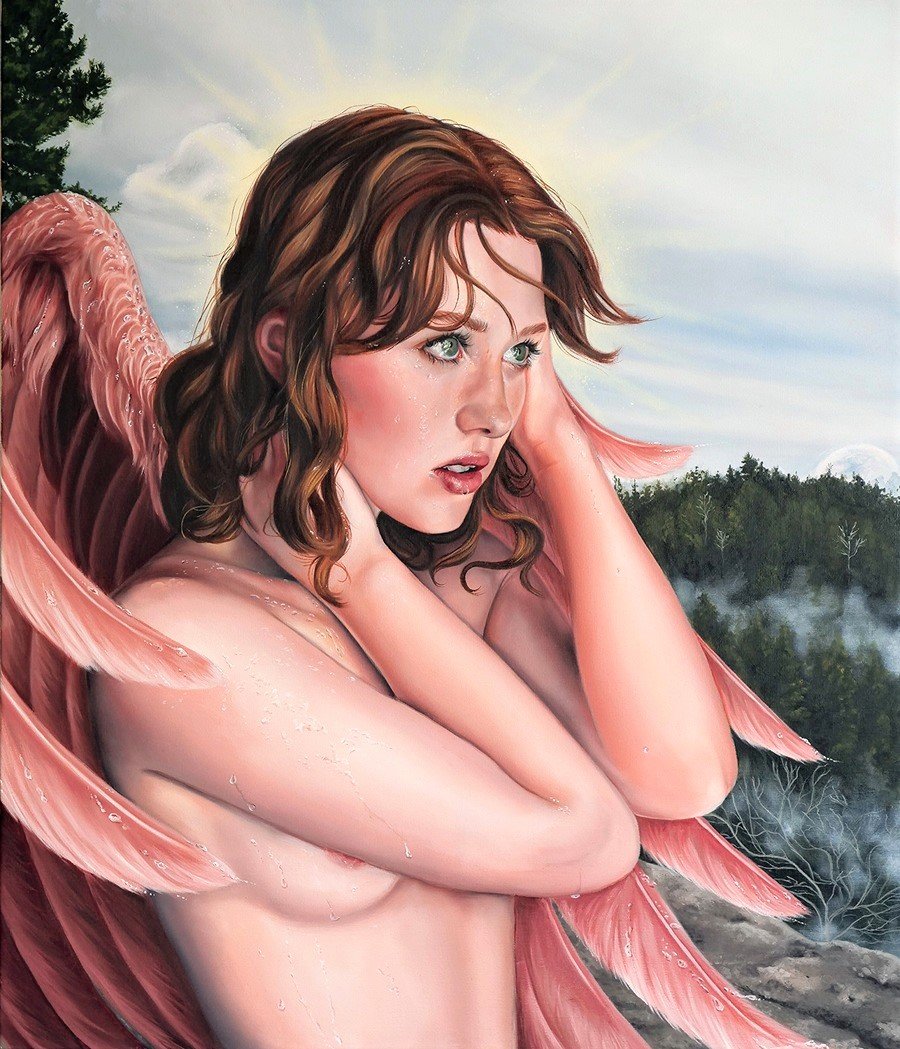
“We are not doomed to a choice between false hope and hopelessness. The alternative is to cultivate moral depth composed of understanding that permanent adversities may frustrate our reasonable and decent efforts to live a good life; that the resulting sense of hopelessness is due to our unrealistic expectation that the human condition is otherwise…
“Moral depth thus brings greater realism. It leads to the acknowledgment of the pervasive forces of contingency, conflict, and evil, and it motivates us to mitigate their destructive consequences while knowing that we may fail. This greater realism is the ground for true hope.
“True hope is chastened; a hope reduced, purified, and strengthened through having resisted the temptations of seeking solace by distancing ourselves from our condition, by denying the facts, by romantic self-aggrandizement or world-weariness, and by succumbing to resignation.”
John Kekes, Moral Wisdom and Good Lives (1995)
(Painting: “Hope” [2022] by Christina Ridgeway)
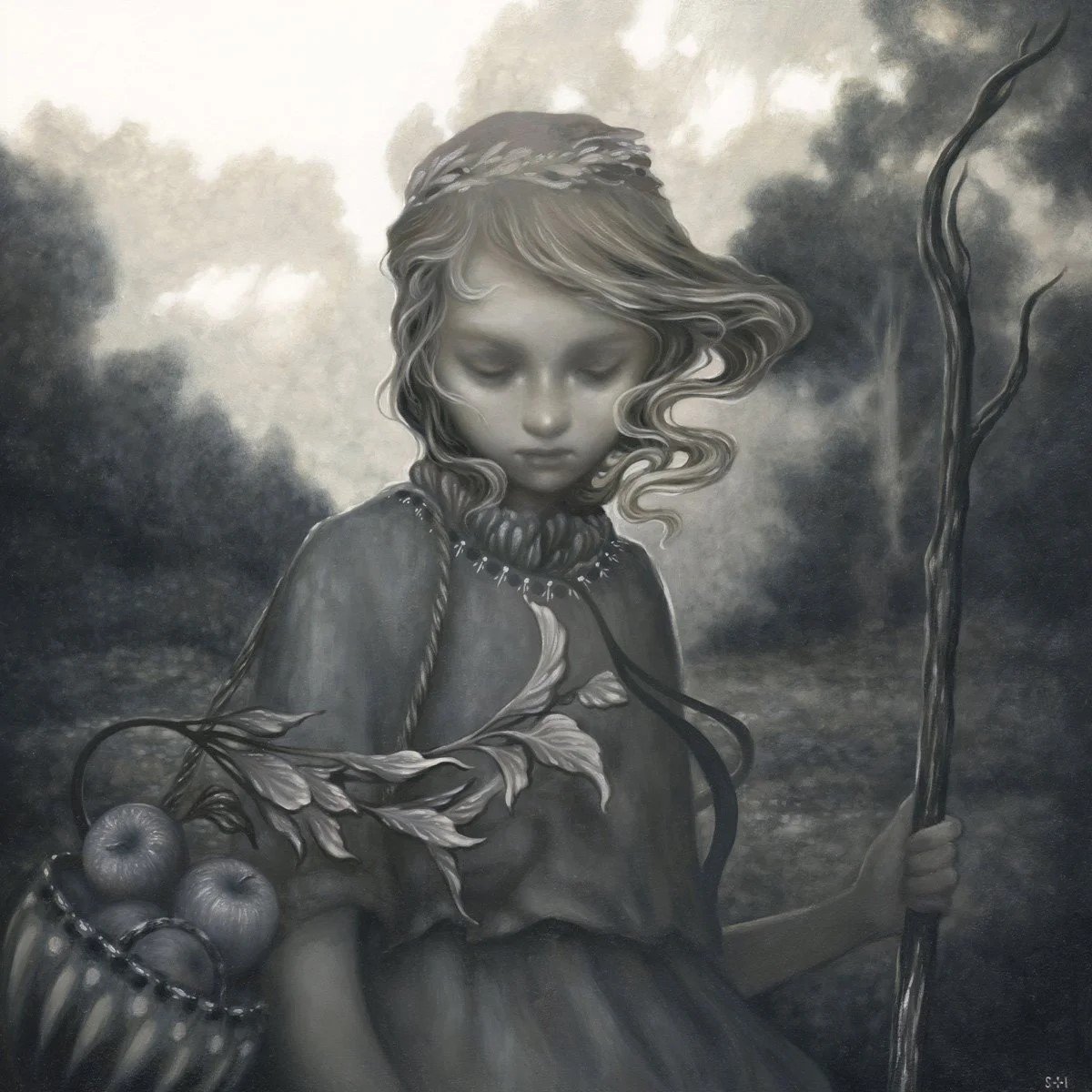
“The roots of education are bitter, but the fruit is sweet.”
Aristotle, as attributed by Diogenes Laërtius
in Lives of Eminent Philosophers
(3rd cent. C.E.)
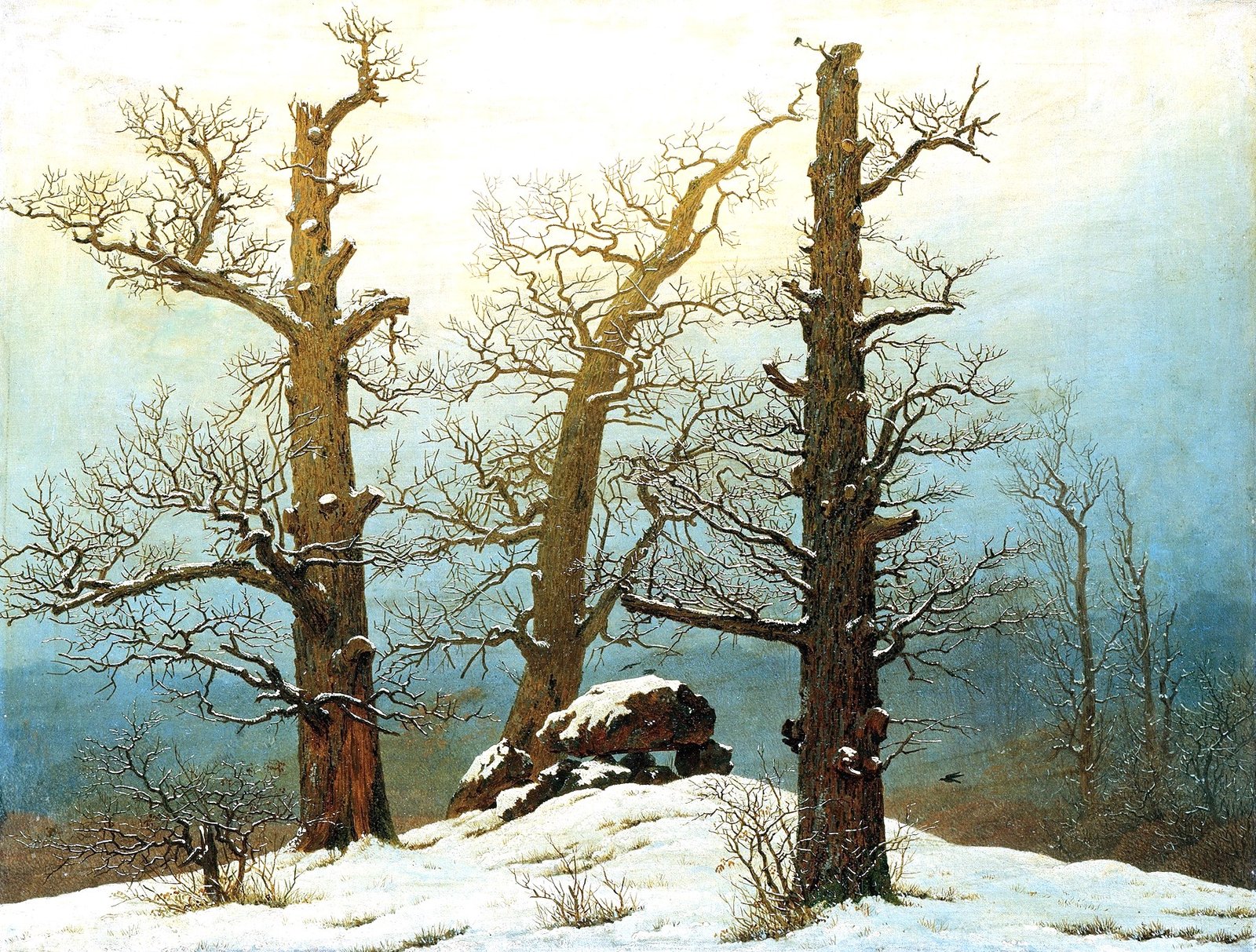
“Lead, kindly Light, amid the encircling gloom,
Lead thou me on!
The night is dark, and I am far from home,—
Lead thou me on!
Keep thou my feet; I do not ask to see
The distant scene,—one step enough for me.”
John Henry Newman, “Lead, Kindly Light” (1833)
(Painting: “Dolmen in the Snow” [c. 1807] by Caspar David Friedrich)
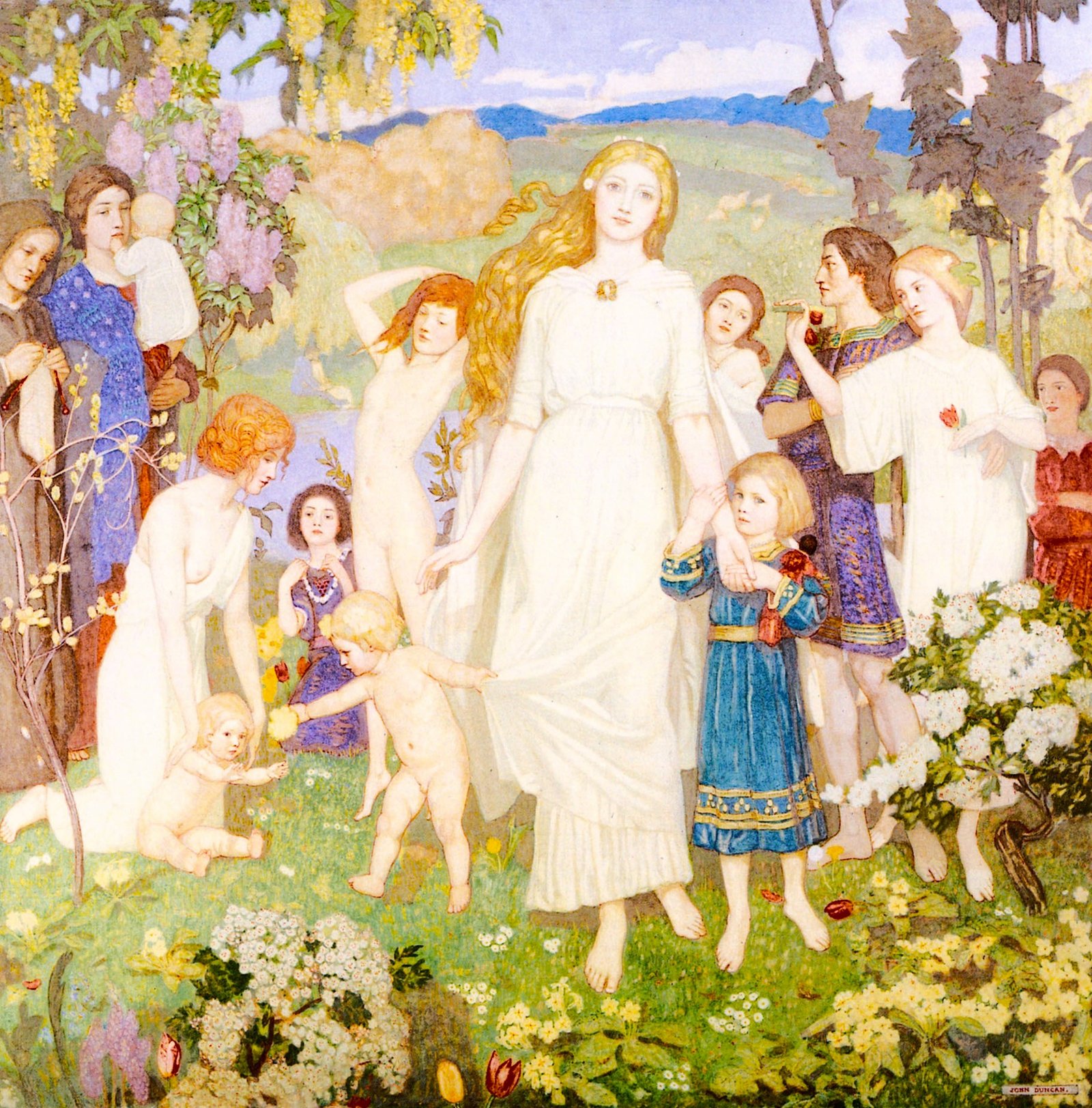
“Where thou art, that is home.”
Emily Dickinson
(Painting: “The Coming of Bride” [1917] by John Duncan)
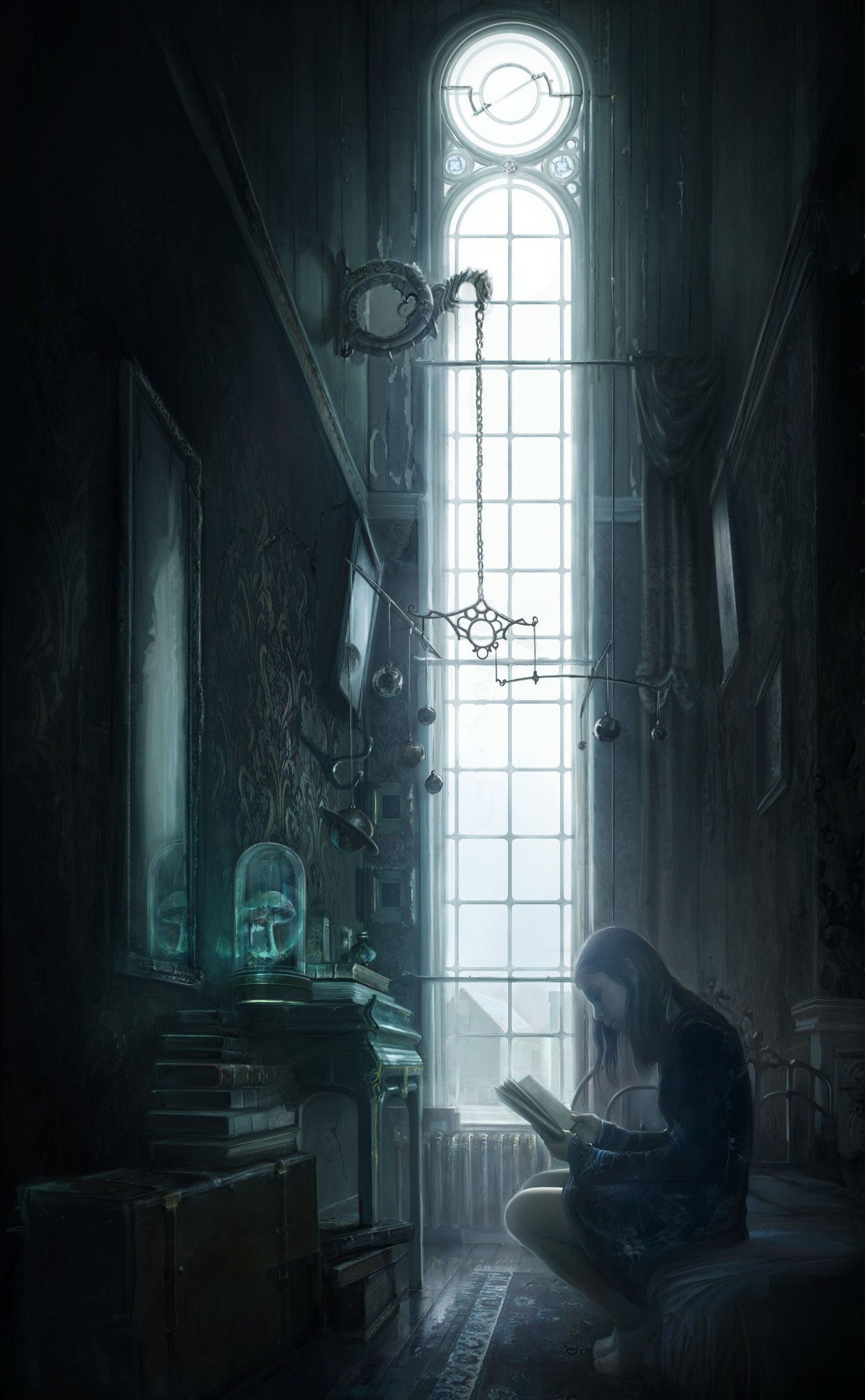
“It’s quite rare for an inventive person in any field to trace success to school training.
Education must be largely self-initiated, a tapestry woven out of broad experience, constant introspection, ability to concentrate on one’s purpose in spite of distractions, a combination of curiosity, patience, and intense watchfulness.
And it requires substantial trial and error risk-taking, along with a considerable ability to take feedback from the environment—to learn from mistakes.”
John Taylor Gatto, Weapons of Mass Instruction
“Highly metarepresentational individuals are likely to see connections where others have not noticed them, by virtue of which they can create new cultural information…
“Metarepresentation enables us to shift information between representational systems, freeing it from its old patterns of discretization and altering the ways in which we can conceptualise it. Metarepresentation is therefore a great source of cultural variation.
“People who engage in intense metarepresentational activity are those who are most likely to shift their patterns, to provide the stimulus to social reform.”
Kate Distin, Cultural Evolution (2011)
“Healthy pride is the antidote to shame, not a complete cure but an essential element in the emotional alchemy that transforms shame into authentic self-esteem. As we build pride over time, shame becomes less important, less pervasive, and less defining. People who have struggled with core shame throughout their lives will always feel its lingering effects to some degree, but they may nonetheless develop authentic self-esteem through achieving their goals and leading lives that embody their standards and values.
“Belonging to a group of individuals not too dissimilar from you—who will support your efforts to build pride and share your joy in achievement—may relieve that loneliness.”
Joseph Burgo, Shame: Free Yourself, Find Joy, and Build True Self-Esteem

“At the moment of vision, the eyes see nothing.”
William Golding, The Spire (1964)
“Art for art’s sake is an empty phrase. Art for the sake of the true, art for the sake of the good and the beautiful, that is the faith I am searching for.”
George Sand, letter to Alexandre Saint-Jean (1872)
(Painting: “First Kiss of Spring” by Lauri Blank)
Mystery
eusylvations
“Religion, whatever it is, is a man’s total reaction upon life…
“Total reactions are different from casual reactions, and total attitudes are different from usual or professional attitudes. To get at them you must go behind the foreground of existence and reach down to that curious sense of the whole residual cosmos as an everlasting presence, intimate or alien, terrible or amusing, lovable or odious, which in some degree every one possesses.
“This sense of the world’s presence, appealing as it does to our peculiar individual temperament, makes us either strenuous or careless, devout or blasphemous, gloomy or exultant, about life at large; and our reaction, involuntary and inarticulate and often half unconscious as it is, is the completest of all our answers to the question, ‘What is the character of this universe in which we dwell?’”
William James, The Varieties of Religious Experience (1902)
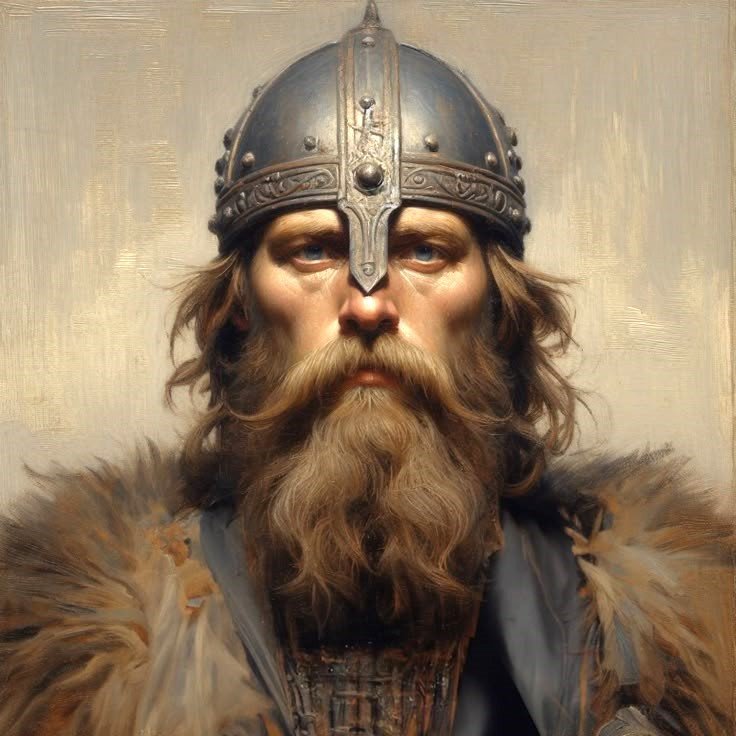
“A religion… [can] be defined as a system of general truths which have the effect of transforming character when they are sincerely held and vividly apprehended. In the long run your character and your conduct of life depend upon your intimate convictions…
“Religion is the art and the theory of the internal life of man, so far as it depends on the man himself and on what is permanent in the nature of things.”
Alfred North Whitehead, Religion in the Making (1926)
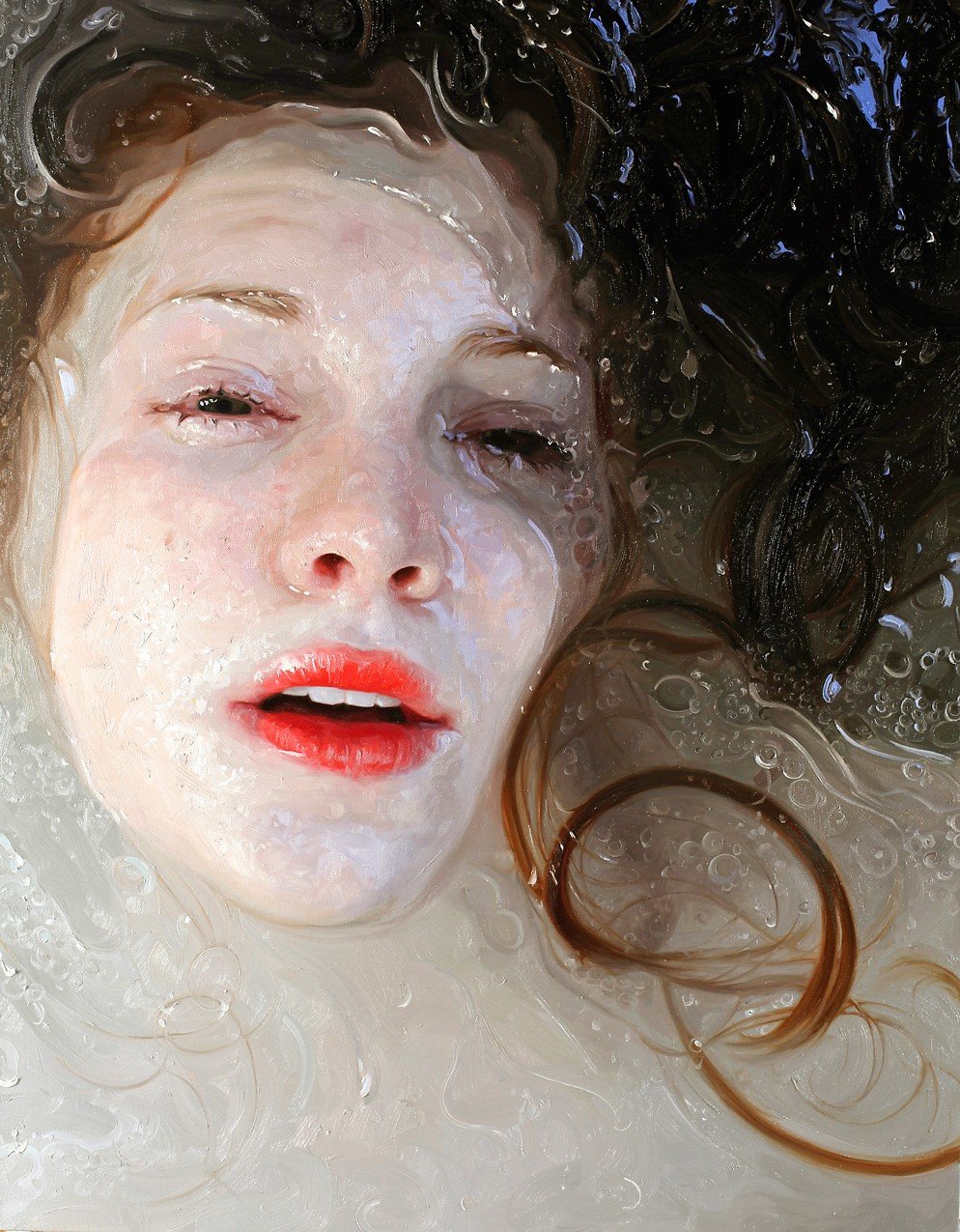
“Most of us have been taught to think only in rationalistic terms. We seem to be victims of the prejudice that the more rationalistic our statements, the more true they are… [But] rationality unaided by such phenomena as art, religion, dream, and the like, is necessarily pathogenic and destructive of life…
“Our first reaction when the myths have not sufficed is mythoclasm; we attack the very concept of myth. The denial of myths…is itself part of our refusal to confront our own reality and that of our society.
“We are deluged with facts, but we have lost, or are losing, our human ability to feel them… We know [only] with the head now, by the facts, by the abstractions…
“Without myth we are like a race of brain-injured people unable to go beyond the word and hear the person who is speaking. There can be no stronger proof of the impoverishment of our contemporary culture than the popular—though profoundly mistaken—definition of myth as falsehood.”
Rollo May, The Cry for Myth (1991)
(Painting: “Squid” [2012] by Alyssa Monks)
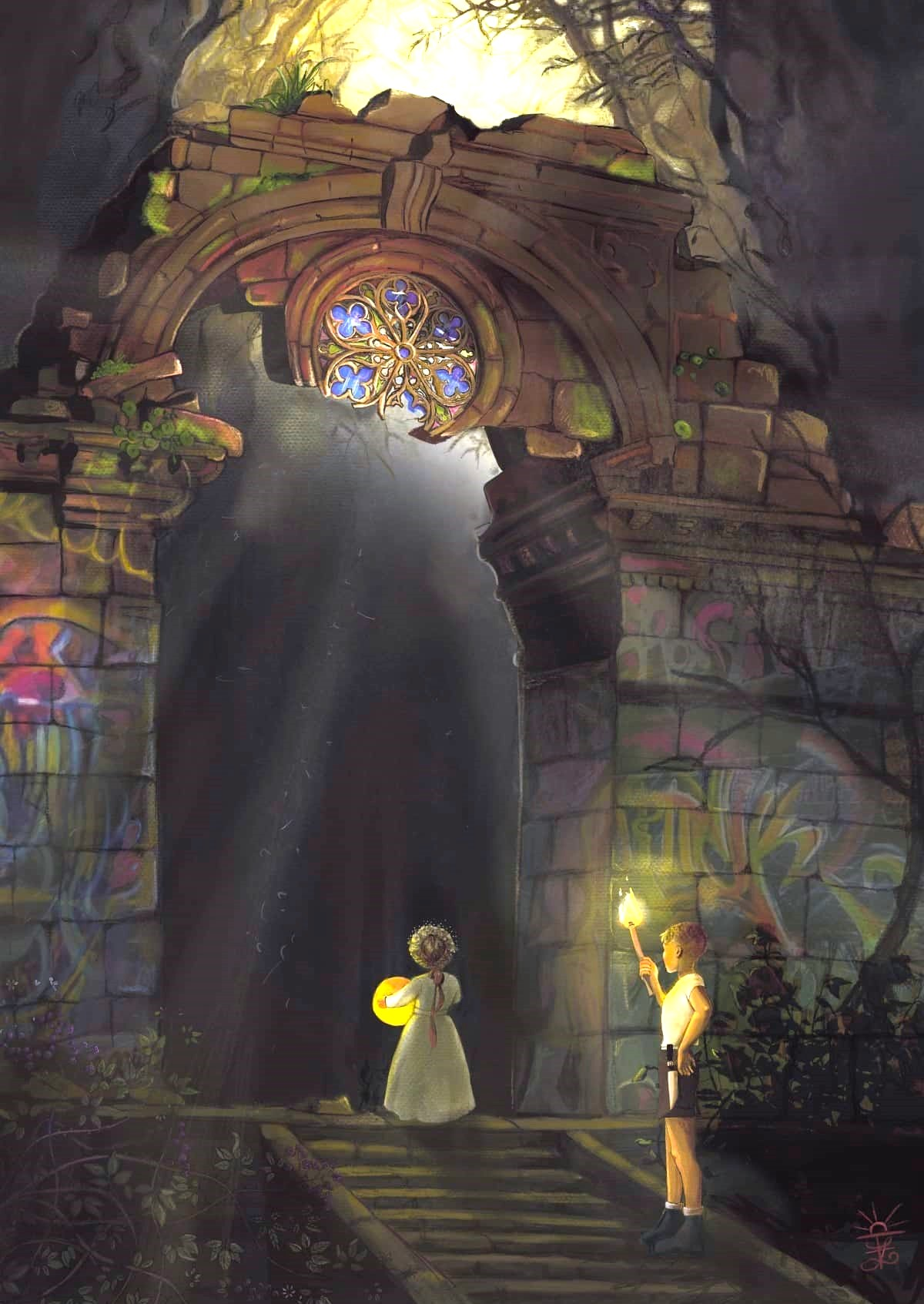
“The heart of man is not compound of lies,
but draws some wisdom from the only Wise,
and still recalls him. Though now long estranged,
man is not wholly lost nor wholly changed.
“Dis-graced he may be, yet is not dethroned,
and keeps the rags of lordship once he owned,
his world-dominion by creative act:
not his to worship the great Artefact,
man, sub-creator, the refracted light
through whom is splintered from a single White
to many hues, and endlessly combined
in living shapes that move from mind to mind.
“Though all the crannies of the world we filled
with elves and goblins, though we dared to build
gods and their houses out of dark and light,
and sow the seed of dragons, ’twas our right
(used or misused). The right has not decayed.
We make still by the law in which we’re made.”
J.R.R. Tolkien, “Mythopoeia” (1931)
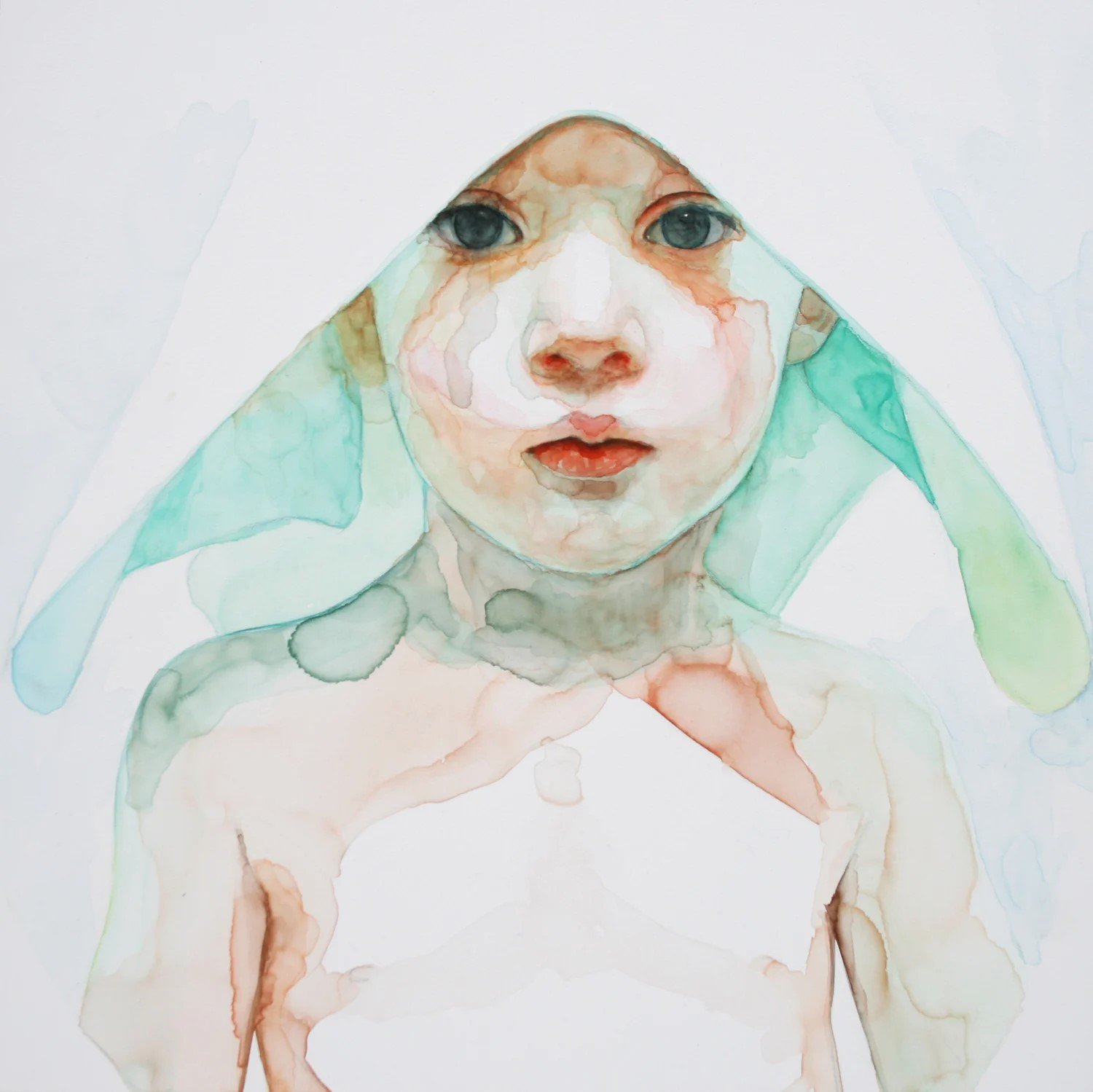
“Justification is the basis of all religion. Your character is developed according to your faith. This is the primary religious truth from which no one can escape.
“Religion is force of belief cleansing the inward parts. For this reason the primary religious virtue is sincerity, a penetrating sincerity.”
Alfred North Whitehead, Religion in the Making (1926)
(Painting: “Open” [2015] by Ali Cavanaugh)

“Is it any wonder that modern people live their lives on the assumption that they are the highest beings of all, and master of all?
“Cut off from direct contact with nature, they are cut off from the experience of its wonder, which is the experience of the infinity of gods. This is the ‘flight of the gods.’
“The gods have not, to be exact, flown. We have merely blinded ourselves to them, by erecting a fabricated world that has obstructed the real world.”
Collin Cleary, Summoning the Gods: Essays on Paganism in a God-Forsaken World (2011)
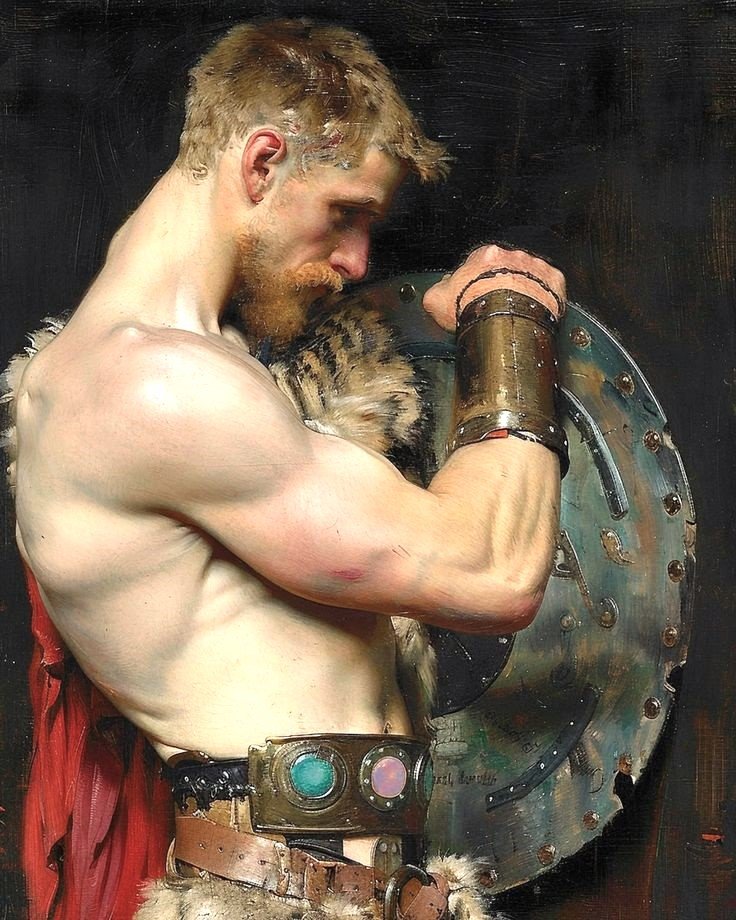
“[Within polytheistic traditions] we do not find the angst, let alone the doubts, that many experience with regard to their relationship with the divine in the monotheistic traditions.
“The deities are not history in and of themselves and do not cause everything that happens… They do not lay down rules for humans to follow, although a particular personal relationship may involve obligations for the human in return for favors from a deity.
“Rather, the rules of human life arise from family and community concerns, ethical considerations, and the way of the universe… Moral conduct means that humans can best live by harmonizing their actions with nature, society as a whole, and the inevitable.”
Jordan Paper, The Deities Are Many: A Polytheistic Theology (2005)
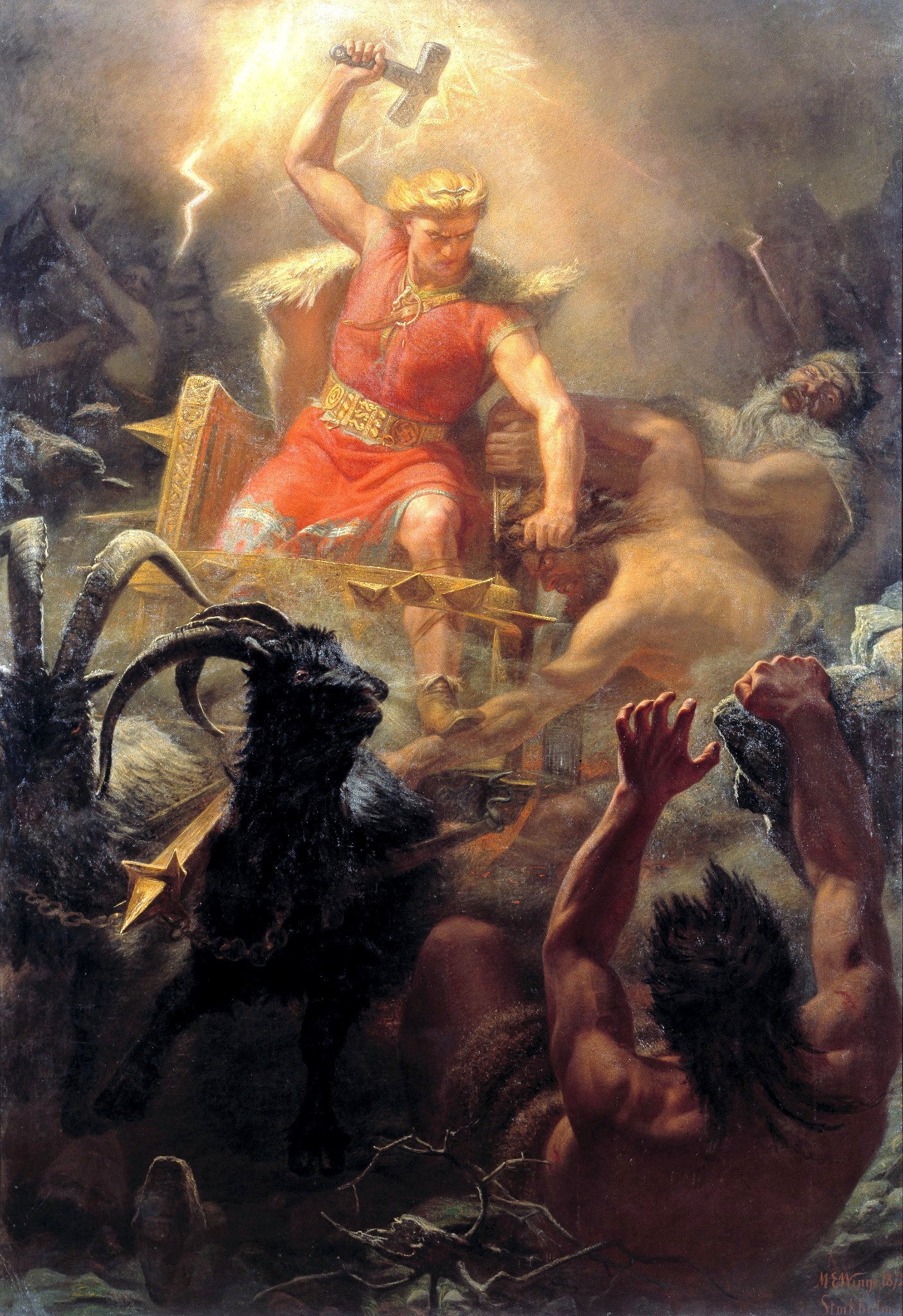
“Gods and Goddesses are the names of powers, or forces, which have autonomy and are not conditioned by or affected by social and historical events, by human will or reason, or by personal and individual factors. This is one meaning of our use of the word ‘immortal’ as it is applied to divinities. The Gods are not contingent upon the conditions of mortality.
“Insofar as they manifest themselves in life they are felt to be informing powers that give shape to social, intellectual, and personal behavior.
“The Gods and Goddesses are the names of the plural patterns of our existence. Their stories are the paradigms and symbols that allow us to account for, to express, and to celebrate those multiple aspects of our reality that otherwise would seem fragmented and anarchic.”
David Miller, The New Polytheism: Rebirth of the Gods and Goddesses (1974)
(Painting: “Tor’s Fight with the Giants” [1872] by Mårten Eskil Winge)
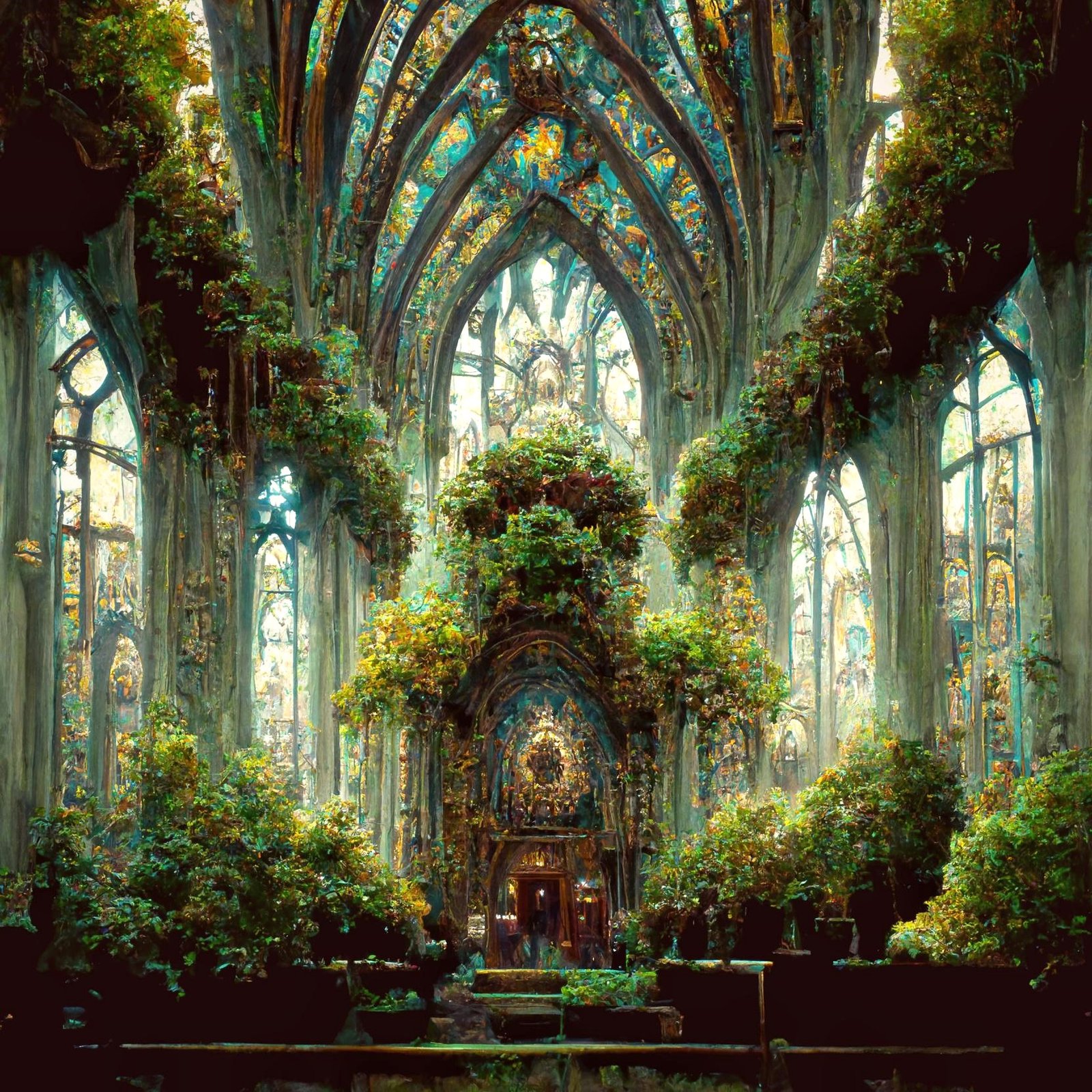
“The sacred groves of Europe’s barbarian prehistory give a new meaning to the phrase ‘cathedral forest,’ which has become something of a commonplace these days.
“The Gothic cathedral visibly reproduces the ancient scenes of worship in its lofty interior, which rises vertically toward the sky and then curves into a vault from all sides, like so many tree crowns converging into a canopy overhead. Like breaks in the foliage, windows let in light from beyond the enclosure.
“In other words, the phrase ‘cathedral forest’ entails more than just a casual analogy; or better, the analogy has its basis in an ancient correspondence between forests and the dwelling place of a god.”
Robert Pogue Harrison, Forests: The Shadow of Civilization (1992)
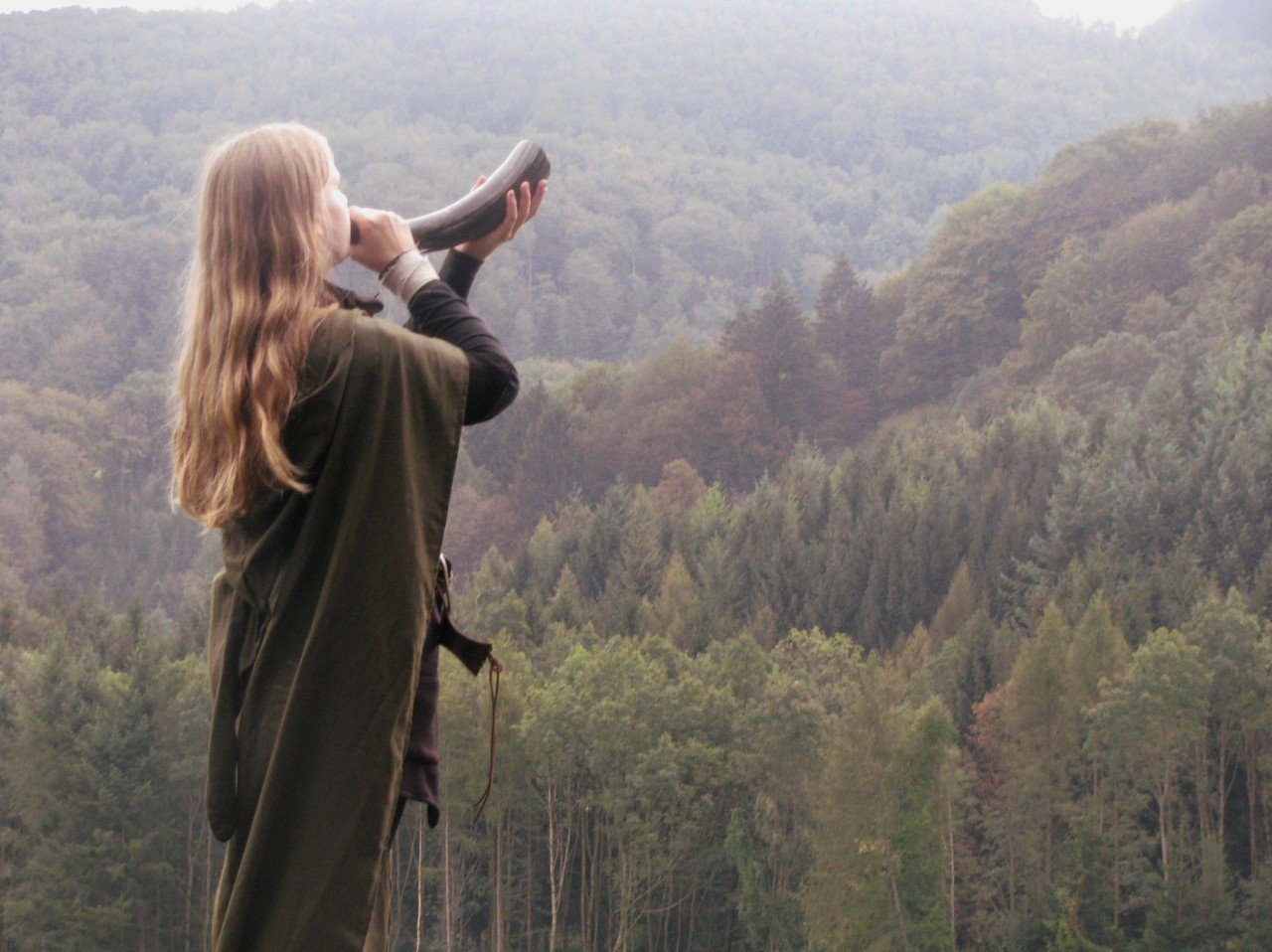
“The polytheistic traditions are invariably experiential… People come to know the deities in polytheistic traditions directly, via such modes as mediumism and shamanism… This is one of the reasons for a multiplicity of deities. People with differing personalities and experiences meet differing deities. Without an enforced monotheistic creed, people are open to an abundance of numinous possibilities. Faith is both meaningless and irrelevant.
“We know what we experience; it takes no leap of faith to assume the reality of deities we have directly encountered…Without creeds, let alone doctrines, there is nothing requiring explicit belief. Arising from encounters in rituals, visions, and so forth, our acceptance of the validity of the experienced deities is absolutely no different, except more certain, than knowledge gained from sensory experiences.”
Jordan Paper, The Deities Are Many: A Polytheistic Theology (2005)

“Much polytheistic theology needs to be done before we discover what hides, well repressed and easily forgotten, in the logics of our Occidental theology.
“The work is not to find allegorical typologies; it is not to make clever associations between far-fetched correspondences. Nor is the work historical: a genetic tracing of the connections that exist in the conscious evolution of thinking, from mythology to philosophy to theology…
“The task rather is to rediscover the stories of the Gods and Goddesses, the theology of the people. It is to recover the varieties of religious experience lurking in the varieties of theological experience. The task begins in feeling and intuition, rather than in thinking…
“The task of a polytheistic theology will not be even begun until there is a sense for life in theology…a love of the Gods and Goddesses.”
David Miller, The New Polytheism: Rebirth of the Gods and Goddesses (1974)
(Painting: “Priestess of Delphi” [1891] by John Collier)
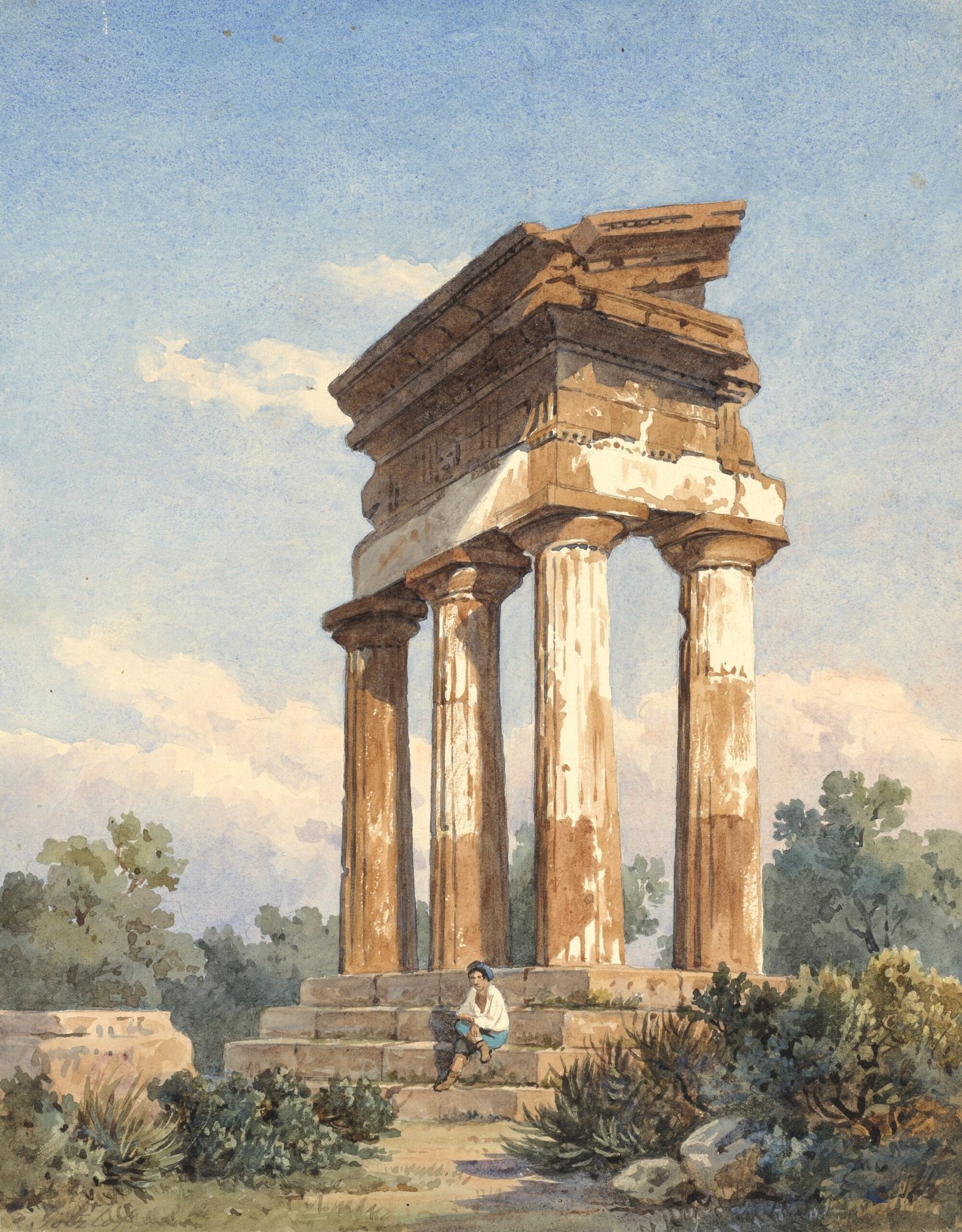
“It is utterly implausible to think that my ancestors simply sat around and ‘invented’ their gods.
“The thought nags me that they possessed a different sort of consciousness, or some special sense that has now atrophied in us, which allowed the gods to show up for them. And then there is also my conviction that something very important has been lost to us in the ‘post-pagan’ world.
“I have tried to think my way back into belief in the gods; to convince myself, intellectually, of their existence. I know that this does not work, nor do I think it will work for anyone else.
“So what are our other options?”
Collin Cleary, Summoning the Gods: Essays on Paganism in a God-Forsaken World (2011)
(Painting: “A Temple Ruin in Agrigento” [c. 1825] by Carl Wilhelm Götzloff)
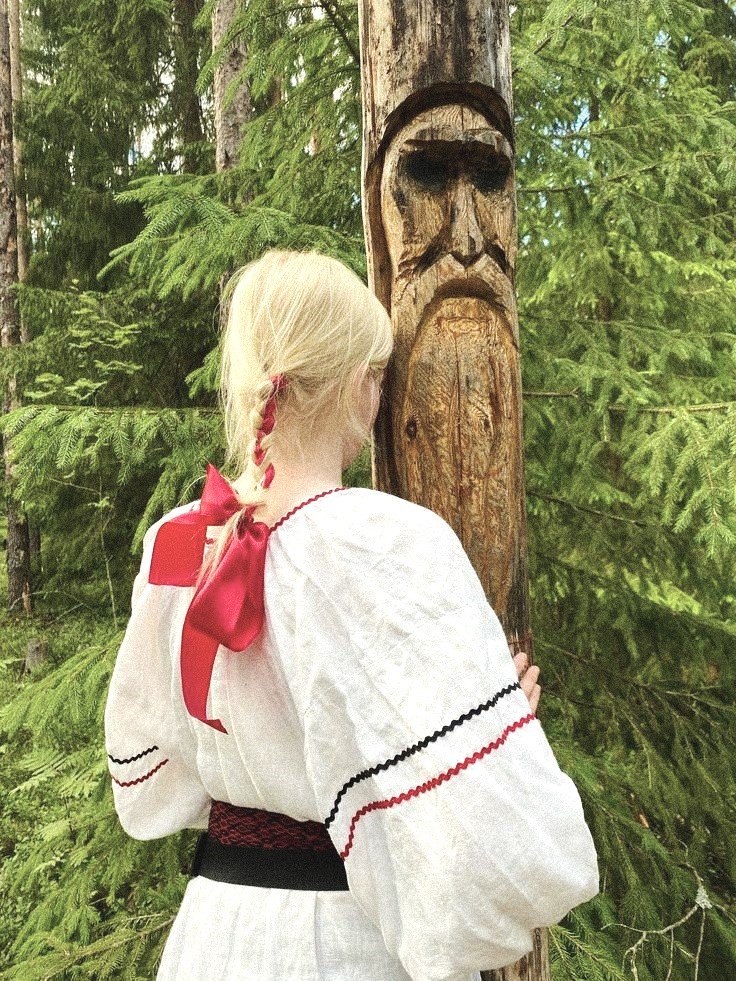
“In comparing classical and related pre-Christian paganisms with Christianity, we find that paganism includes
(1) a number of both male and female gods,
(2) magical practice,
(3) emphasis on ritual efficacy,
(4) corpospirituality, and
(5) an understanding of gods and humans as codependent and related.
“Paganism has no belief in historic revelation. Instead, this world and the otherworld are intimately interrelated, and while the myths and stories about the gods are chiefly to be understood as metaphors, the divine itself is to be experienced directly.
“Individual pagan religions furnish frameworks and techniques for encouraging experiential encounters with the godhead for both improving one’s welfare in this world and exploring the otherworld in search of spiritual renewal. In other words, they provide hermeneutical tools for interpreting the world and the supernatural and humanity’s relationship to both.”
Michael York, Pagan Theology: Paganism as a World Religion (2003)

“If [Roman religion] tends to subdivide experience into a sequence of divine agents, it equally veers off in the opposite direction: grouping them together according to specific elements that for us would be considered absolutely disparate, under the name of a single god.
“Mars, for example, whom we all know as the god of war, can also be invoked to ensure a successful harvest or the well-being of animal stock… [But] why should we mix war, the fertility of the fields, and the health of oxen all together?
“Because these moments have as their common denominator a single feature: danger. The dangers of war when you enter the battlefield, the dangers arising from natural calamities when the crops are growing, the dangers in the woods when the animals are out to pasture. This explains why in each of these cases the same god is called upon for intervention: warlike Mars.”
Maurizio Bettini, In Praise of Polytheism
(Painting: “Mars the Bringer of War” [2003] by Toshiyuki Enoki)
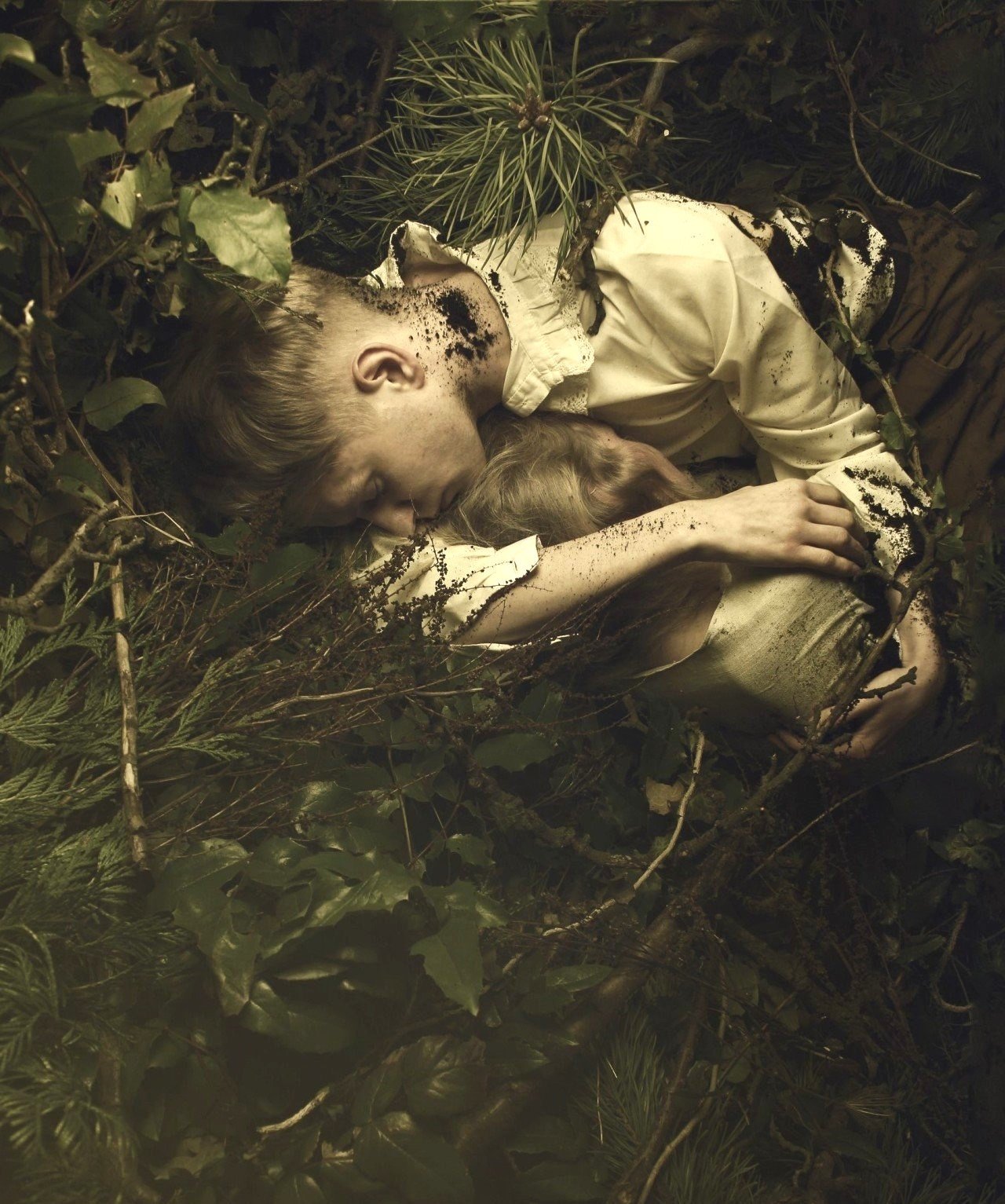
“Gods are conceived to be first things in the way of being and power. They overarch and envelop, and from them there is no escape. What relates to them is the first and last word in the way of truth.
“Whatever then were most primal and enveloping and deeply true might at this rate be treated as godlike, and a man’s religion might thus be identified with his attitude, whatever it might be, towards what he felt to be the primal truth…
“Were one asked to characterize the life of religion in the broadest and most general terms possible, one might say that it consists of the belief that there is an unseen order, and that our supreme good lies in harmoniously adjusting ourselves thereto.”
William James, The Varieties of Religious Experience (1902)

“As a group of twelve, the gods of Olympus came together primarily in poetry and art. Zeus was the most powerful of the twelve—but he was not all-powerful, because he needed and craved the company of his own family…
“Seated on Mount Olympus, he ruled over the entire world, but on the sacred mountain itself his family constantly undermined his authority. His wife Hera resented his affairs, challenged him, and sometimes even managed to trick him into doing what she wanted; his brother Poseidon demanded respect; his daughter Artemis charmed him in order to secure presents and promises; his son Apollo impressed and inhibited him; and little Hermes made him laugh, no matter how disobedient he was.
“Occasionally, Zeus threatened and thundered in order to remind his family that he alone was the ruler of the universe, but such outbursts were short and futile, for Zeus himself preferred the negotiations of family life to the loneliness of absolute power.”
Barbara Graziosi, The Gods of Olympus: A History (2013)
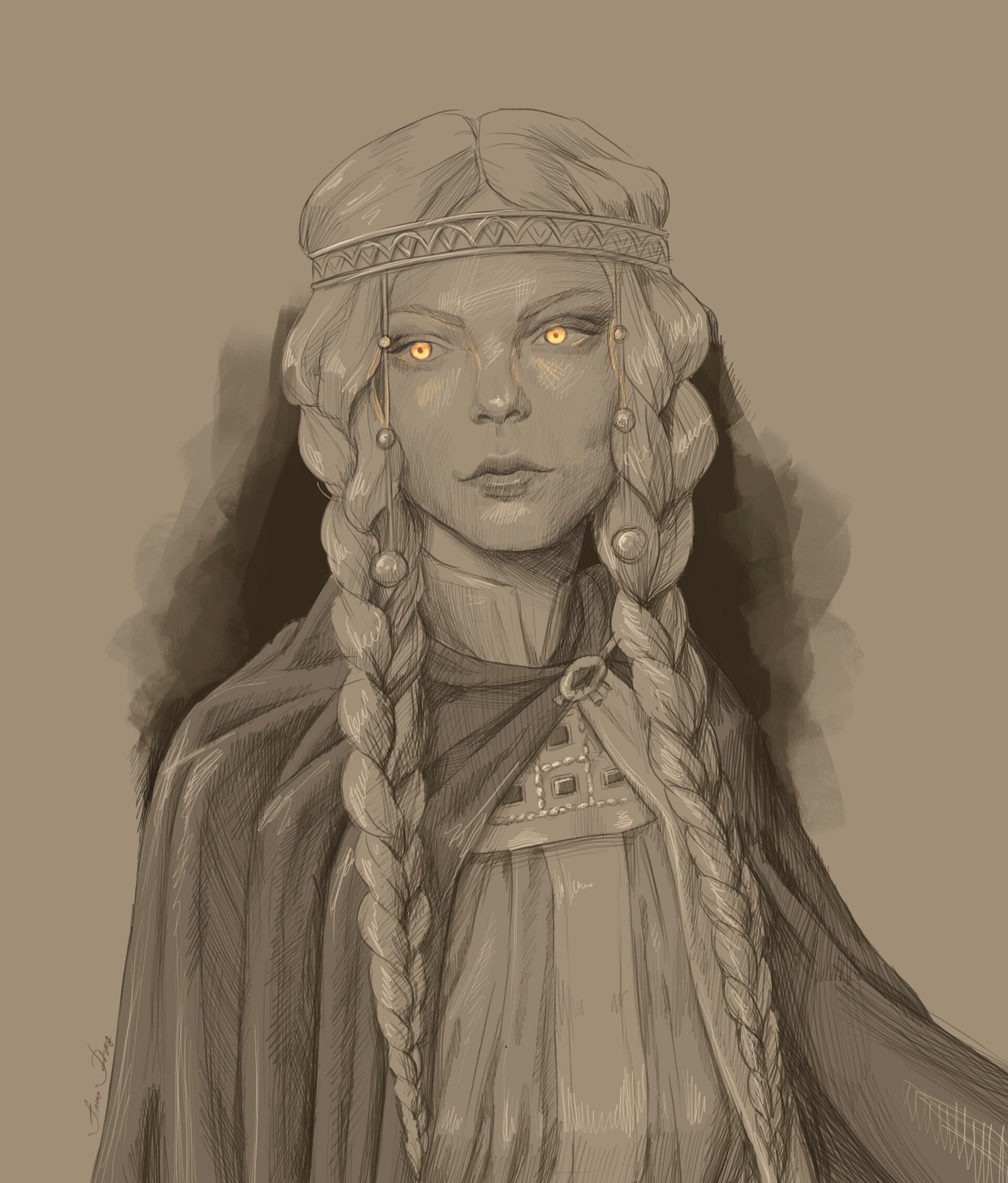
“The word ‘pagan’…is often used pejoratively to mean simply ‘uncivilised,’ or even ‘un-Christian’ (the two generally being assumed to be identical)… lts literal meaning is ‘rural,’ ‘from the countryside’ (pagus).
“As a religious designation it was used first by early Christians in the Roman Empire to describe followers of the other (non-Jewish) religions…[following] Roman soldiers of the time [who] used the word paganus, contemptuously, for civilians or noncombatants. The early Christians, thinking of themselves as ‘soldiers of Christ,’ looked down on those who did not follow their religion as mere stay-at-homes, pagani…
“By the fourth century [however], ‘Pagan’ had returned closer to its root meaning and was being used non-polemically to describe anyone who worshipped the spirit of a given locality or pagus.”
Prudence Jones and Nigel Pennick, A History of Pagan Europe (1995)
(Illustration: “Freyja” by Anna Pirog)
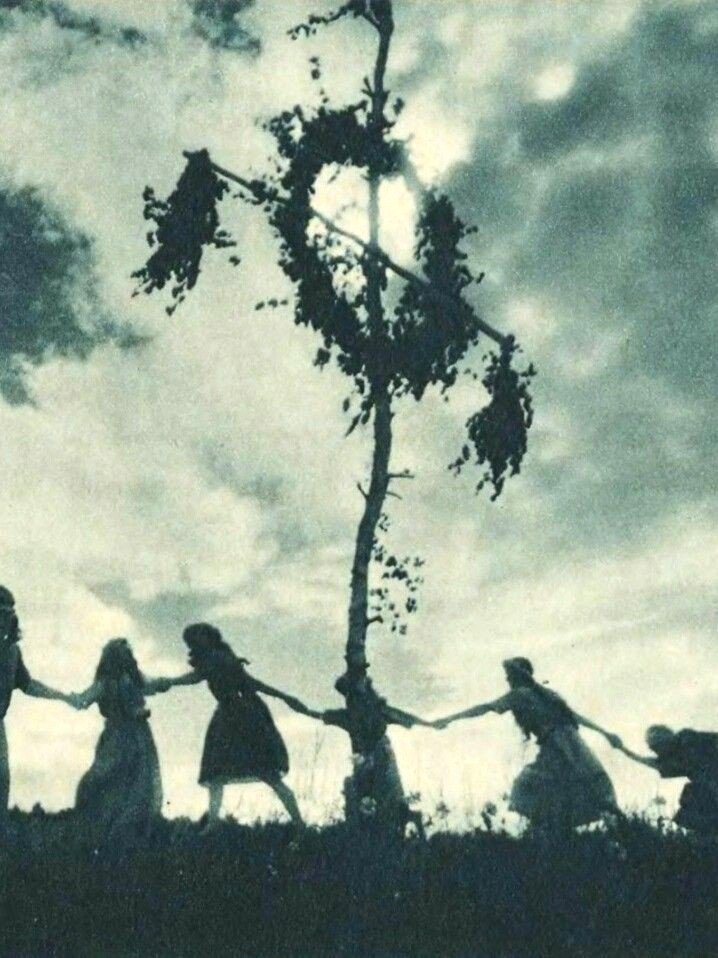
“What ultimately distinguishes paganism from Christianity is not the number of its gods but the nature of its deity. Whereas the Christian God is transcendent, the pagan godhead is immanent. Spirituality for the pagan is corporeal or at least includes the physical.
“The pagan god is not ‘wholly other’…as is the Christian God. Consequently, paganism’s corpospirituality allows for perception of the divine in nature…for appreciation of the sacredness of place, for contact with the divine through both local geodynamics and pilgrimage to revered holy centers, and for multiplicity of manifestation.
“Its deities are in some sense corporeal, whether through metaphorical bodies or venerated physical representations.”
Michael York, Pagan Theology: Paganism as a World Religion (2003)
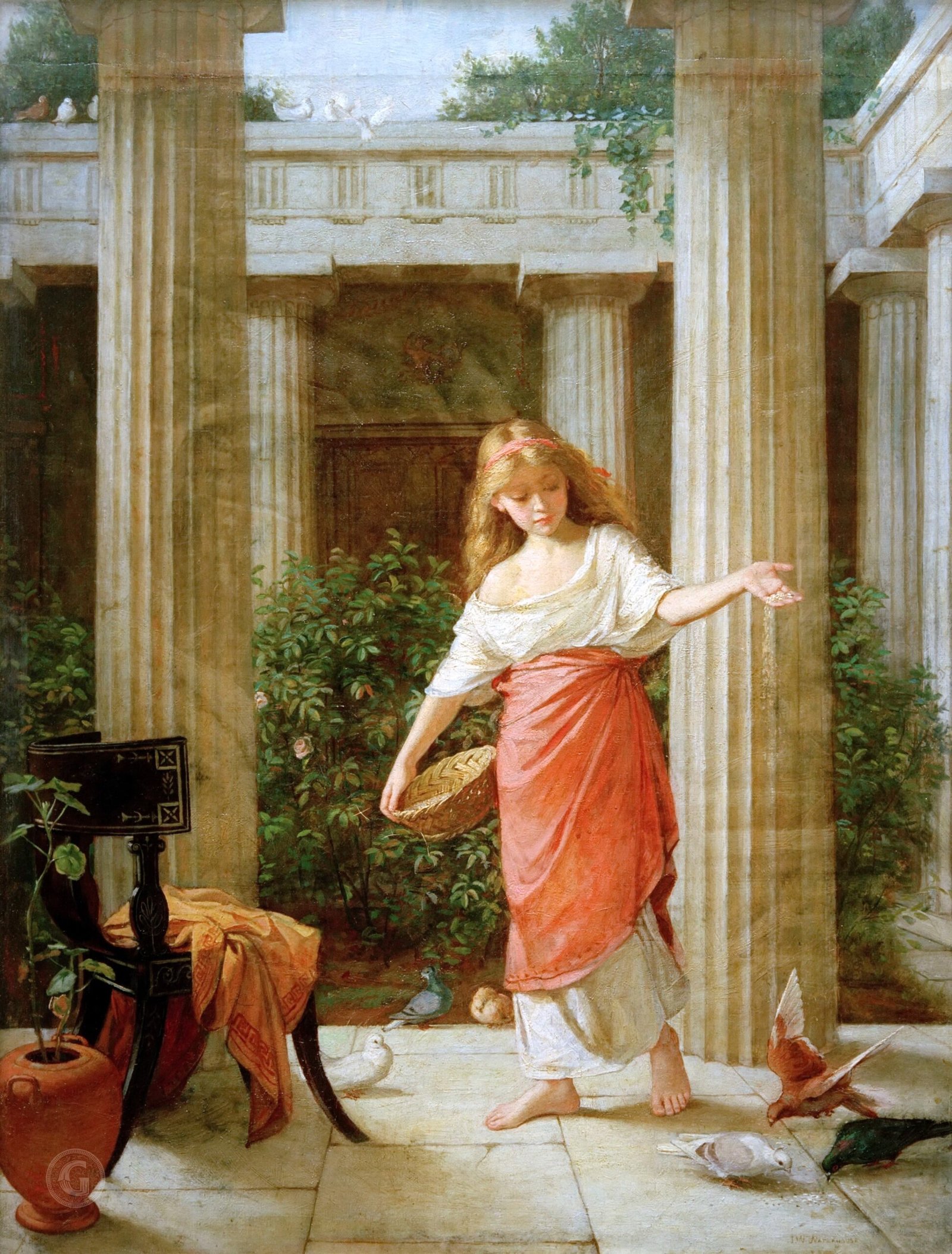
“Let’s try to picture in our minds, just for a moment, a culture in which a child’s life corresponds to a series of steps, each one accompanied by a god.
“Lucina brings children into the light, Vitumnus and Sentinus give them life and emotions, Vaticanus opens their mouths for their first cry, Levana lifts them from the ground, Cunina rocks them, Potina and Educa give them drink and food, Farinus gives them their first meaningful word, and so on—up to the two goddesses who will take care of them the moment they leave home: Iterduca in their going away, Domiduca to ensure their return.
“We are witnessing a sequence of ‘minuscule’ gods, as the Romans called them, who not only oversee specific actions, but represent them as religious agents: divinities who function simultaneously as ways of doing and as cognitive categories.”
Maurizio Bettini, In Praise of Polytheism (2014)
(Painting: “In the Peristyle” [1874] by John William Waterhouse)
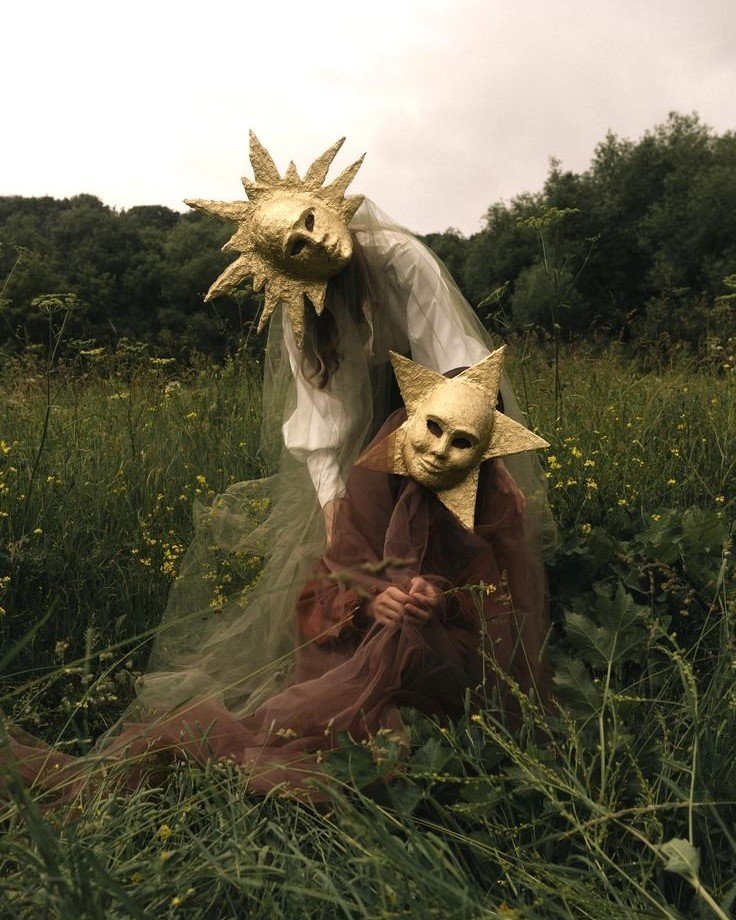
“Religion, in her fullest exercise of function, is not a mere illumination of facts already elsewhere given, not a mere passion, like love, which views things in a rosier light.
“It is indeed that… But it is something more, namely, a postulator of new facts as well.
“The world interpreted religiously is not the materialistic world over again, with an altered expression; it must have, over and above the altered expression, a natural constitution different at some point from that which a materialistic world would have.
“It must be such that different events can be expected in it, different conduct must be required.”
William James, The Varieties of Religious Experience (1902)
“Paganism suggests an interactive relationship among the different poles of reality… The dynamic of paganism is such that…the world or nature is altered by humanity and the gods as much as they are by both it and one another. In paganism, the essential realms of reality, however conceived, are essentially codependent…
“In other words, even if paganism or particular pagan identities elevate the special or the numinously distinguishable over the whole, or the theistic or even polytheistic over the pantheistic, the divine or sacred will be found everywhere.
“Paganism, therefore, allows the divine to be manifested in and as the material, whatever else it may be. But paganism eschews any true hierarchy between the temporal and permanent, between the physical and spiritual, or between this world and the otherworld. In paganism, all realms of being and possibly nonbeing partake in a dynamic partnership or colloquium of potential equals.”
Michael York, Pagan Theology: Paganism as a World Religion (2003)
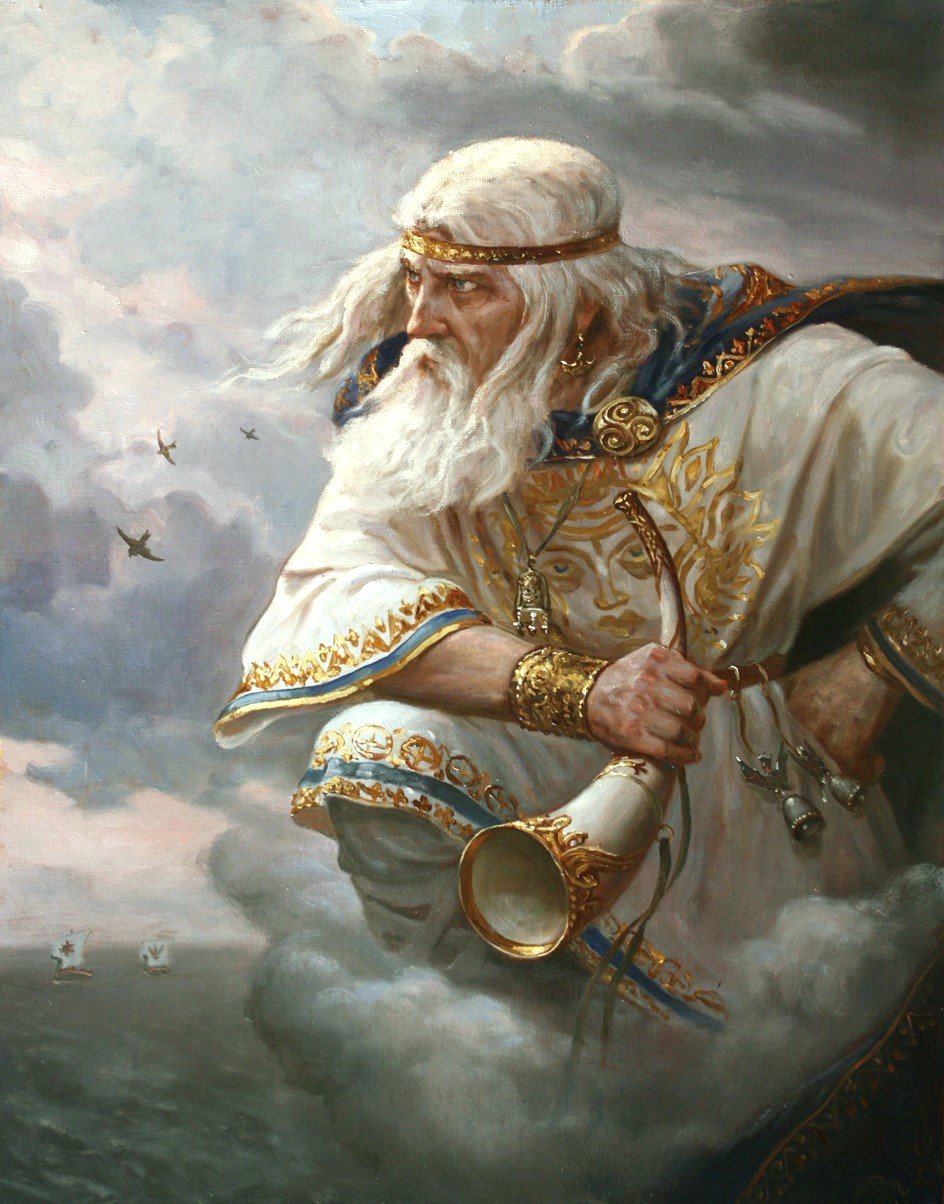
“I have said that our wonder at the being of things is an intuition of divinity. Thus, wonder that there is such a thing as the wind just is the experience of the ‘God of wind.’
“But, the critic may charge, this is not what we have in mind by what a god is… The god of wind is a personality… The myths involve the feelings, thoughts, speeches, and actions of such gods. The gods, in short, are supposed to be conscious beings who run around and do things…
“The trouble with this way of understanding things is that it confuses symbols with their referents. The god of wind is a personality because human beings have consciously and deliberately personified him…
“We personify because we have a drive to personify in order to hold the god in mind. Really, what this means is that we personify in order to hold in mind the wind, taken not as a ‘natural phenomenon’…but as a noumenon, as a being awakening wonder.”
Collin Cleary, Summoning the Gods
(Painting: “Stribog the Master of Winds” [2014] by Andrey Shishkin)
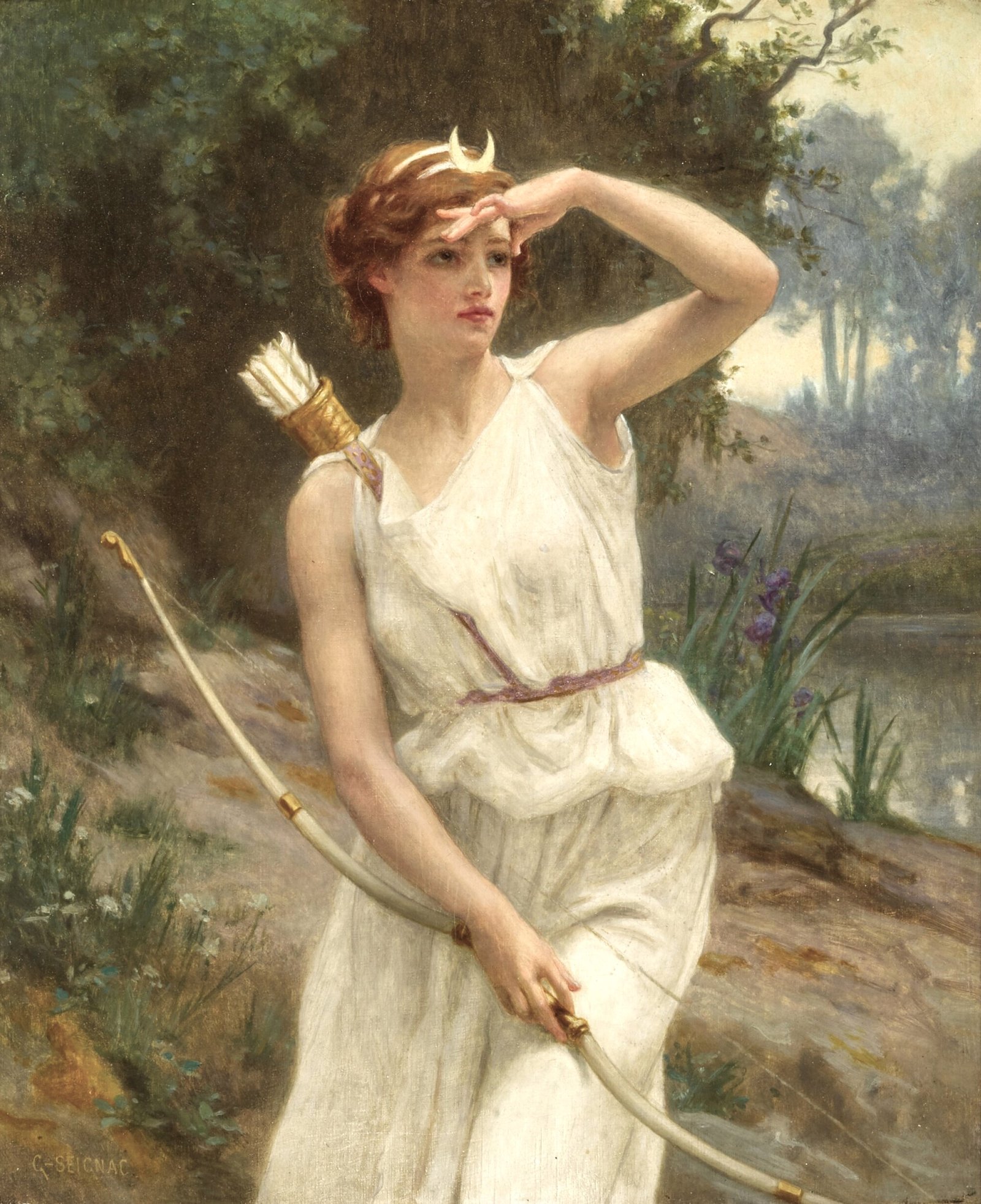
“Our wonder at the being of particular things is an intuition of a god, or divine being.
“Thus, there are gods of the sun, the wind, the rain, the ocean, the mountains… In truth, all things shine with divinity; all things are God. And there is no contradiction between this statement and the statement that there are gods.
“We might think of the gods as ‘regions’ within being. There are as many gods as there are regions of being. Our awareness of regions of being does not come through philosophical analysis or speculative system-building. It comes through experience and intuition.
“There are as many regions as there are experiences of wonder at the fact that ‘things such as X’ exist at all. And there are regions within regions.”
Collin Cleary, Summoning the Gods: Essays on Paganism in a God-Forsaken World (2011)
(Painting: “Diana the Huntress” [c. 1900] by Guillaume Seignac)
Heritage
eusylvations
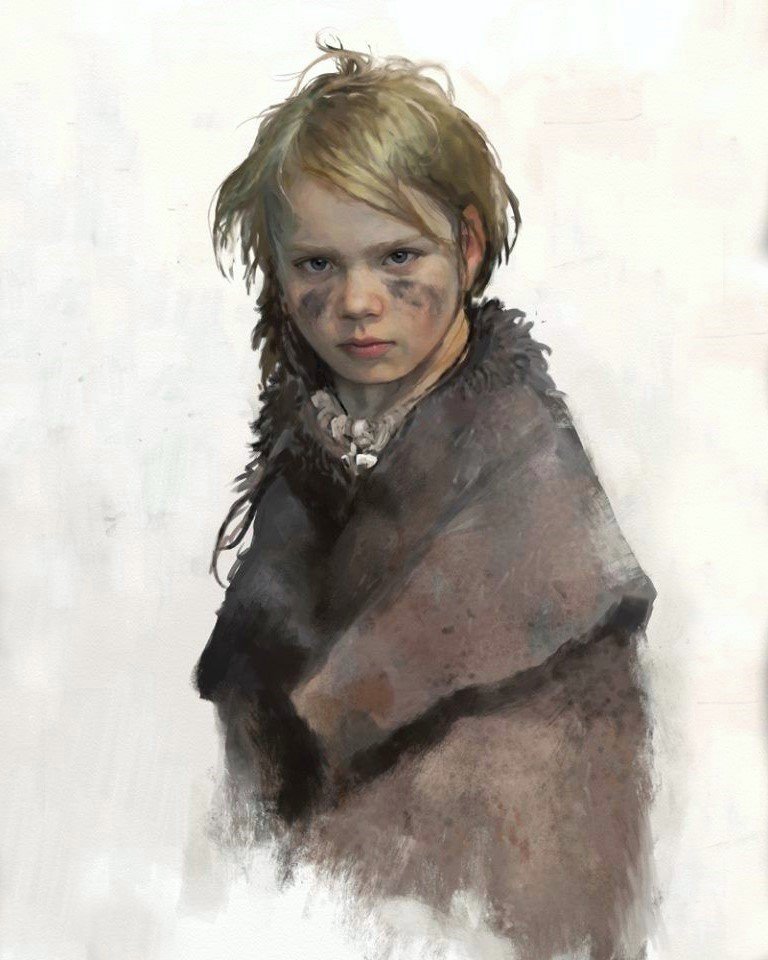
“DV: My conception of tradition is new. It defines my interpretation of history and of the future of Europe. It can also be applied to other peoples. It begins with the observation that the conventionally accepted history of European civilisation is an illusion, behind which exists a genuine secret history made up of hidden permanencies. Tradition is the expression of these permanencies…
“[Interviewer:] What gives tradition permanence?
“DV: If a tradition survives over time, it is because it rests upon the hereditary dispositions of related peoples, and a spiritual heritage whose origin reaches back into prehistory, through the long and mysterious period that led to the emergence of the Indo-Europeans.
“Saying 30,000 Years of European Identity [with reference to his 2004 book, History and Tradition of Europeans: 30,000 Years of Identity] is a deliberate act of provocation that nevertheless highlights a true fact.”
Dominique Venner, The Shock of History (2011)
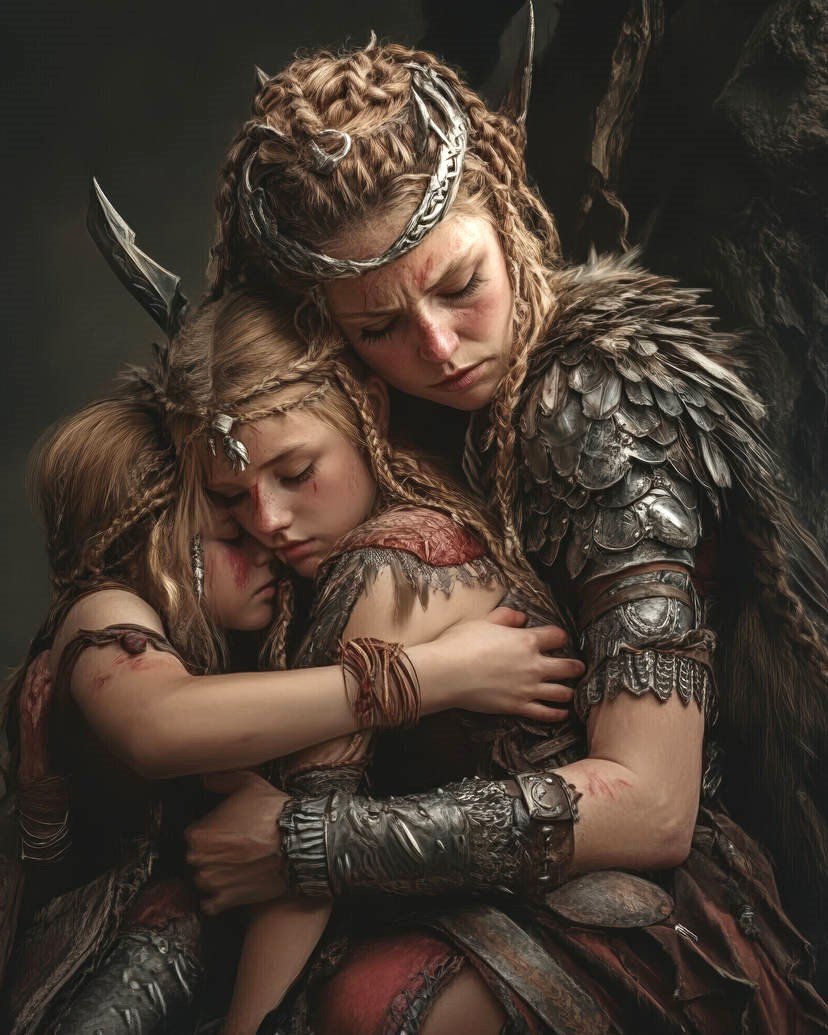
“One cannot create an instant ethny by creating a myth. The myth has to be rooted in historical reality to be accepted. Ethnicity can be manipulated but not manufactured.
“Unless ethnicity is rooted in generations of shared historical experience, it cannot be created ex nihilo.”
Pierre L. van den Berghe, The Ethnic Phenomenon (1981)

“In love of home, the love of country has its rise.”
Charles Dickens, The Old Curiosity Shop (1840–41)
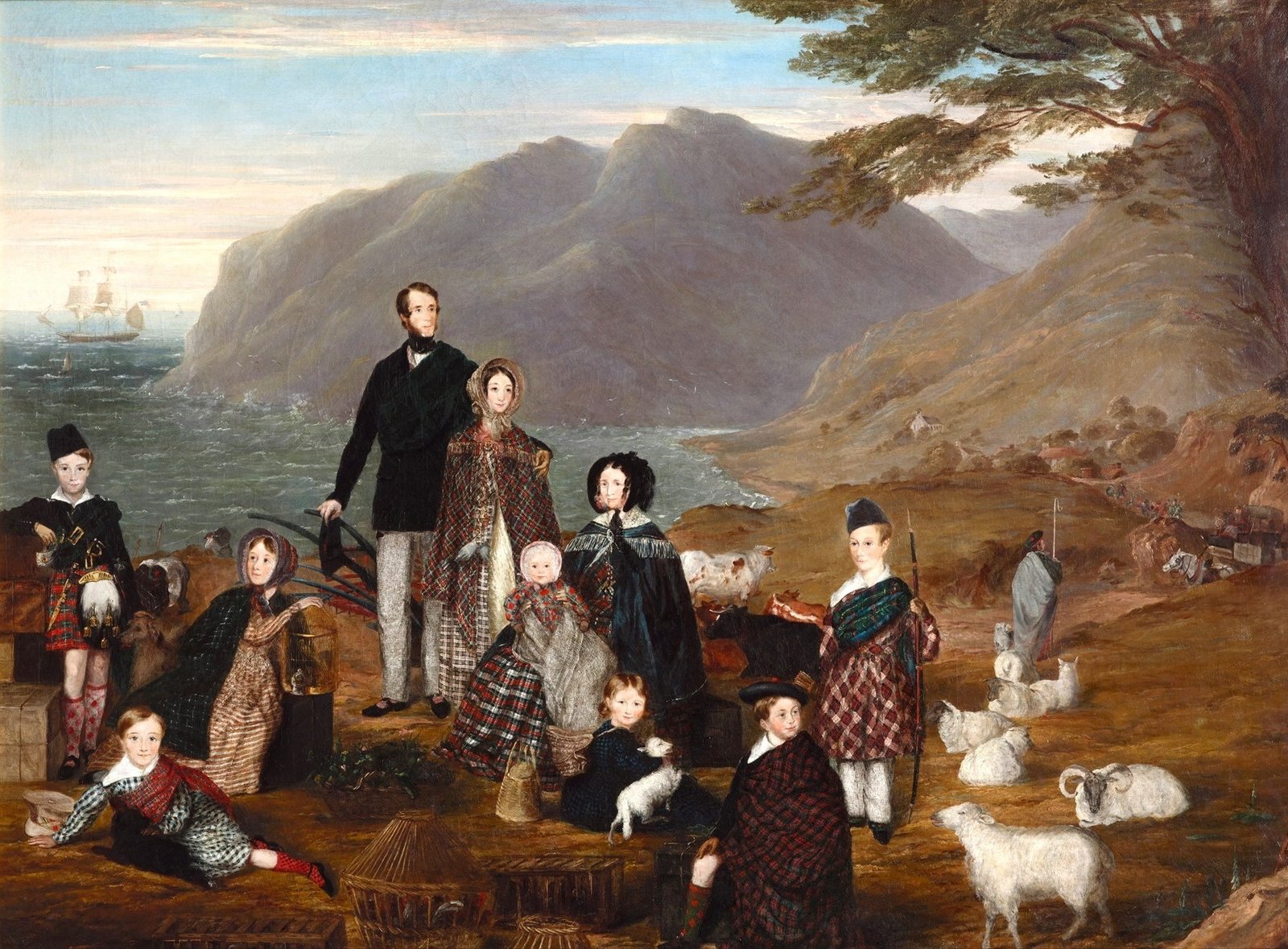
“You were born somewhere and to someone. You have parents, places, languages, and cultures in your history—whether you know about it or not. Understanding what and who you come from is critical—whether you connect with it or decide that you can’t relate to the entire package. It’s a part of who you are…
“The deeper you connect to your family history and roots, the stronger your foundation as a person. Making this connection is different for every one of us. You can connect to your roots through family, genealogy, food, geography, religion, literature, music, architecture—whatever makes you feel that you’re at home and understand yourself better. It involves both knowing and connecting—one with your brain and one with your heart.”
Irina Nevzlin, The Impact of Identity: The Power of Knowing Who You Are (2019)
(Painting: “The Emigrants” [1844] by William Allsworth)

“Historical memory is the responsibility of each generation. It takes only two or three generations, less than a century, for memory to be eclipsed. Virgil’s Sibyl warns, ‘Easy is the descent to Avernus’; the doors of the Underworld stand open (Aeneid 6.283).
“It is easy to die, cross Lethe, and forget; it is done all the time, in a thousand ways. ‘But to return to the air of day—that is the labor, that is the task.’ Remembering takes mental effort, a willed struggle, and piety. Not many can undertake the journey and return, and none without personal heroism and Jove’s love.”
John Paul Russo, “The Great Forgetting” (2005)
(Painting: “The Springs of Lethe” [1896] by Ella Bedford)

“The first Indo-Europeans who founded the ‘civilized’ West (and started to leave the state of nature) were the Mycenaean warriors who comprised the background to classical Athens.
“The second were the Macedonians who rejuvenated the martial virtues of Greece after the debilitating Peloponnesian War, and went on to conquer Persia and create the basis for the intellectual harvest of Alexandrian Greece.
“The third were the early Romans who founded an aristocratic republic, preserved the legacy of Greece, and cultivated their own Latin tradition.
“And the fourth were the Celtic-Germanic peoples who interacted for some centuries with the Romans, and then developed the Western legacy within a higher fusion of classical, Christian, and barbarian values.”
Ricardo Duchesne, The Uniqueness of Western Civilization (2011)
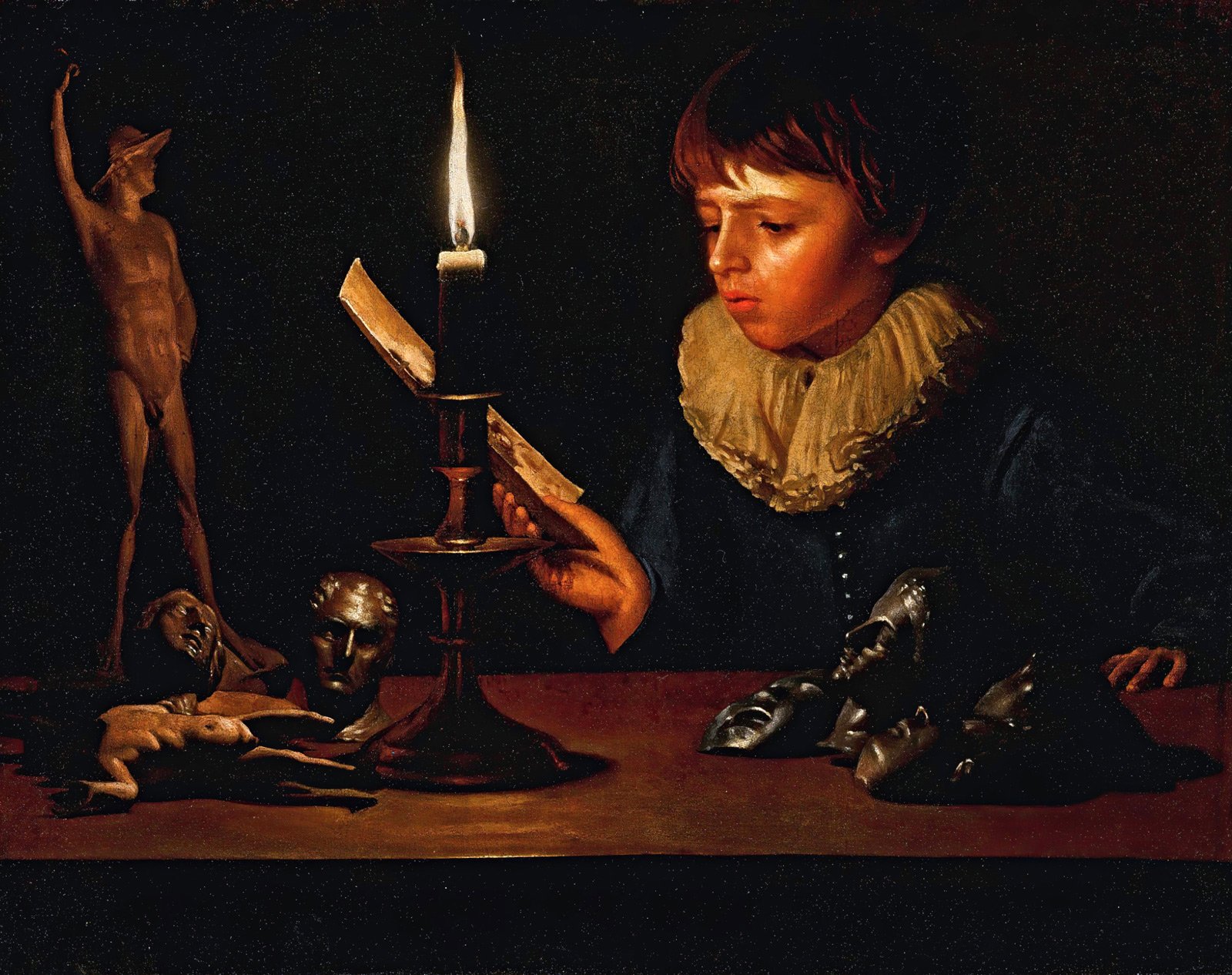
“In domesticating the past we enlist it for present causes. Legends of origin and endurance, of victory or calamity, project the present back, the past forward; they align us with forebears whose virtues we share and whose vices we shun.
“We are apt to call such communion history, but it is actually heritage. The distinction is vital. History explores and explains pasts grown ever more opaque over time; heritage clarifies pasts so as to infuse them with present purposes.
“Critics who confuse the two enterprises condemn heritage as a worthless sham, its credos as fallacious, even perverse. But heritage, no less than history, is essential to knowing and acting. Its many faults are inseparable from heritage’s essential role in husbanding community, identity, continuity, indeed history itself.”
David Lowenthal, The Heritage Crusade and the Spoils of History (1996)
(Painting: “Boy Behind a Table with Statuettes Reading by Candlelight” [1641] by Adam de Coster)
“The feelings of continuity, memory, and identity from old places give us a sense of who we are. The experience of beauty and the awe of the sacred at old places deepens our connections to a broader world and fosters a sense of empathy with others.
“Knowing the places where our ancestors are from gives people a deep sense of belonging. Learning history at the places where history happened is a viscerally memorable experience that stays with us for the rest of our lives. The simple act of continuing to use an existing place is one of the most effective things people can do for a more sustainable world…
“The bottom line is that old places matter for more reasons than we generally assume. As such, the preservation of old places is not just something ‘nice’ to do; it provides profound material, emotional, sociological, and spiritual benefits for all.”
Thompson Mayes, Why Old Places Matter: How Historic Places Affect Our Identity and Well-Being (2018)
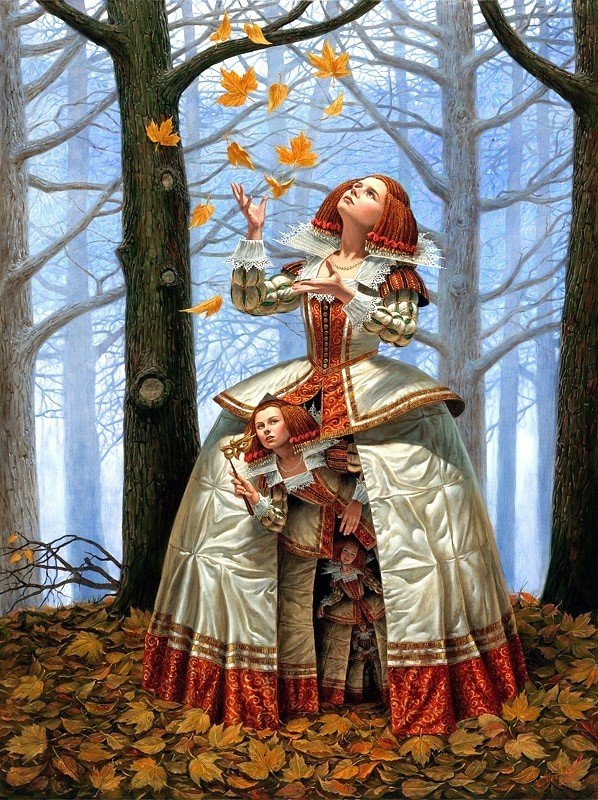
“People will not look forward to posterity,
who never look backward to their ancestors.”
Edmund Burke, Reflections on the Revolution in France (1790)
(Painting: “Enigma of Generations” [2015] by Michael Cheval)

“The most elemental…‘genealogical community’ is…the family. And as implied in the term ‘extended family,’ we also extend our vision of this community far beyond its basic ‘nuclear’ form. Indeed, the family is the prototypical social group on which larger genealogical communities often model themselves…
“The most common such communities are ‘ethnic’ groups… Pronouncedly tribal, ethnic sentiments are basically ‘of the same nature as those encountered between kin, albeit typically…more diluted.’
“Ethnicity also takes the form of peoplehood or nationhood, their envisioned descent from a common ancestor being the foremost image binding the ethnic nation’s members together… In ethno-nations such as Japan or Israel, [group membership] is essentially determined by descent…
“Although they are conventionally viewed as quite distinct from each other, the difference between families and ethno-nations is only a matter of scale.”
Eviatar Zerubavel, Ancestors and Relatives: Genealogy, Identity, and Community (2012)
(Painting: “The Bride Changing Clothes after the Wedding Ceremony” [c. 1769] by Suzuki Harunobu)
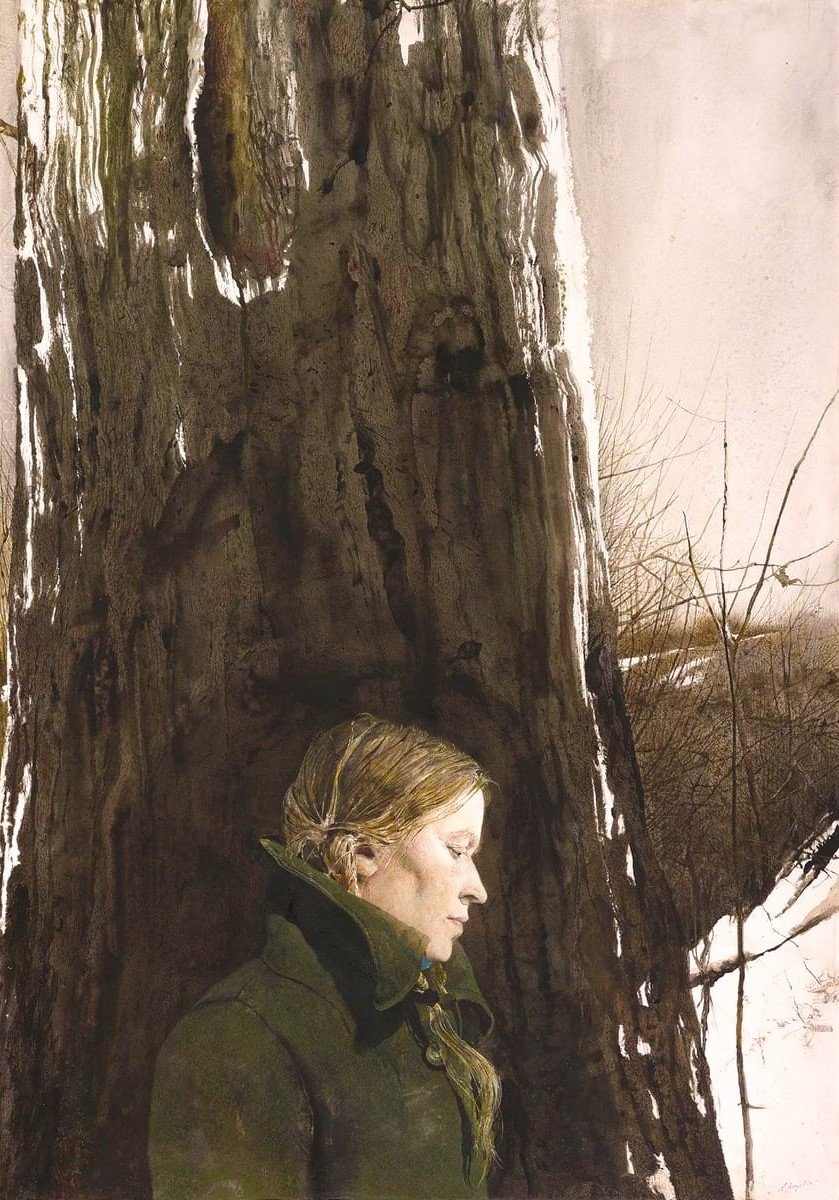
“‘Mankind’…has no aim, no idea, no plan… I see, in place of that empty figment of one linear history, which can only be kept up by shutting one’s eyes to the overwhelming multitude of the facts, the drama of a number of mighty cultures, each springing with primitive strength from the soil of a mother-region to which it remains firmly bound throughout its whole life-cycle; each stamping its material, its mankind, in its own image; each having its own idea, its own passions, its own life, will and feeling, its own death.
“Here indeed are colours, lights, movements, that no intellectual eye has yet discovered. Here, the cultures, peoples, languages, truths, gods, [and] landscapes bloom and age as the oaks and the stone-pines, the blossoms, twigs and leaves—but there is no ageing ‘mankind.’”
Oswald Spengler, The Decline of the West (1923)
(Painting: “Refuge” [1985] by Andrew Wyeth)

“Although radically transformed and enhanced by modernity, nationalism, the rough congruence—and connection—between state and culture, people or ethnicity, was not invented in the modern era.
“The national state has been perennial in human history since the beginning of statehood and as one of its major forms, alongside petty-states and empires; and yet human history itself is but a blink of the eye compared with the vast time span of human prehistory, when no states or nations existed.
“Indeed, nations and nationalism are not primordial; nonetheless, they are rooted in primordial human sentiments of kin-culture affinity, solidarity, and mutual cooperation, evolutionarily engraved in human nature. These attachments, permeating social life and extending beyond family to tribe and ethnos, became integral to politics when states emerged.”
Azar Gat, Nations: The Long History and Deep Roots of Political Ethnicity and Nationalism
(Painting: “Germanic Warrior with [Roman] Helmet” [1902] by Osmar Schindler)
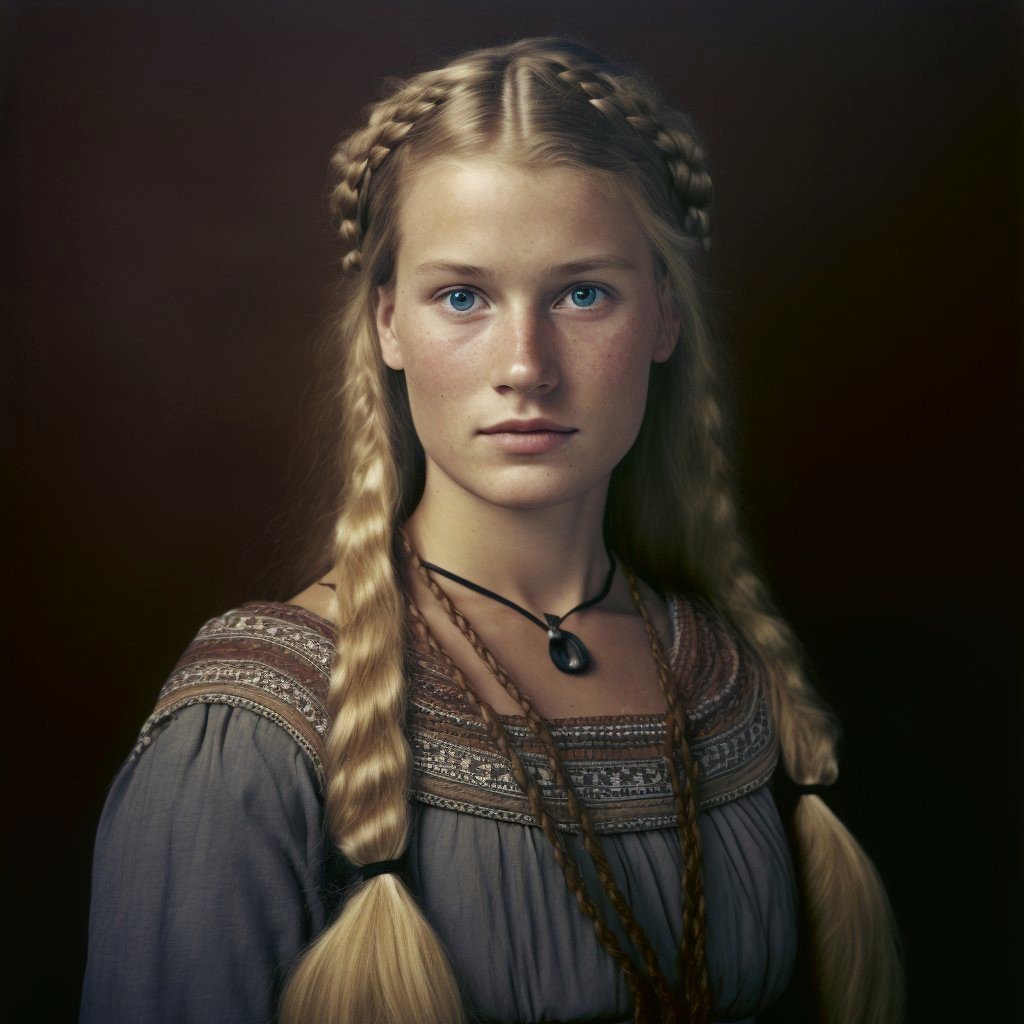
“[Interviewer: You have written that] ‘I am from the land of the tree and the forest, the oak and the wild boar, of vineyards and sloping roofs, songs of heroic deeds and fairy tales, of the winter solstice and Saint John’s Eve in the summer.’ Was this a declaration of faith?
“DV: It was a response to those who pretend that Europe does not know who she is. It was a way of saying that my point of reference is found within myself, as close as possible to my roots, and not in some far-off land in which I am an outsider. The sanctuary in which I commune with myself is the deep and mysterious forest of my origins…
“That said, it is not my intention to ignore the Christian centuries. The cathedral of Chartres is as much a part of my universe as…the Parthenon. Such is the heritage that I must come to terms with.
“European history is not simple. It is littered with ruptures beyond which we are tasked with recovering the spiritual continuity of our primordial tradition.”
Dominique Venner, The Shock of History
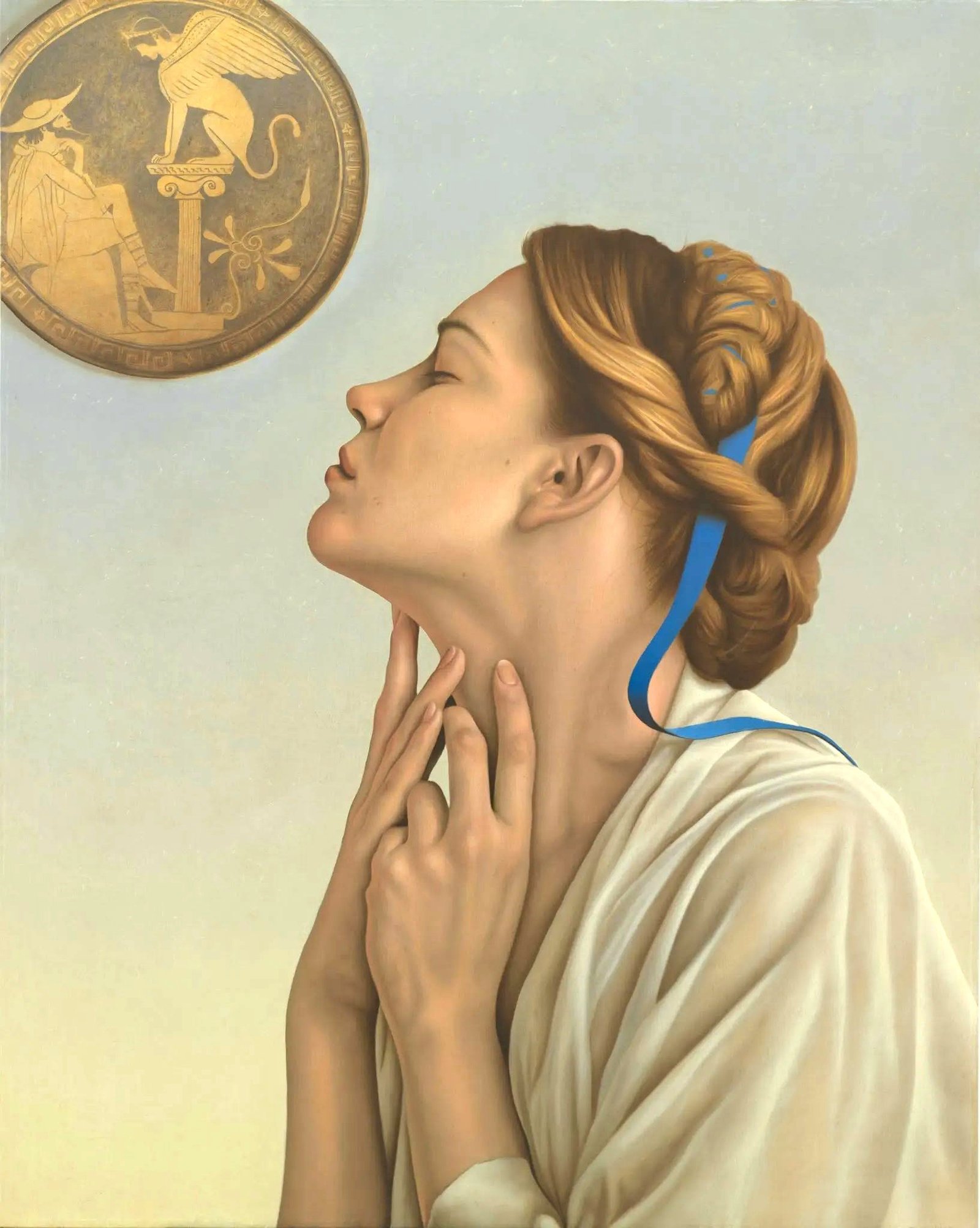
“It is fascinating to explore the mind of the present generation, to unravel the many threads that enter into its tangled fabric and trace them back to their first appearance in the loom of history…
“But it is more; it is of the utmost importance for one who wishes to understand the life about him, to comprehend its intellectual forces, to discern the probable drift of the current, and perchance to take his place at the oar.
“Ideas are much more lasting than anything else in man’s civilization, and those which find themselves in modern minds have roots going back into the immemorial past. It is through the mind that man attaches himself to his remote predecessors…
“To understand, appreciate, and judge the science, the religion, the art, [and] the moral ideals of today, it is imperative to understand those great achievements in the past…that have created the home in which man’s spirit now moves.”
John Herman Randall, Jr., The Making of the Modern Mind (1926)
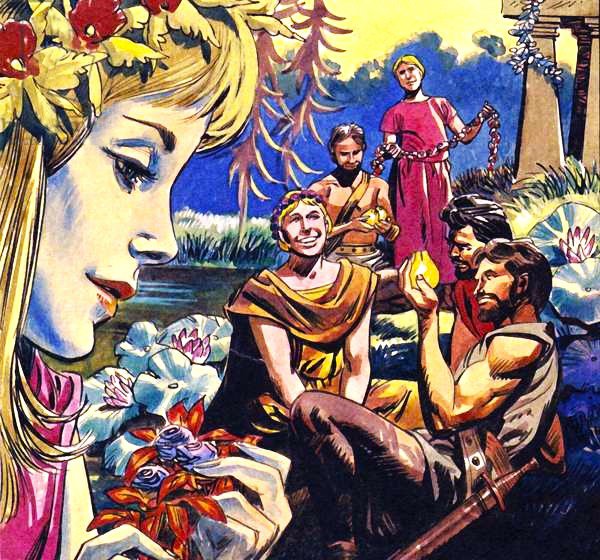
“Nine days I drifted on the teeming sea
before dangerous high winds. Upon the tenth
we came to the coastline of the Lotus Eaters,
who live upon that flower. We landed there
to take on water. All ships’ companies
mustered alongside for the mid-day meal.
“Then I sent out two picked men and a runner
to learn what race of men that land sustained.
They fell in, soon enough, with Lotus Eaters,
who showed no will to do us harm, only
offering the sweet Lotus to our friends—
but those who ate this honeyed plant, the Lotus,
never cared to report, nor to return:
they longed to stay forever, browsing on
that native bloom, forgetful of their homeland.
“I drove them, all three wailing, to the ships,
tied them down under their rowing benches,
and called the rest: ‘All hands aboard;
come, clear the beach and no one taste
the Lotus, or you lose your hope of home.’
Filing in to their places by the rowlocks
my oarsmen dipped their long oars in the surf,
and we moved out again on our sea faring.”
Homer, The Odyssey (Book IX)
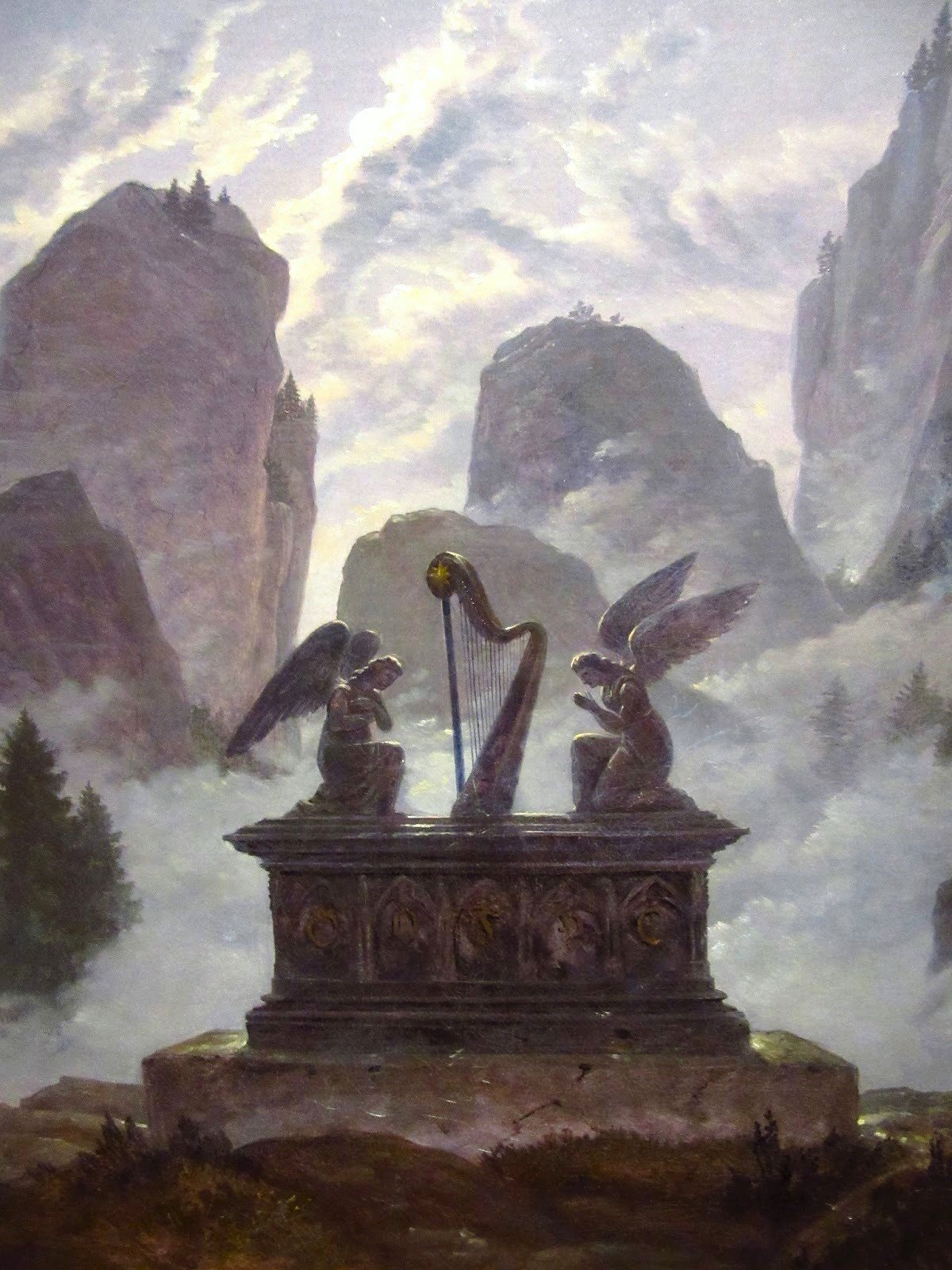
“[Interviewer:] How can we rediscover our fading tradition?
“DV: By opening our eyes, and by using the effort of our imagination in order to make ourselves conscious of the things that are hidden from us…
“[Interviewer:] Have men always wondered who they are?
“DV: Yes, and they have always answered this question by implicitly invoking their lineage, language, religion, and customs, that is to say their identity and their tradition. Being of a people is the necessary anchor of identity.
“But a human group is not a people unless it shares like origins, in a specific location, commanding a space, giving it direction and a border between the inside and the outside. This location, this space, is not only geographic, but spiritual too.”
Dominique Venner, The Shock of History: Religion, Memory, Identity (2011)
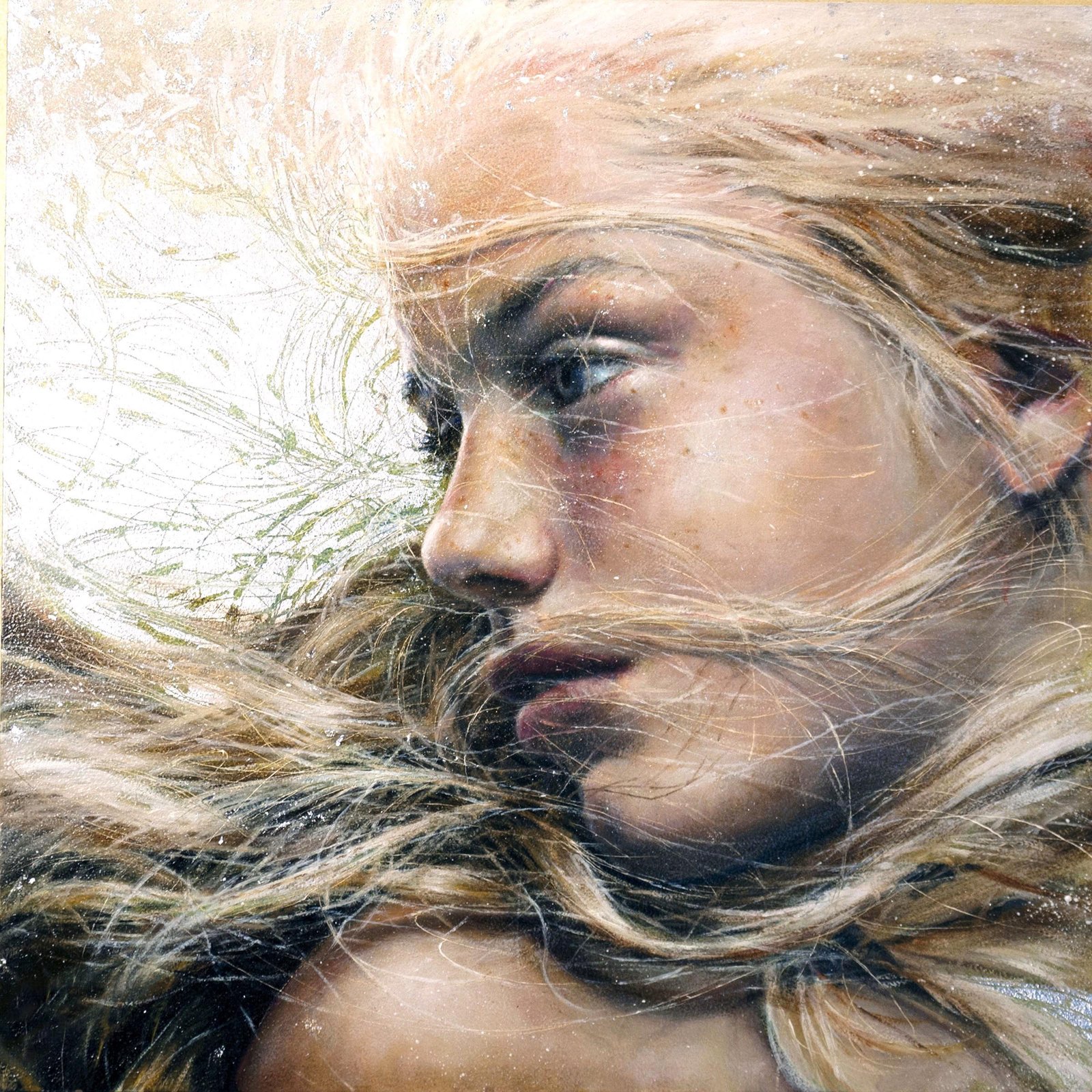
“Helen, thy beauty is to me
Like those Nicean barks of yore,
That gently, o’er a perfumed sea,
The weary, wayworn wanderer bore
To his own native shore.
“On desperate seas long wont to roam,
Thy hyacinth hair, thy classic face,
Thy Naiad airs have brought me home
To the glory that was Greece,
And the grandeur that was Rome.”
Edgar Allan Poe, “To Helen” (1831)
(Painting: “Small Breeze” [2016] by June Stratton)
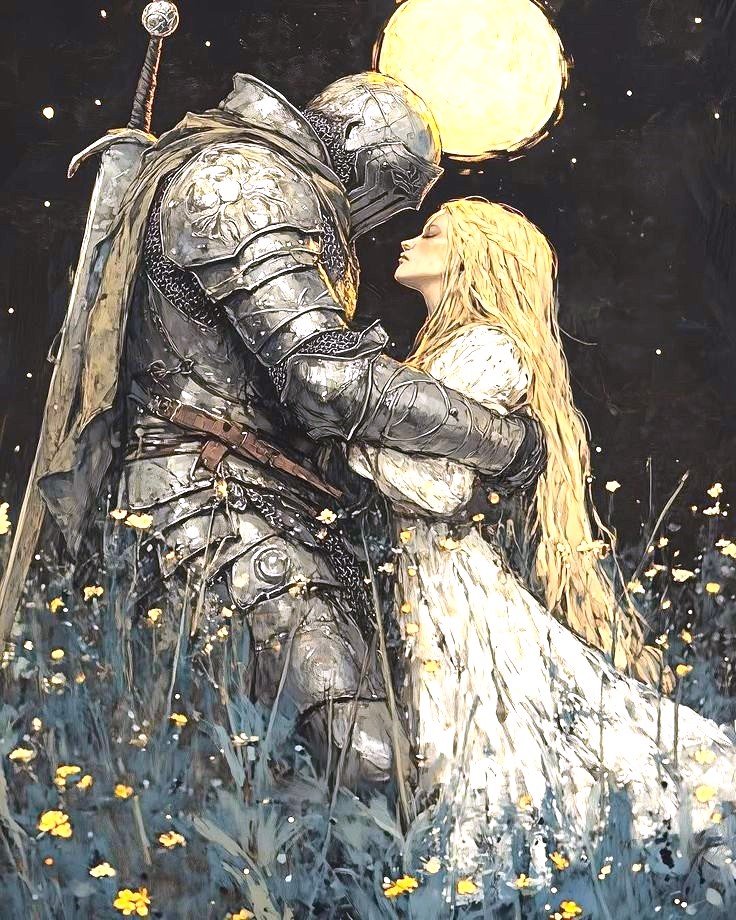
“Chivalry posited more civilized behavior and a gloss of gentility for the high aristocracy. Aristocrats were to dress well; practice good table manners; participate in tournaments, for which the lords were to accouter themselves in special ornamental armor; take care to improve the bloodlines of their women, horses, and falcons; and be patrons of the arts.
“They were to treat each other, even on real battlefields, with at least a modicum of care and reciprocity. Certainly by the early fourteenth century this code of chivalry was well entrenched among the great nobles and some of the wealthier gentry.
“But it was on relationships between the sexes that chivalry had perhaps its most profound social effect. Women of the upper classes must not be raped or physically abused. They could, however, be seduced.”
Norman Cantor, The Last Knight: The Twilight of the Middle Ages and the Birth of the Modern Era (2004)

“There was a Knight, a valiant man,
who, from the time when he had first begun
to venture out, had loved chivalry,
truth and honor, liberality and courtesy.
He had proved his worth in his lord’s wars,
in which he had ridden as far as any man,
both in Christendom and in heathen lands,
and he had always been honored for his valor…
“He was at Alexandria when it was won;
many times he had sat at the head of the table
in Prussia, above knights of all nations;
he had campaigned in Lithuania, and in Russia,
more often than any other Christian man of his rank…
Although he was valiant, he was prudent,
and bore himself as meekly as a maiden;
never in all his life had he been
rude to anyone at all.
He was a true, perfect, gentle knight.”
Geoffrey Chaucer, The Canterbury Tales (c. 1390)
(Painting: “A Knight Rode On” [1915] by John Bauer)

“The two centuries from 1200 to 1400 cover both the high point of medieval civilization and its rapid decline. In material terms, the thirteenth century was the most prosperous Europe had known since the fall of the Roman Empire.
“There was a great increase of wealth and trade, and in particular a rapid growth of towns. Paris became by far the largest city in Europe.
“There was a new urban middle class of merchants and tradesmen. Craft-skills became more sophisticated, and this sophistication was recognized in the increasing elaboration of the guild system, which regulated the training of craftsmen, conditions of labor and methods of manufacture.”
Edward Lucie-Smith, Art & Civilization (1992)
(Painting: “Fair in Ghent in the Middle Ages” [1862] by Félix de Vigne)
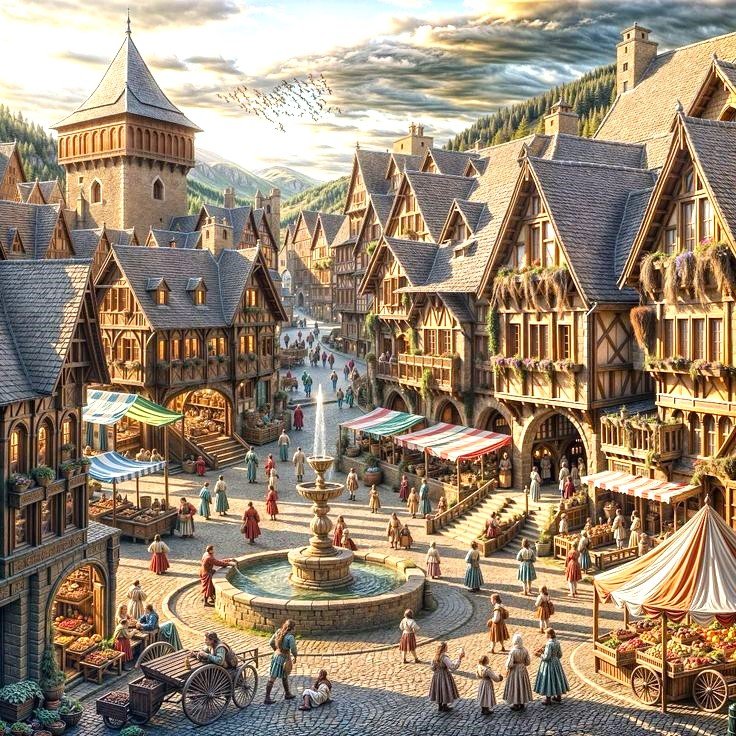
“Until just a few decades ago, the medieval town, with its narrow twisting streets, its jumble of shops, houses, churches and workshops, its marketplaces, walls and gateways, its snickets, alleyways and go-throughs, all apparently unplanned and accidental, was derided as unhealthy, inefficient, illogical and downright primitive.
“Now we see the medieval town as both a historical treasure and the best hope for a life that bridges individual aspiration and communal identity. We have belatedly understood that the human interactions and accidental meetings that did, and still do, take place in these streets, lanes, pubs and shops are a profoundly important element in human existence.
“As Lewis Mumford wrote: ‘We have tardily begun to realise that our hard-earned discoveries in the art of laying out towns… merely recapitulate, in terms of our own social needs, the commonplaces of sound medieval practice.’”
Roger Osborne, Civilization: A New History of the Western World (2006)
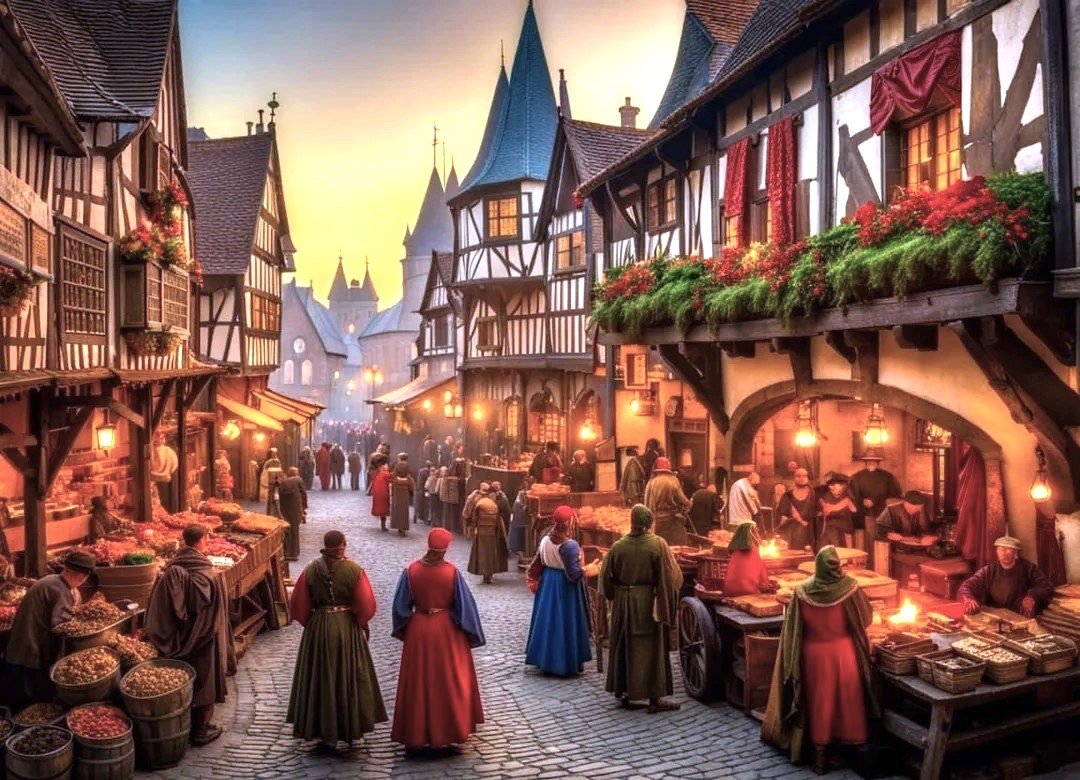
“The chartered medieval town, with its strong element of communal life, self-determination and common identity, was the keystone of European culture…
“The dispersal of economic and cultural life into the countryside that followed the collapse of the Roman empire allowed a localized culture to re-assert itself, free from the controlling and centralizing hand of Rome. But, in a centuries-long process beginning with the rule of Charles Martel in the eighth century, control over the countryside was reimposed in almost every part of western and central Europe.
“In contrast to their rural cousins, citizens of towns were able to live and work independently and to group together to defend their interests. In this sense, medieval towns were a continuation of the independent communities that had existed in western Europe since prehistory.”
Roger Osborne, Civilization: A New History of the Western World (2006)
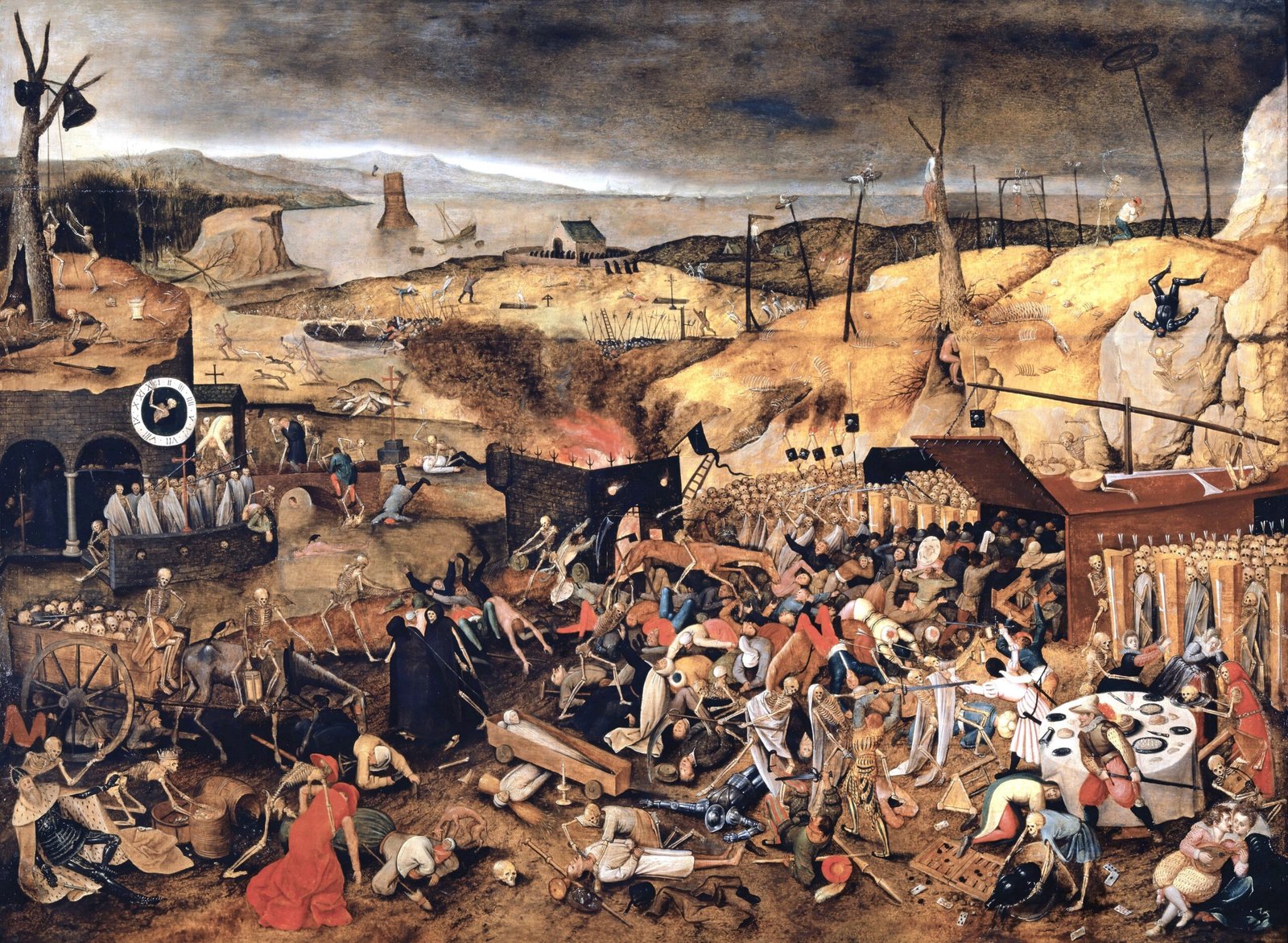
“The fourteenth century was marked by a series of catastrophes, chief among them the Black Death which ravaged Europe from 1347 onwards, in some places reducing the population by more than half and causing economic and social chaos. The disease became endemic, and constantly checked attempts at recovery.
“In 1379 religious unity was shattered by the Great Schism, which left Europe with rival popes for nearly forty years. In 1392 the feeble Charles VI of France lost his reason, and the most powerful kingdom in Europe, already badly damaged by the Hundred Years War between France and England…seemed likely to disintegrate completely.”
Edward Lucie-Smith, Art & Civilization (1992)
(Painting: “The Triumph of Death” [1608] by Pieter Bruegel the Younger)
Nature
eusylvations
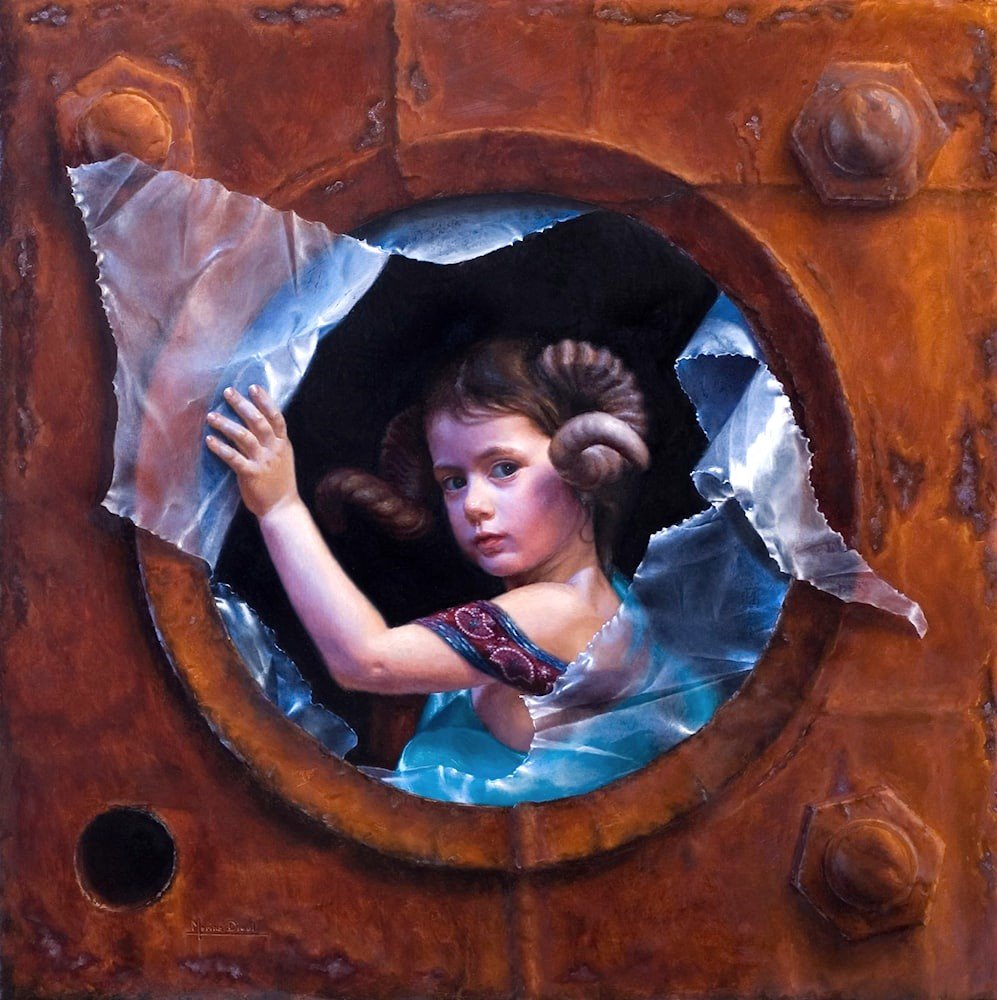
“The popular press often conjures up a vision of the future dominated by advanced technology, all running smoothly. I personally find this an unappealing, dehumanized vision, void of spontaneity and freedom. A high-tech society comes with costs we are all becoming painfully aware of. A cost to the integrity of nature. A cost to the integrity of our spiritual life.
“On the other hand, a growing number of people have a vision of a natural, re-enchanted world, dominated by wild nature rather than by technological artifacts.
“And when we talk about wildness, we should consider not only the wildness of nature and the wonderful blossoming and efflorescing of life that goes on around us, but also the wildness…in our own lives, the independence, freedom, and deeper emotional participation in life that our overwrought and regimented culture can’t tolerate.”
Christopher Manes in Listening to the Land (1995)
(Painting: “Bacchante” [2011] by Marina Dieul)
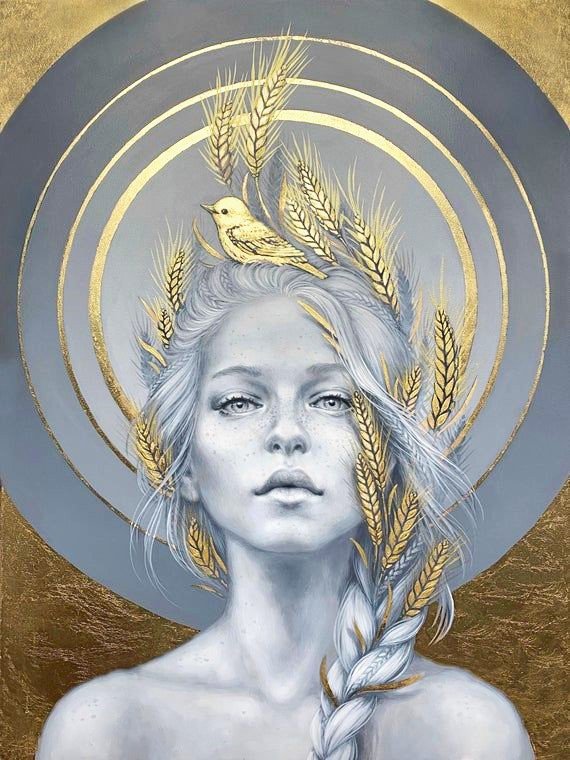
“The proliferation of mind-numbing sameness is an alarming trend. As the march of globalization continues, it manifests across the continent in places that look and feel alike…
“There is little sense of the historical background and unique histories of the places where we live, and even less real understanding of the ecological heritage and natural landscapes upon which we rely…
“The growing uniformity and anonymity of contemporary settlement patterns begets an attitude that they are disposable and interchangeable. One is just like another…
“Perhaps now more than ever, in the face of global economic and social forces, the march of sameness, and the reckless treatment of landscapes and environment, we need the solace and support of places. Now more than ever we need to revisit what it means to be native to where we live, to recommit to place.”
Timothy Beatley, Native to Nowhere: Sustaining Home and Community in a Global Age (2004)
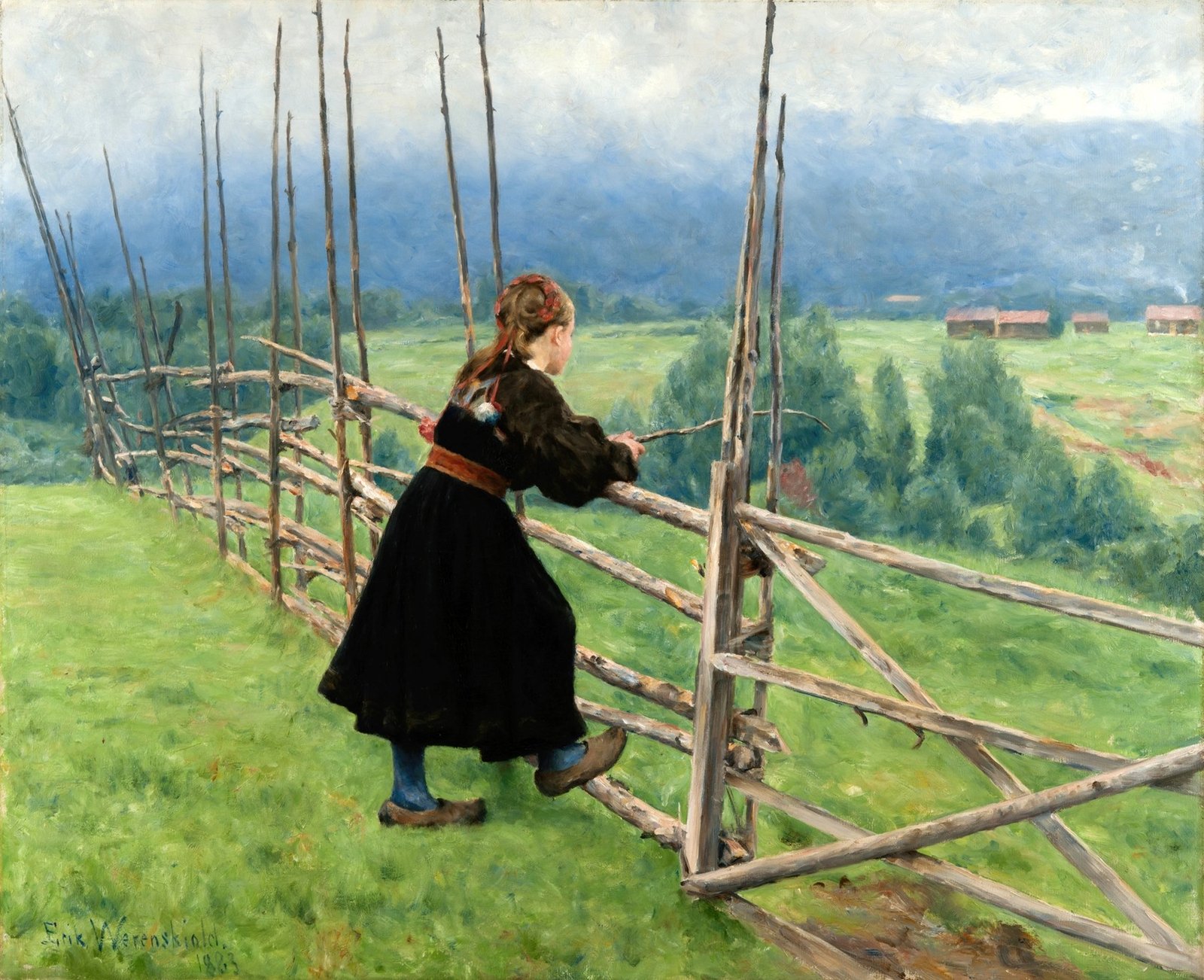
“As we walk our own ground, on foot or in mind, we need to be able to recite stories about hills and trees and animals, stories that root us in this place and that keep it alive. The sounds we make, the patterns we draw, the plots we trace may be as native to the land as deer trails or bird songs.
“The more fully we belong to our place, the more likely that our place will survive without damage. We cannot create myth from scratch, but we can recover or fashion stories that will help us to see where we are, how others have lived here, how we ourselves should live.”
Scott Russell Sanders, Staying Put: Making a Home in a Restless World (1993)
(Painting: “On the Plain” [1883] by Erik Werenskiold)
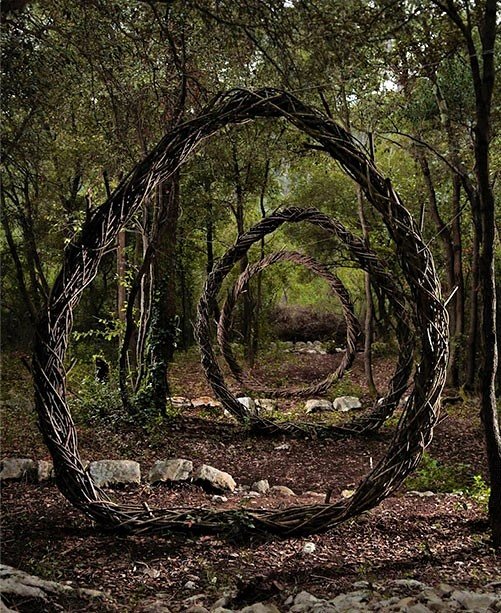
“I only went out for a walk, and finally concluded to stay out till sundown, for going out, I found, was really going in.”
John Muir, John of the Mountains
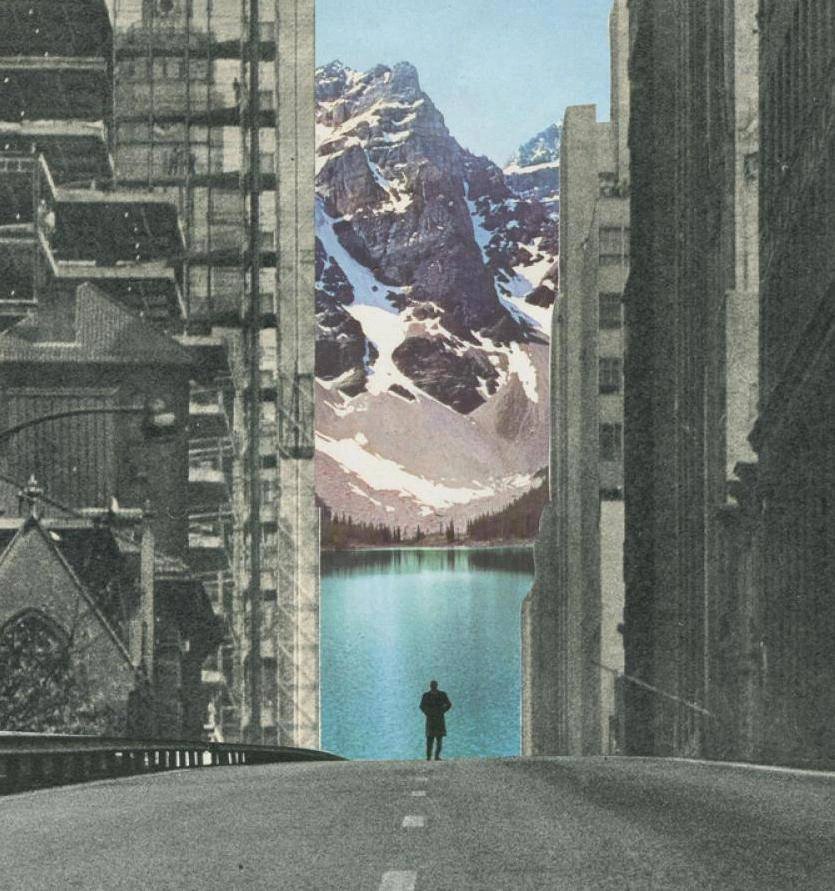
“The driving cultural force of that form of life we call ‘modern’ is the idea, the hope and desire, that we can make the world controllable. Yet it is only in encountering the uncontrollable that we really experience the world. Only then do we feel touched, moved, alive.
“A world that is fully known, in which everything has been planned and mastered, would be a dead world. This is no metaphysical insight, but an everyday experience. Our lives unfold as the interplay between what we can control and that which remains outside our control, yet ‘concerns us’ in some way. Life happens, as it were, on the borderline.”
Hartmut Rosa, The Uncontrollability of the World
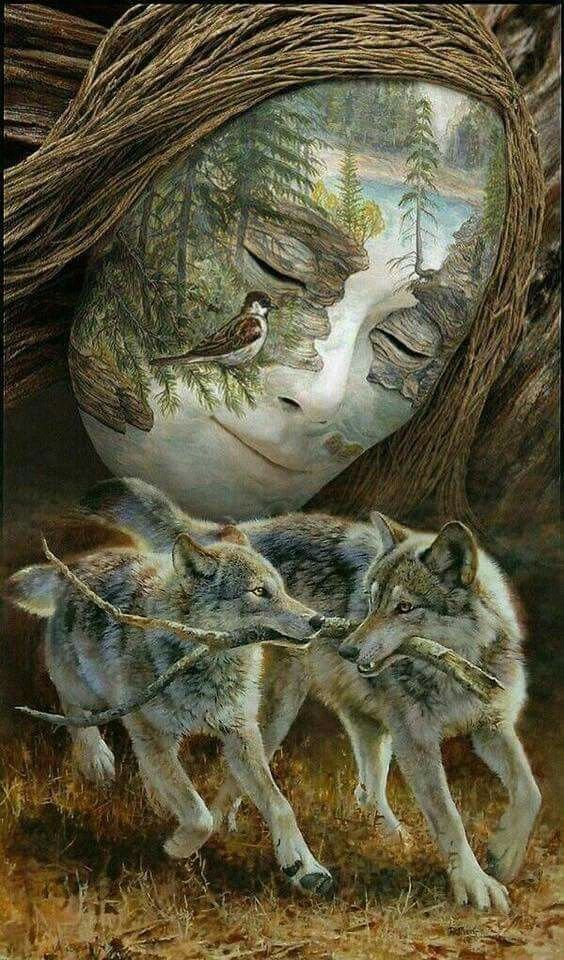
“To sever the connection between [ecologically attuned] societies and the species around which their cultures are constellated would be to destroy the identity of those cultures. Typically the dependence of such societies on their local ecosystem is mutual—their interaction with their environment contributes to the viability of the ecosystem. The role of such cultures, with their pointedly value-laden belief systems, is precisely to generate such interaction—to channel social action in ecologically sustainable and beneficial directions. Despite its abstractness, then, a culture may act as a naturally selected instrument of Nature, or participant in the local ecosystem.
“The society which practises such a culture, tied to a particular region and a particular set of ecological relations, may thus qualify as a self-maintaining system—since it successfully perpetuates its own social structures by means of its belief-system—and thus as a holistic subsystem of the local ecology.”
Freya Mathews, The Ecological Self
“[The environmentalist] David Brower…invites his listeners to consider the six days of Genesis as a figure of speech for what has in fact been four billion years. On this scale, a day equals something like six hundred and sixty-six million years, and thus ‘all day Monday and until Tuesday noon, creation was busy getting the earth going.’ Life began Tuesday noon, and ‘the beautiful, organic wholeness of it’ developed over the next four days. ‘At 4 p.m. Saturday, the big reptiles came on. Five hours later, when the redwoods appeared, there were no more big reptiles. At three minutes before midnight, man appeared. At one-fourth of a second before midnight, Christ arrived. At one-fortieth of a second before midnight, the Industrial Revolution began. We are surrounded with people who think that what we have been doing for that one-fortieth of a second can go on indefinitely. They are considered normal, but they are stark, raving mad.‘”
John McPhee, Encounters with the Archdruid (1971)
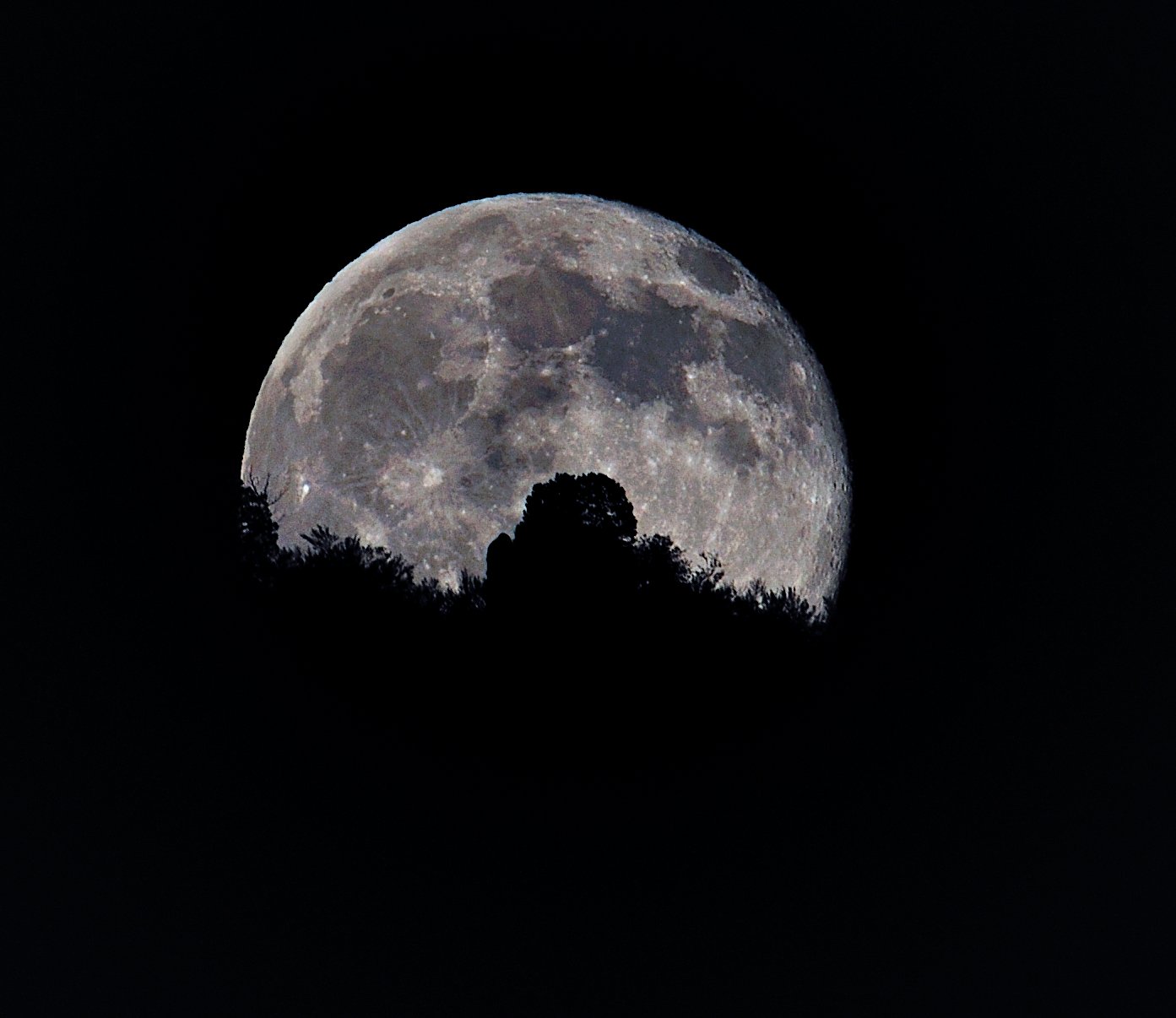
“We have taken the old quest to break free of nature and the human condition very nearly as far as our considerable technological powers would permit, and in the process created landscapes — spiritual, cultural and in some places physical as well — very nearly as bleak as the Moon’s silent and airless wastes. Whether that was a good idea or a bad one, a choice or a necessity, a triumph or a terrible failure, is ultimately less relevant than the fact that the effort has run its course.
“A different quest calls us now, murmuring through the emerging religious sensibility of our age, rising stark before us in the cold gray dawn of a world after progress: to return to the living Earth and come to know it again as the whole of which each of us is a part. After all our wanderings, it is time to come home.”
John Michael Greer, After Progress
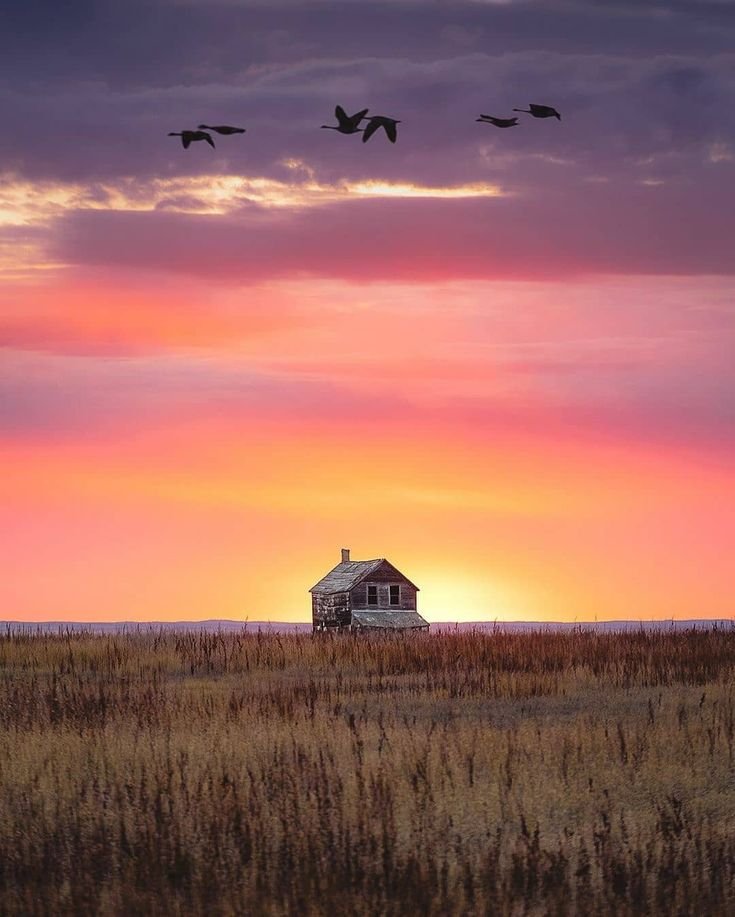
“All around me is that odor that I have not smelled since I was eleven, but have never forgotten… I pull myself up the bank by a gray-leafed bush, and I have it. The tantalizing and ambiguous and wholly native smell is no more than the shrub we called wolf willow…
“It is wolf willow, and not the town or anyone in it, that brings me home. For a few minutes, with a handful of leaves to my nose, I look across at the clay bank and the hills beyond…and the present and all the years between are shed… The perspective is what it used to be, the dimensions are restored, the senses are as clear as if they had not been battered with sensation for forty alien years…
“A contact has been made, a mystery touched. For the moment, reality is made exactly equivalent with memory, and a hunger is satisfied. The sensuous little savage that I once was is still intact inside me.”
Wallace Stegner, Wolf Willow: A History, a Story, and a Memory of the Last Plains Frontier (1962)
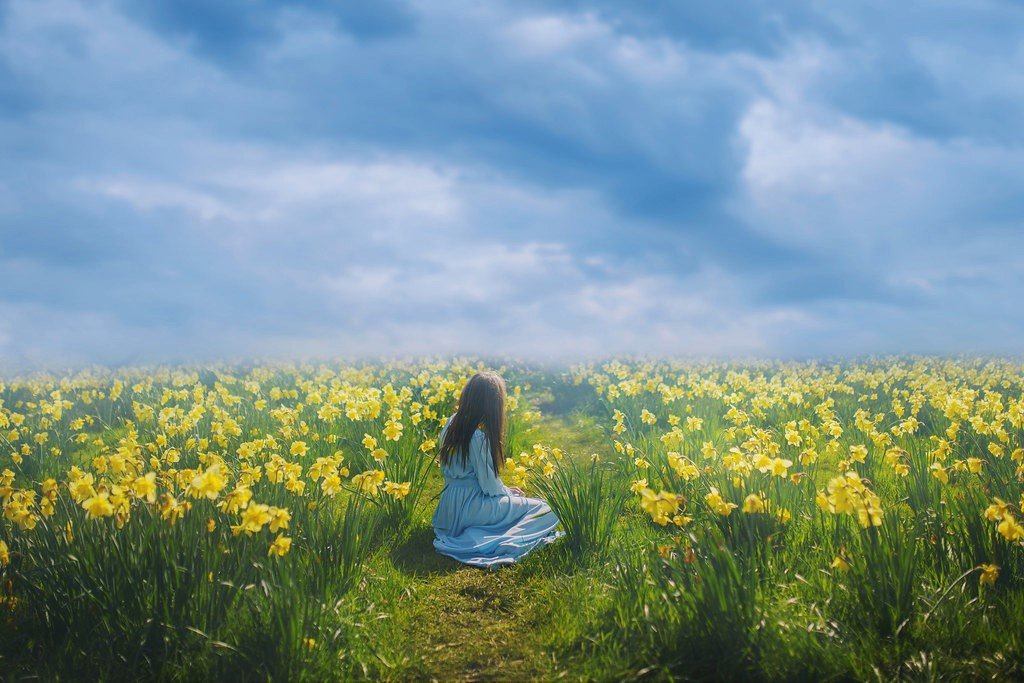
“I wandered lonely as a cloud
That floats on high o’er vales and hills,
When all at once I saw a crowd,
A host, of golden daffodils;
Beside the lake, beneath the trees,
Fluttering and dancing in the breeze.
“Continuous as the stars that shine
And twinkle on the milky way,
They stretched in never-ending line
Along the margin of a bay:
Ten thousand saw I at a glance,
Tossing their heads in sprightly dance.
“The waves beside them danced; but they
Out-did the sparkling waves in glee:
A poet could not but be gay,
In such a jocund company:
I gazed—and gazed—but little thought
What wealth the show to me had brought:
“For oft, when on my couch I lie
In vacant or in pensive mood,
They flash upon that inward eye
Which is the bliss of solitude;
And then my heart with pleasure fills,
And dances with the daffodils.”
William Wordsworth (1770-1850)
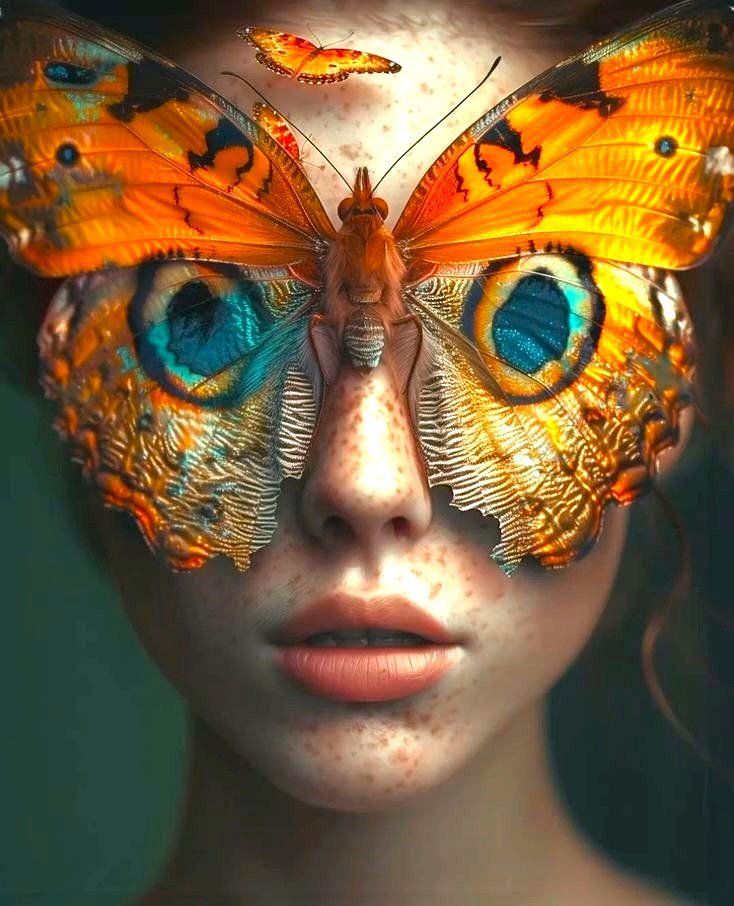
“It has long been convenient for social scientists to assume that human evolution ground to a halt in the distant past… Evolutionary psychologists teach that the human mind is adapted to the conditions that prevailed at the end of the last ice age, some 10,000 years ago. Historians, economists, anthropologists and sociologists assume there has been no change in innate human behavior during the historical period…
“The recent discoveries that human evolution has been recent, copious and regional severely undercut the social scientists’ official view of the world because they establish that genetics may have played a possibly substantial role alongside culture in shaping the differences between human populations.
“Why then do many researchers still cling to the notion that culture alone is the only possible explanation for the differences between human societies?”
Nicholas Wade, A Troublesome Inheritance (2014)
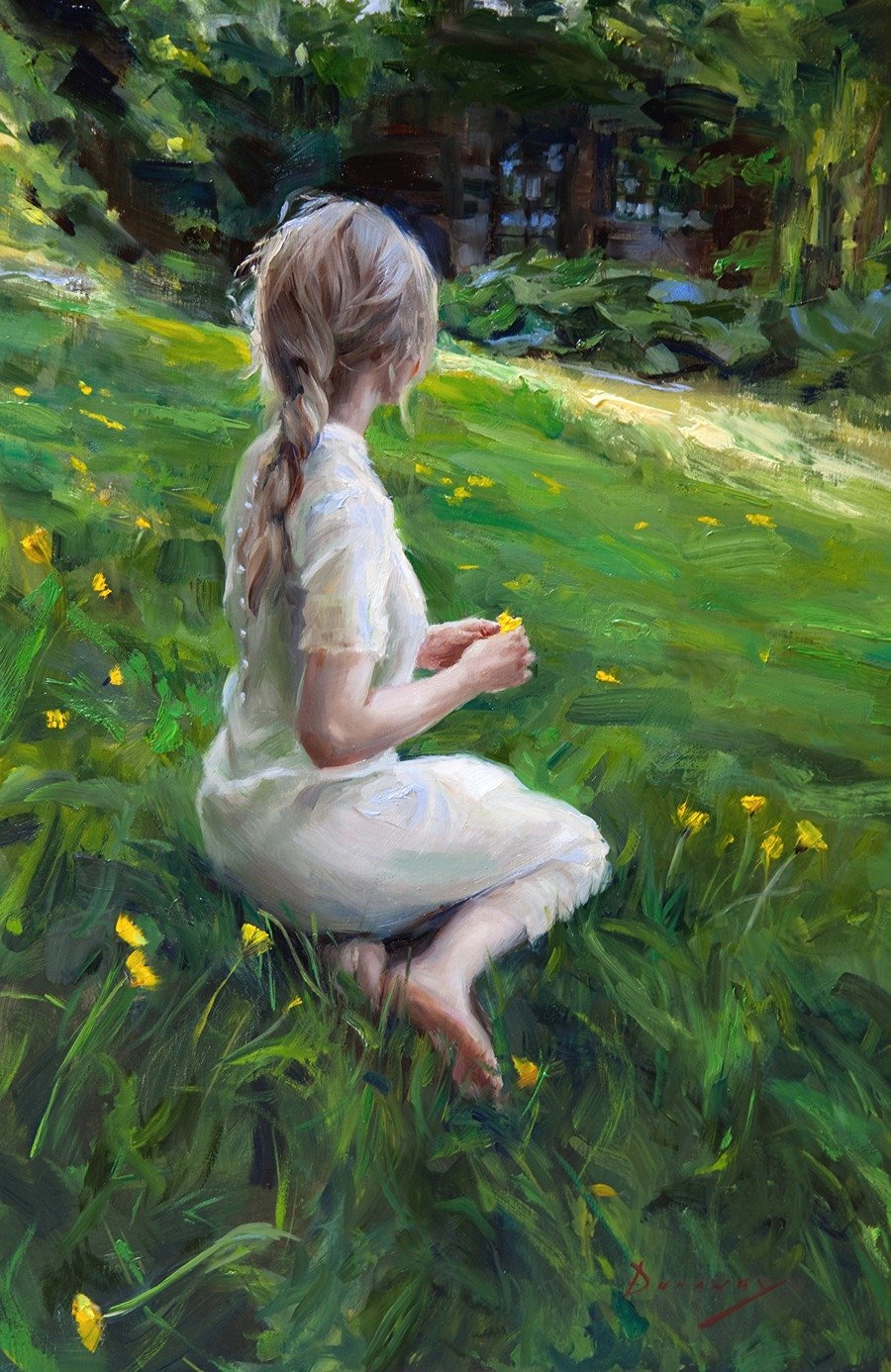
“What is the value of preserving and strengthening this sense of awe and wonder, this recognition of something beyond the boundaries of human existence? Is the exploration of the natural world just a pleasant way to pass the golden hours of childhood or is there something deeper?
“I am sure there is something much deeper, something lasting and significant. Those who dwell…among the beauties and mysteries of the earth are never alone or weary of life. Whatever the vexations or concerns of their personal lives, their thoughts can find paths that lead to inner contentment and to renewed excitement in living…There is symbolic as well as actual beauty in the migration of the birds, the ebb and flow of the tides, the folded bud ready for the spring. There is something infinitely healing in the repeated refrains of nature—the assurance that dawn comes after night, and spring after the winter.”
Rachel Carson, The Sense of Wonder
“For most of the last century, the received wisdom in the social sciences has been that human evolution stopped…before modern humans expanded out of Africa some 50,000 years ago. This implies that human minds must be the same everywhere—the ‘psychic unity of mankind.’ It would certainly make life simpler if it were true.
“Unfortunately, a recent halt to evolution also implies that human bodies must be the same everywhere, which is obviously false. Clearly, received wisdom is wrong…
“Human evolution has [in fact] accelerated in the past 10,000 years, rather than slowing or stopping, and is now happening about 100 times faster than its long-term average over the 6 million years of our existence. The pace has been so rapid that humans have changed significantly in body and mind over recorded history… This is a radical idea and hard to believe…[but] the evidence is there.”
Gregory Cochran and Henry Harpending, The 10,000 Year Explosion (2009)
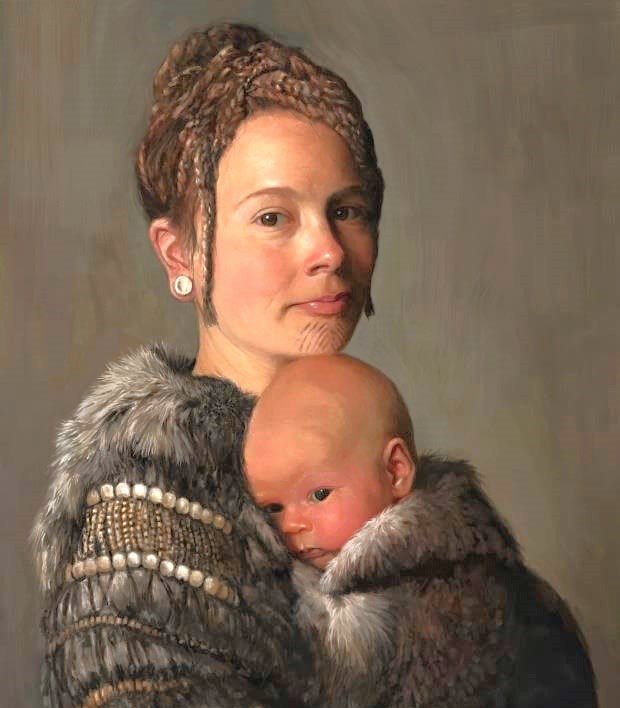
(Painting: Portrait of an Ice-Age mother and child by the Finnish artist, Tom Björklund)

“People are like plants, it seems, blossoming or fading with the weather… Brighter days lead to brighter moods, hotter days lead to hotter tempers, and clearer days may foster clearer thinking…
“Environmental influences…act through our brains, but they are not governed by our brains… Our brains absorb and reflect their surroundings, channeling external influences seamlessly into changing emotional states and behaviors… [which] can have deep consequences in our lives.
“We pursue different goals when we are aroused, equanimous, ebullient, or depressed. Others then see us differently, affecting our careers and our relationships, and perhaps even influencing the fate of our genes. On an instantaneous basis, our emotional state helps determine how we react to specific contexts or stimuli, setting the tone for momentous decisions made in the blink of an eye—like whether to accept a marriage proposal, take a job offer, or jump off a bridge.”
Alan Jasanoff, The Biological Mind (2018)
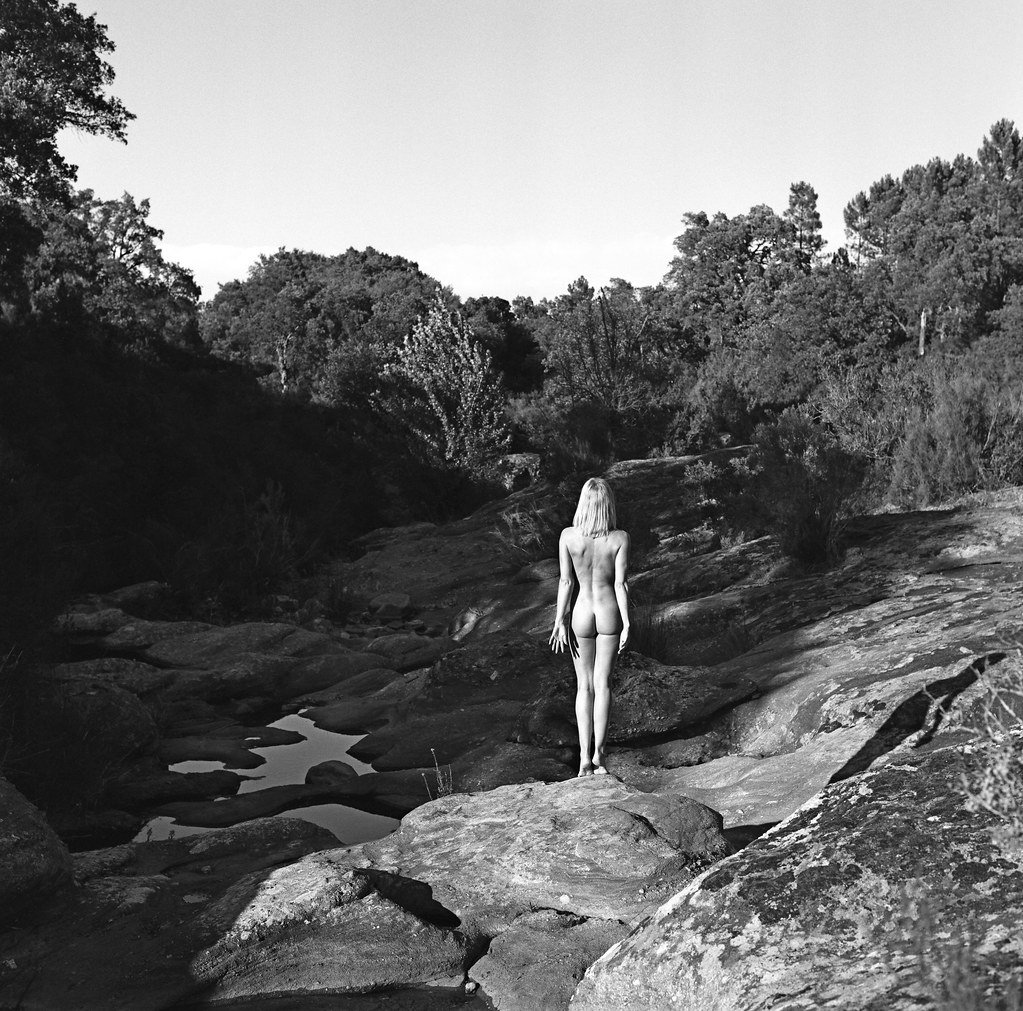
“Recollecting that we once lived in places is part of our contemporary self-rediscovery. It grounds what it means to be ‘human’ (etymologically something like ‘earthling’). I have a friend who feels sometimes that the world is hostile to human life… But how could we be were it not for this planet that provided our very shape?
“Two conditions—gravity and a livable temperature-range between freezing and boiling—have given us fluids and flesh. The trees we climb and the ground we walk on have given us five fingers and toes. The ‘place’ (from the root, plat, broad, spreading, flat) gave us far-seeing eyes, the streams and breezes gave us versatile tongues and whorly ears. The land gave us a stride, and the lake a dive.
“The amazement gave us our kind of mind. We should be thankful for that, and take nature’s stricter lessons with some grace.”
Gary Snyder, The Practice of the Wild (1990)
“The separation we have made between human creativity (as expressed in culture) and natural creativity (as expressed in evolution) is mistaken. The two are more deeply related than previously recognized. Humans are [clearly] embedded in and dependent on nature…The recognition that culture is embedded in nature is not so evident…
“All life, from bacteria to humans, involves a creative process grounded in natural languages…The coherent form of an organism emerges during its development as the embodied meaning of the historical genetic text…
“The organism itself is the emergent meaning of the developmental process, an embodied form sensitive to both historical constraint within the genome and to environmental context…Contemporary studies have revealed that genes are not independent units of information…but elements of complex networks acting together in a morphogenetic process that produces coherent form and function.”
Brian Goodwin (2010)
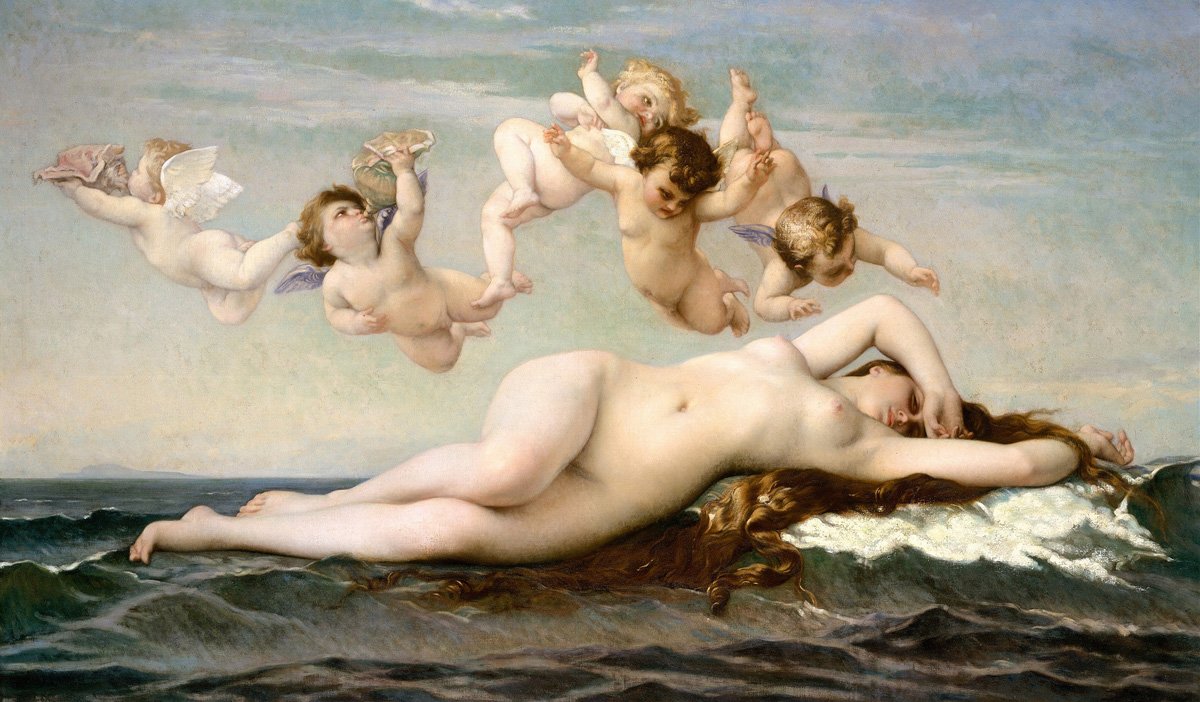
(Painting: “The Birth of Venus” [1875] by Alexandre Cabanel)
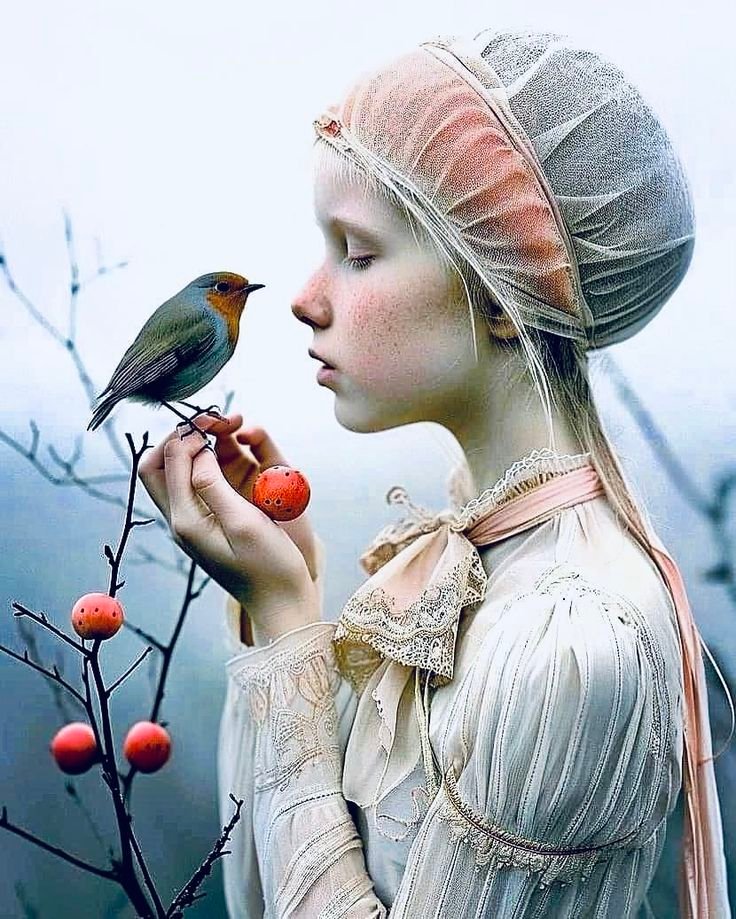
“Sexual selection…is really a matter of the evolution of aesthetics in nature…
“Biologists are afraid of sexual selection because it always claims a certain amount of arbitrariness. If we demonstrate that it does work, what are we able to prove or predict about nature? Only that nature works in mysterious and beautiful ways. The world is less machine and more art…
“What do we gain by calling these things art? ‘You gain because you’ve picked a definition of art that isn’t centered on people.’ If birds have intention, then the natural world has meaning. If birds have culture, they create artifacts, and we have more levels of understanding to share with them. We may treat them with more respect; we might be much more likely to want to get to know them better.”
David Rothenberg, Survival of the Beautiful: Art, Science, and Evolution (2011)

“Theoretical models suggest that [with regard to reproductive fitness] the optimal balance is third-cousin matings. And indeed, numerous species prefer to mate with between a first and a third cousin. This occurs in insects, lizards, and fish, where, on top of that, cousin-mating pairs invest more in the rearing of their offspring than do unrelated parents. A preference for cousin matings [also] occurs in quail, frigate birds, and zebra finches…
“And what about humans? Something similar. Women prefer the smell of moderately related over unrelated men. And in a study of 160 years of data concerning every couple in Iceland (which is a mecca for human geneticists, given its genetic and socioeconomic homogeneity), the highest reproductive success arose from third- and fourth-cousin marriages.”
Robert Sapolsky, Behave: the Biology of Humans at Our Best and Worst
“City buildings are for people. In spite of roaches and rats, urban houses and pavements have no little transition to nature, no intermediate ground shared with the external world, except for gardens.
“Like the cathedral, the garden or park represents the point at which the interpretation of experience in nature is transitional between mythical and rational, between an internal, personal sense of identity and the universe.
“The garden is composed of real nonhuman organisms with their own independent existences, but which are perceived metaphorically and reassuringly. Unlike the buildings which turn the individual in on himself, the garden is the landing from which outer space is confronted.”
Paul Shepard, Man in the Landscape (1967)
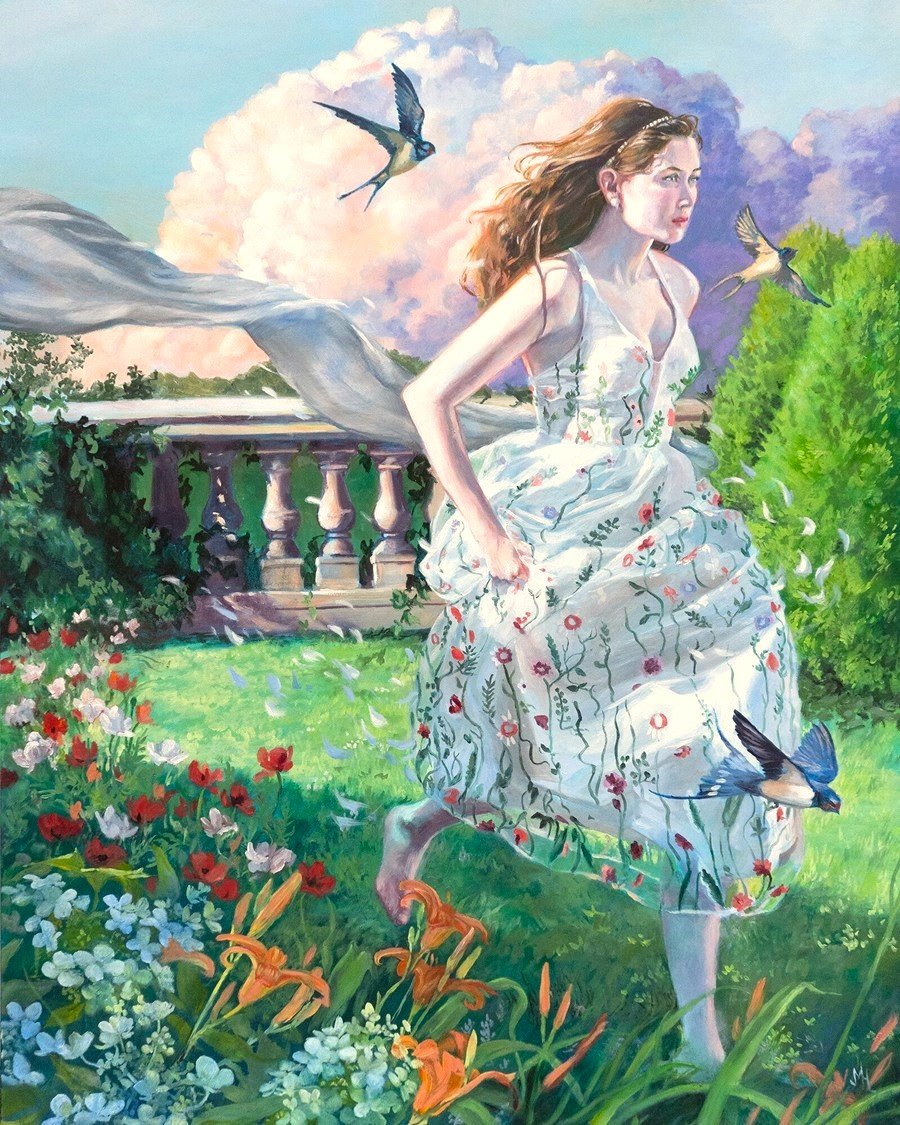
(Painting: “Return to the Garden” by Jennifer Hrabota Lesser)
“Nature-deficit disorder describes the human costs of alienation from nature, among them: diminished use of the senses, attention difficulties, and higher rates of physical and emotional illnesses. The disorder can be detected in individuals, families, and communities. Nature deficit can even change human behavior in cities, which could ultimately affect their design, since long-standing studies show a relationship between the absence, or inaccessibility, of parks and open space with high crime rates, depression, and other urban maladies…
“Nature-deficit disorder can be recognized and reversed, individually and culturally… [for] ‘deficit’ is only one side of the coin. The other is natural abundance. By weighing the consequences of the disorder, we also can become more aware of how blessed our children can be—biologically, cognitively, and spiritually— through positive physical connection to nature.”
Richard Louv, Last Child in the Woods
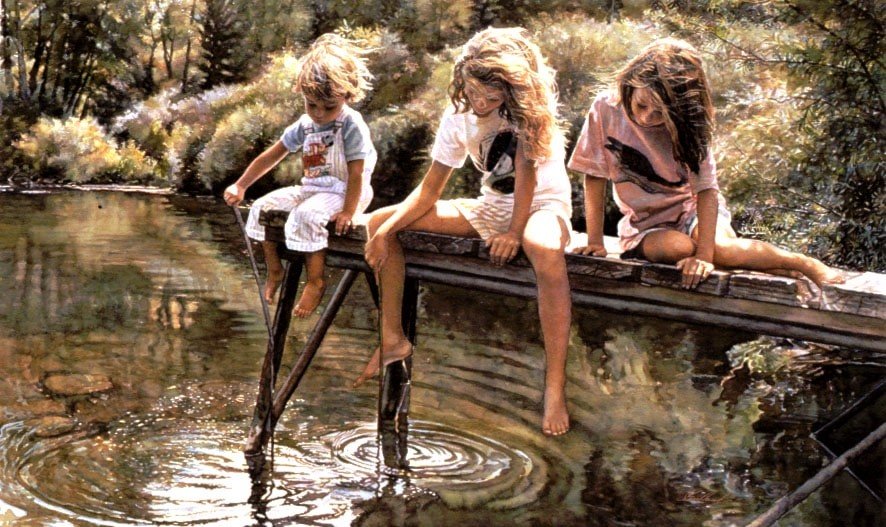
(Painting: “A World for Our Children” by Steve Hanks)
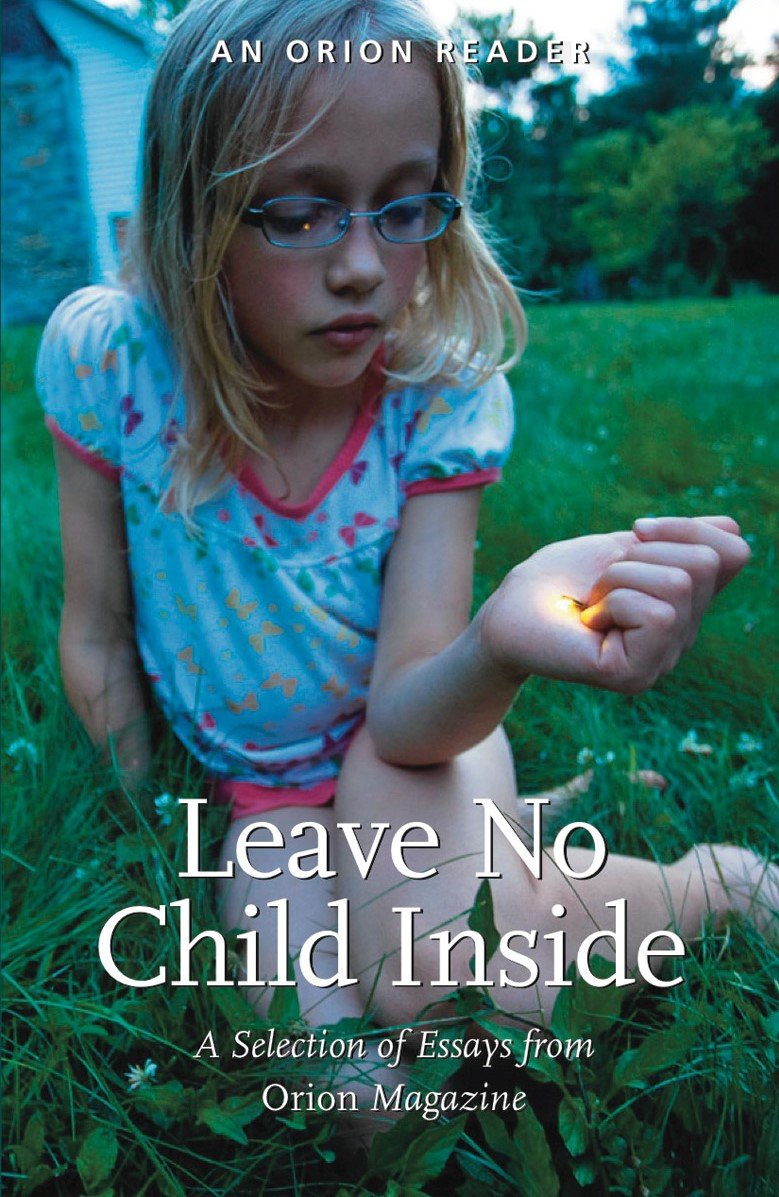
“I…discovered that a ‘bioregional’ curriculum works well [with students]. My understanding of this term is informed by the writing of Gary Snyder, especially in The Practice of the Wild.
“He conveys the rewards of emphasizing a particular landscape as one tries to draw connections between human culture and natural history. For us, this meant looking for ways to interweave the indigenous, scientific, and literary lineages of a place, and grounding them all within the shared landscape of our own experience and writing.”
John Elder, “In Pursuit of a Bioregional Curriculum” (Leave No Child Inside)
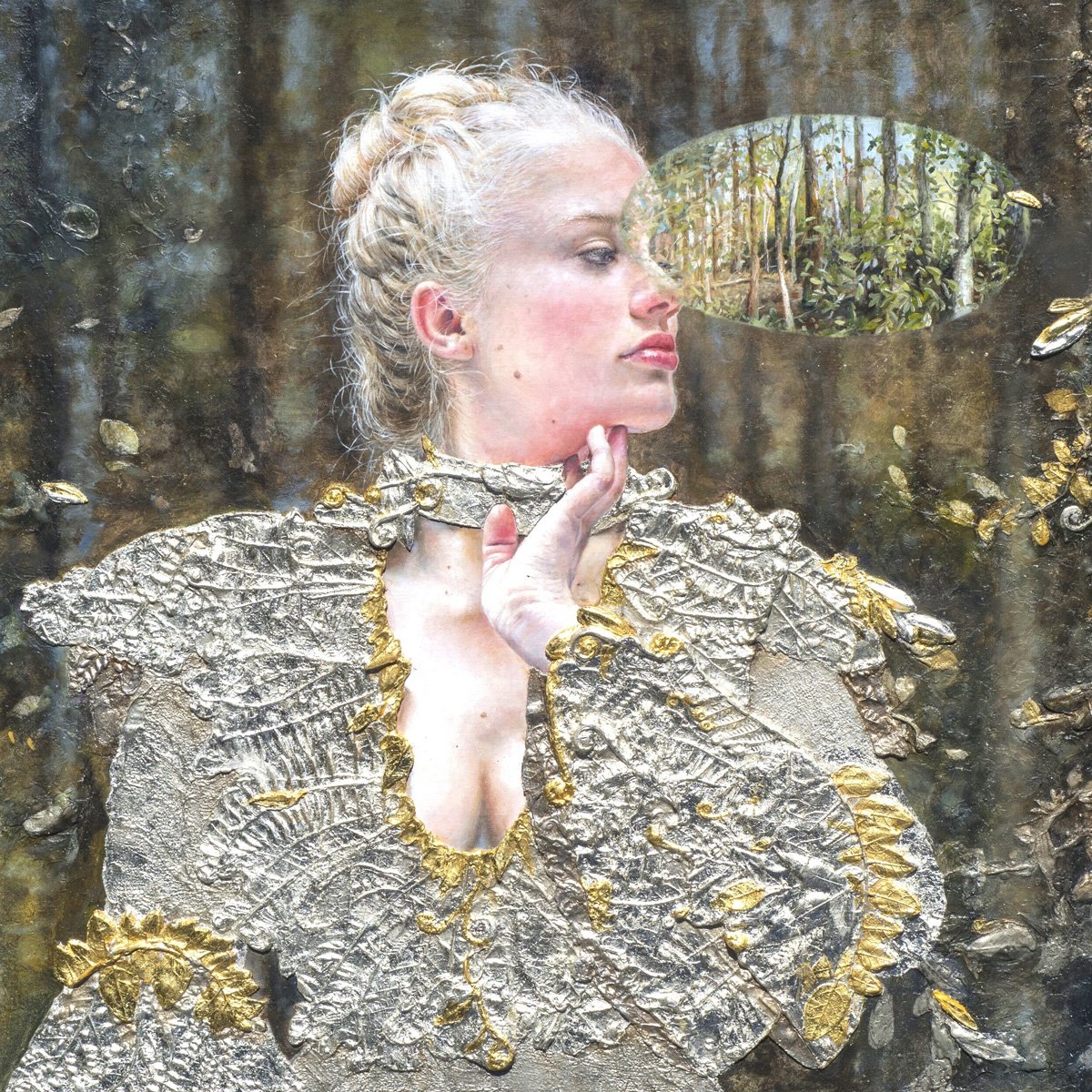
“A bioregion is literally and etymologically a ‘life-place’… Bioregions can be variously defined by the geography of watersheds, similar plant and animal ecosystems, and related, identifiable landforms…and by the unique human cultures that grow from natural limits and potentials of the region. Most importantly, the bioregion is emerging as the most logical locus and scale for a sustainable, regenerative community to take root and to take place.
“In reaction to a globally shallow, consumer-driven, technologically saturated world where humans are alienated from nature and offered simulations of it instead, a bioregion offers an appropriate venue for the natural predisposition toward graceful human life on earth…
“The bioregional approach suggests a means of living by deep understanding of, respect for, and, ultimately, care of a naturally bounded region or territory.”
Robert L. Thayer, Jr., LifePlace: Bioregional Thought and Practice (2003)
(Painting: “Flourish” by June Stratton)
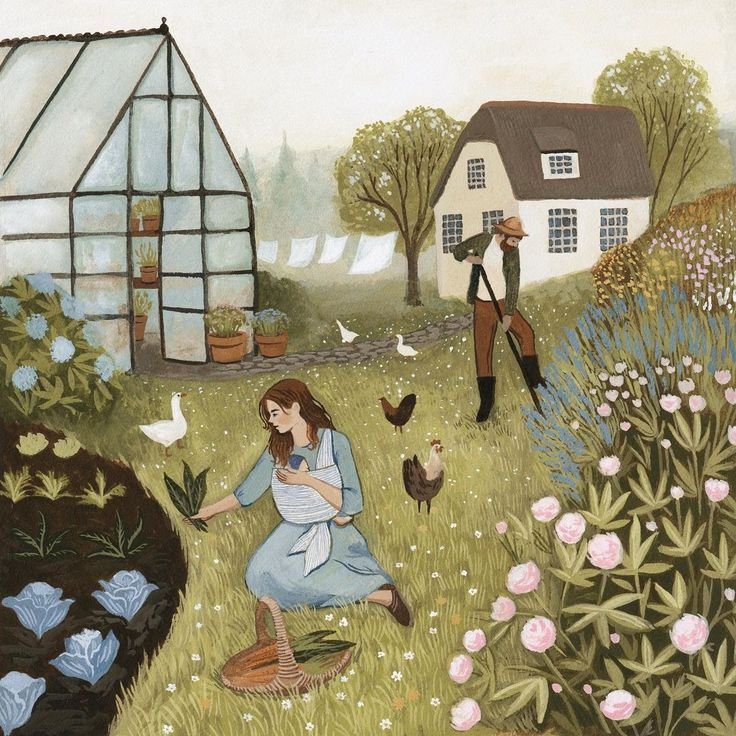
“While homesteaders seek to reverse the standard equation of the human-nature relationship, they also seek to remake the self…Homesteaders construct the self within a self-imposed set of limits, a set of limits that keep them tied to nature, tied to the ‘natural’ particulars of place and time, and tied to a specific local culture, whose most modern aspects are resisted.
Like religious practices in which the devotee voluntarily commits to certain dietary rules, patterns of prayer, devotional practices, and communal rituals, homesteading practices are self-chosen habits of constraint that can keep human hubris in check. There is tremendous ecological and spiritual potential in such a way of living.”
Rebecca Kneale Gould, At Home in Nature
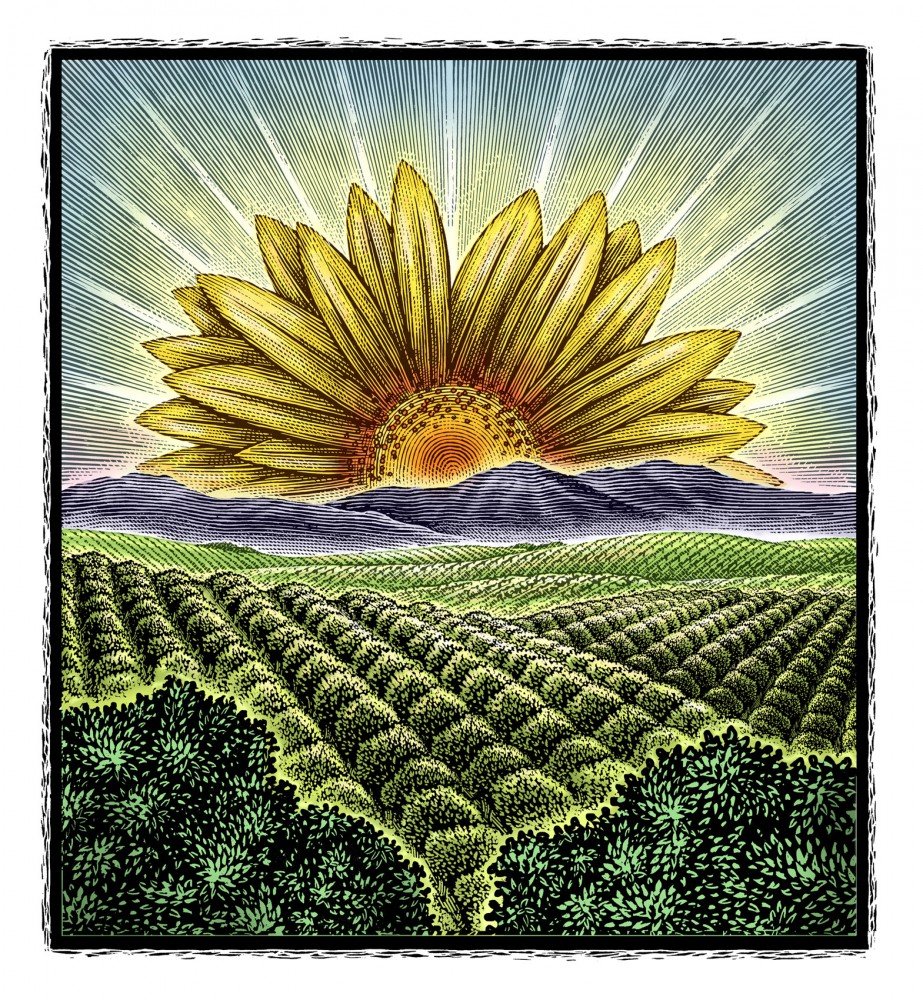
“When an ecosystem has been damaged—say, from logging, overgrazing, or chemical-dependent mono-crop agriculture—and then you leave it alone, invasive species typically show up and take over. If you then attempt to simply suppress or eliminate the invasives—whether through pesticide application or heroic weeding—you’re not strengthening the ecosystem but rather merely suppressing a symptom called “weeds.”
“In contrast, if you tend the health of the ecosystem—for example, by improving soil quality or planting native species—the invasives find a less suitable landing site and the ecosystem is more quickly restored to its natural and mature wholeness.”
Bill Plotkin, Wild Mind: A Field Guide to the Human Psyche
“The prospect of going off-grid, for most people, rightly feels like taking a leap into the dark. Most of us have become accustomed to flicking on a switch and…stretching daylight deep into night-time… [We] are spoiled with the historically unique privilege of being able to microwave our food in seconds, tumble-dry our machine-washed clothes in minutes, and power up dozens of digital gadgets all day long. Our homes can be warmed at the twisting of a thermostat and…our bodily business can be flushed away in an instant.
“So, how can we, and why would we, cut off these lifelines?
“Some might say because our lives may have gotten just a tad too boring, too disconnected from the natural world, too comfortable, too lazy, too irresponsible, too crowded, too expensive, too confined, too saturated, too superficial, too fast, too incompetent, and too dependent.”
Phillip Vannini and Jonathan Taggart, Off the Grid: Re-Assembling Domestic Life (2015)
Companionship
eusylvations
“The end of the twentieth century is marked both by the end of modern times and the entering into a postmodernity, which is characterized by a set of new themes: the emergence of ecological concerns, the search for ‘quality of life,’ the role of ‘tribes’ and ‘networks,’ renewed appreciation of communities, the politics of group recognition [and] the multiplication of conflicts both within and beyond the state…
“Proponents of the dominant ideology, having nothing more to say and seeing the growing malaise of contemporary societies, are reduced to an incantatory discourse—constantly echoed by the media—in a world that is in danger of implosion.
“‘Implosion,’ not ‘explosion’: the overcoming of modernity will not take the form of a ‘big event’ (a secular ‘second coming’). It will manifest, rather, through the appearance of thousands of auroras…through the emergence of sovereign spaces freed from the domination of modernity.”
Alain de Benoist and Charles Champetier, Manifesto for a European Renaissance (1999)
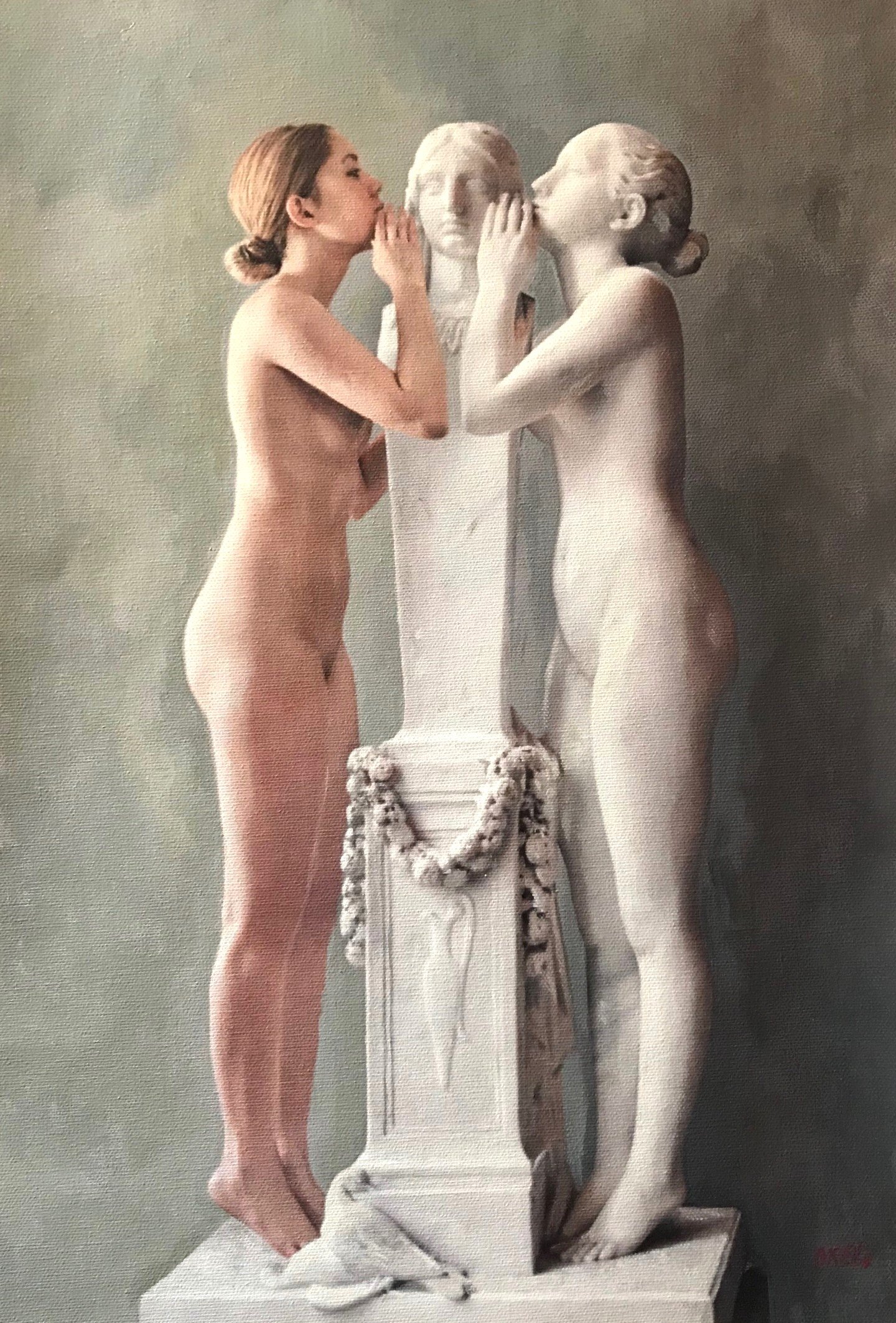
“From a broad evolutionary standpoint, human culture as a whole is not opposed to human biology, but is part of it. From this standpoint, the practices that constitute human cultures differ only in degree of complexity, not in kind, from the web-spinning habits of spiders…
“Distinctions can be drawn between aspects of human life that are genetically transmitted across generations and aspects of human life that are transmitted in other ways, just as we can draw a biological distinction between genotype and phenotype…
“Thus, culture is a biological phenomenon in the very broadest sense of the word ‘biology,’ despite not being a genetically determined or genetically transmitted phenomenon.
“Consequently, the traditional arguments that there is no human nature, because humans are what they are due to cultural socialization rather than biology, rest upon a false dichotomy.”
David Buller, Adapting Minds: Evolutionary Psychology and the Persistent Quest for Human Nature (2005)
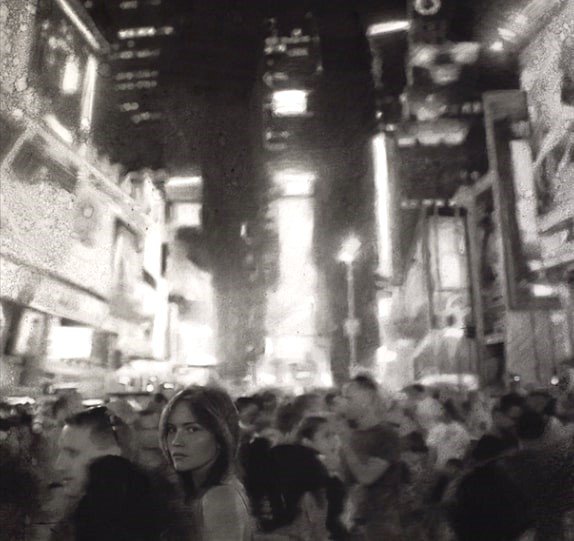
“People go to church less and less every year. We belong to fewer organizations than our predecessors did. We know our neighbors less than we did a generation or two ago. We vote less than we did a generation or two ago. Men have fewer jobs than they did a generation or two ago. Men are in the labor force less than they were a generation or two ago. Americans marry less than we did in 1960. We have fewer and fewer children every decade.
“It all adds up to this: Americans are less attached to society, their neighbors, their communities, other humans. Lacking the environment of a strong community, more Americans lack the scaffolding to climb above their starting point. More Americans lack the support structure that they would need to build a family. More Americans lack role models, and they lack roles.
“They are displaced persons living in their home country, even in their native state or hometown. They are strangers in their own land.”
Timothy Carney, Alienated America (2019)
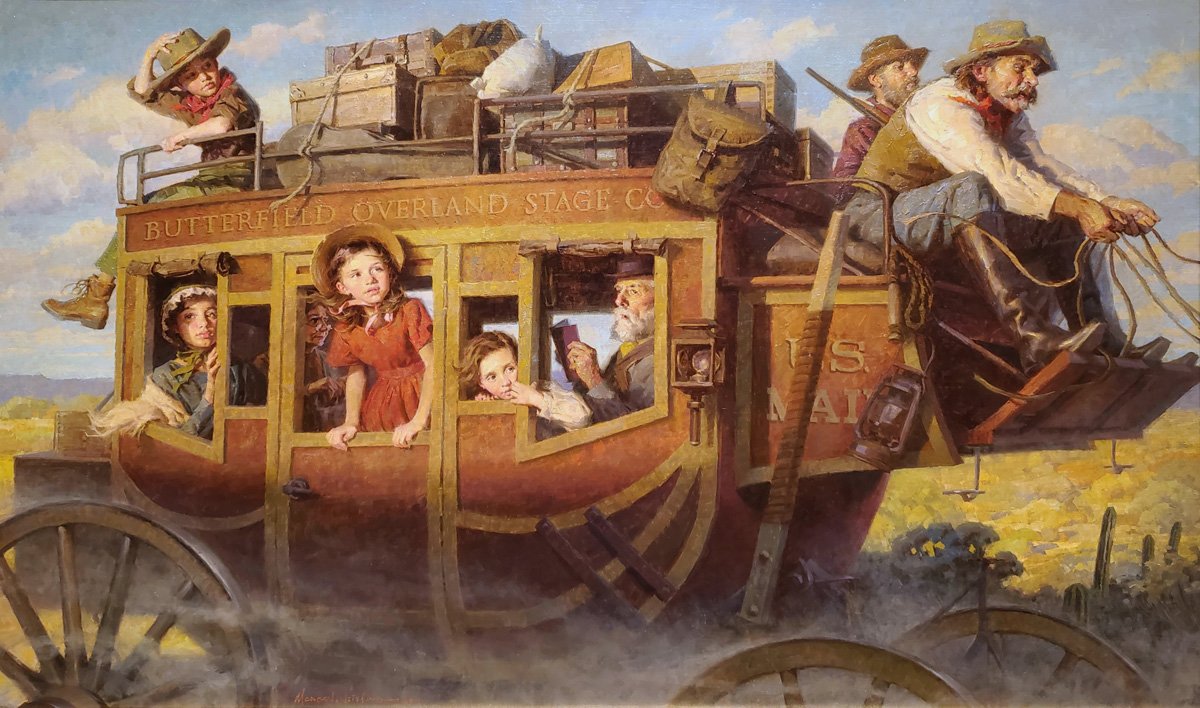
“The entire culture has been overturned by a civilisation dominated by market and civil society, and in this transformation civilisation itself is coming to an end; unless it be that some of its scattered seeds remain alive, so that the essential concepts of community may be encouraged once again and a new civilisation can develop secretly within the one that is dying.”
Ferdinand Tönnies, Community and Civil Society (1887)
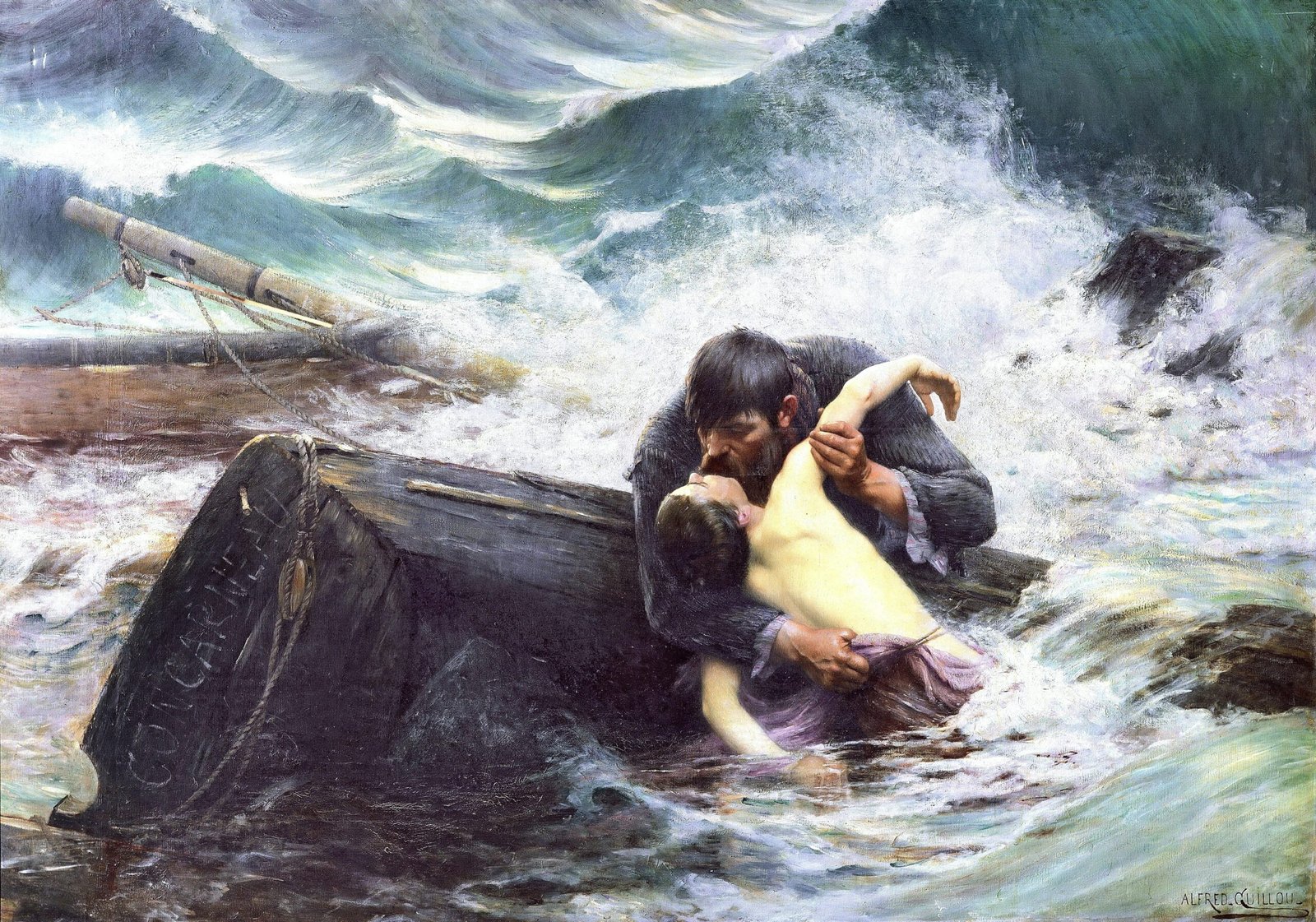
“It is a sense of place that binds healthy communities together, and distinguishes living cultures from dead ones. Globalisation is said to have confined this to history. Our evolution into citizens of nowhere is supposed to be A Good Thing; an opening up, a casting off of our narrow, parochial past, our petty local differences.
“Communities are no longer geographical but communities of interest. Barriers are broken down by mass media, technology and trade laws. Rootless, we gain freedom. Placeless, we belong everywhere. But this is nonsense…
“We are building ourselves an all-consuming global civilisation of malls, asphalt, brushed aluminium and sliding doors. The rising tide of this global progress, we are told, will lift all boats. But some of our boats are anchored; anchored by place, identity, a sense of belonging.
“Anchored boats are not lifted by rising tides; they are overwhelmed, and sunk with all hands.”
Paul Kingsnorth, Real England (2012)
(Painting: “Adieu!” [1892] by Alfred Guillou)
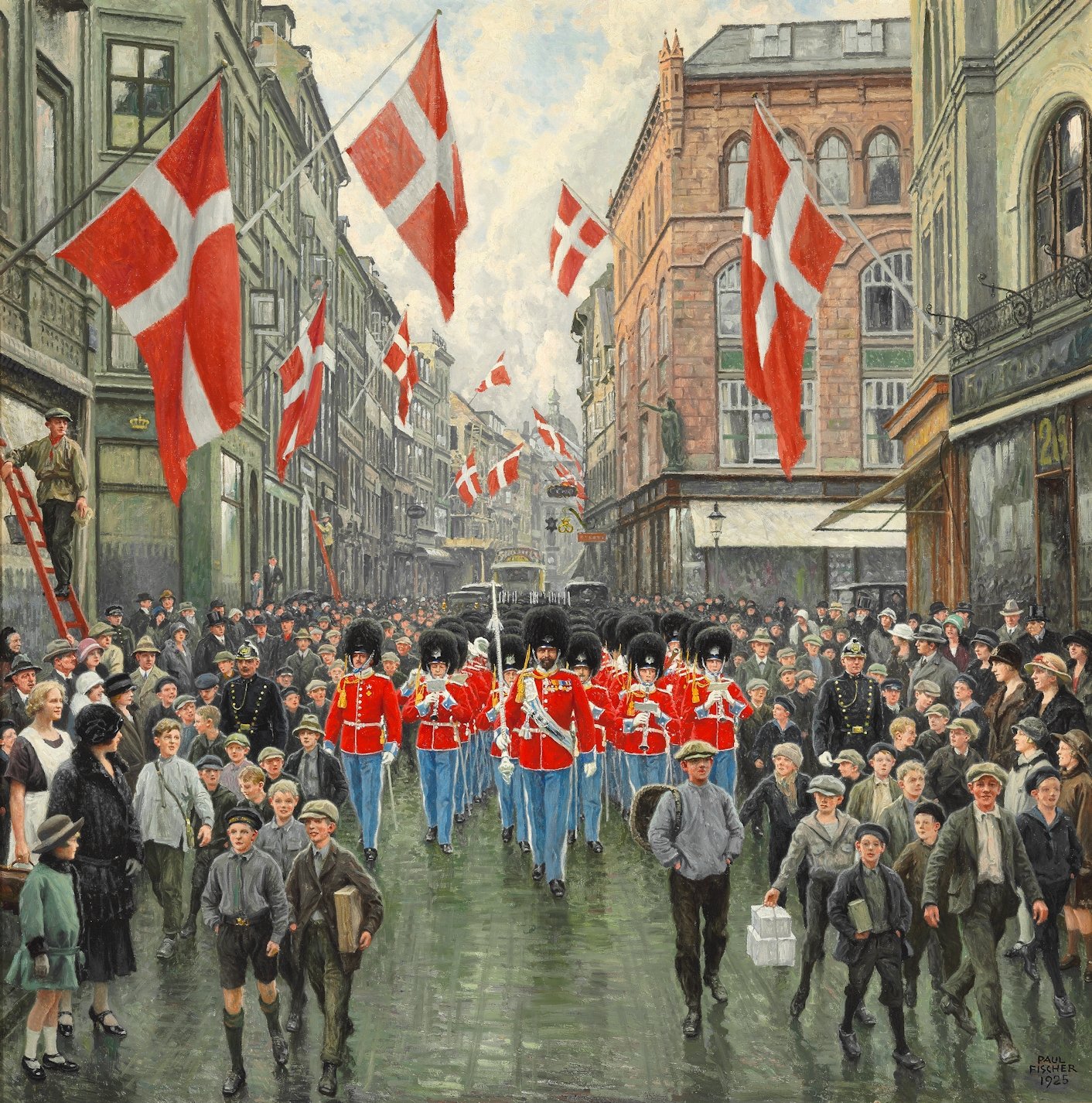
“I am engaged in what the French call la chasse au bonheur, the hunt for happiness. Specifically, my prey is a Dutch professor named Ruut Veenhoven: the godfather of happiness research. Veenhoven runs something called the World Database of Happiness. It is no joke. Veenhoven has collected, in one location, the sum of human knowledge about what makes us happy, what does not, and, of particular interest to me, which places are the happiest…
“Veenhoven gives me complete access to his database and wishes me luck, but first he warns me: ‘You may not like what you find.’ ‘What do you mean?’
“The happiest places, he explains, don’t necessarily fit our preconceived notions. Some of the happiest countries in the world—Iceland and Denmark, for instance—are homogeneous, shattering the American belief that there is strength, and happiness, in diversity.”
Eric Weiner, The Geography of Bliss (2008)
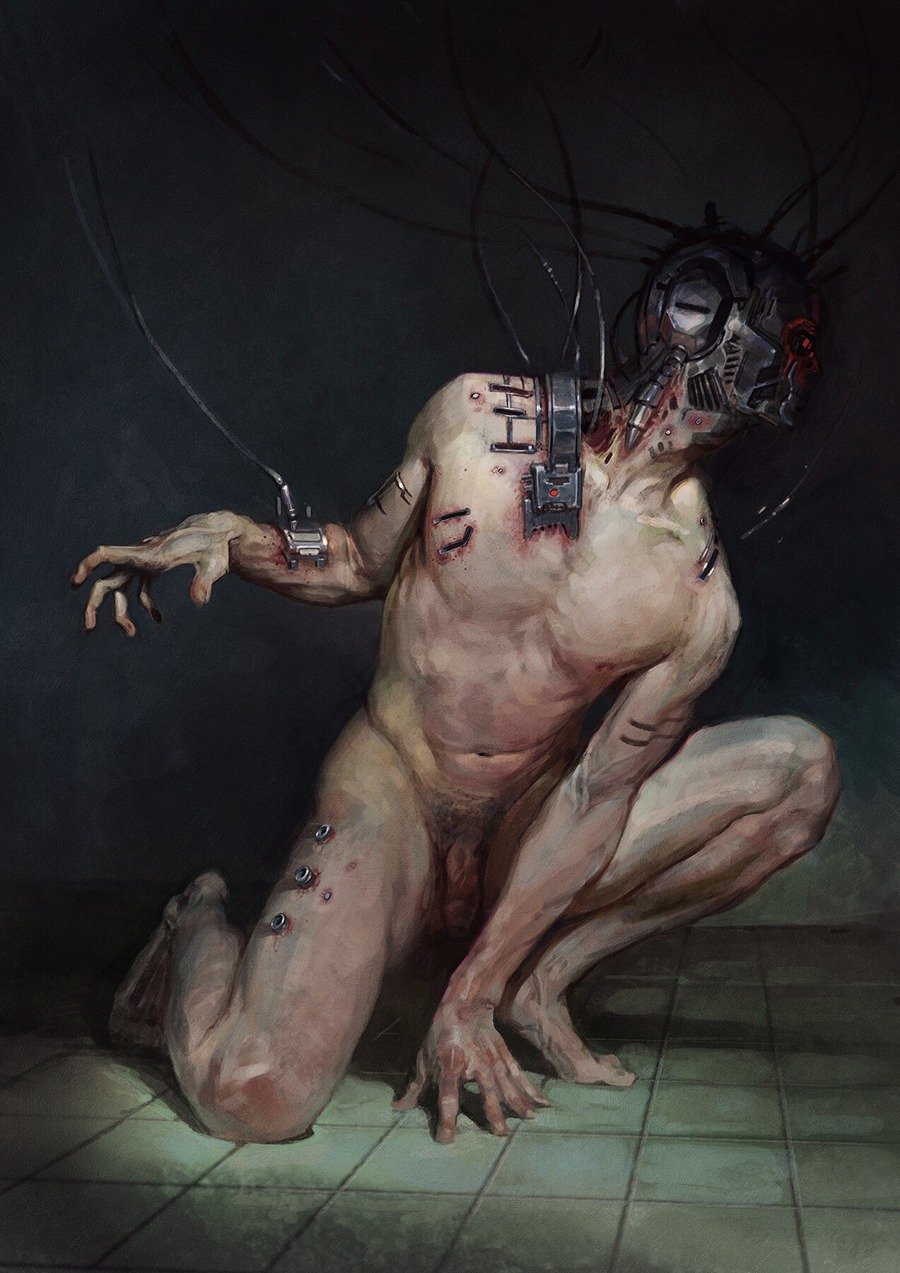
“In the future, social systems will not be adjusted to suit the needs of human beings. Instead, human beings will be adjusted to suit the needs of the system…Our society tends to regard as a ‘sickness’ any mode of thought or behavior that is inconvenient for the system, and this is plausible, because when an individual doesn’t fit into the system it causes pain to the individual as well as problems for the system. Thus the manipulation of an individual to adjust him to the system is seen as a ‘cure’ for a ‘sickness’ and therefore as good…
“To those who think that all this sounds like science fiction, we point out that yesterday’s science fiction is today’s fact. The Industrial Revolution has radically altered man’s environment and way of life, and it is only to be expected that as technology is increasingly applied to the human body and mind, man himself will be altered as radically as his environment and way of life have been.”
Theodore Kaczynski, Technological Slavery

“We live in the age of the ascendant global market—the driver, we are told, of all that is good, modern, progressive; creator of wealth, destroyer of want.
“But we have encountered a flaw in the program. We are discovering that a global market requires a global identity; that not just goods, but landscapes and cultures must be branded and made safe for the universal act of consumption.
“We are discovering that a global market requires global tastes—that it needs us to want the same things, feel the same things, like or dislike the same things, see in the same way. Only that way can demand cross, and break down, cultural boundaries…
“In order for this global consumer economy to progress, we must cease to be people who belong to…localities… We must become consumers…dealers on a faceless, placeless international trading floor…
“We must become citizens of nowhere.”
Paul Kingsnorth, Real England: The Battle Against the Bland (2012)
(Painting: “We Are All Pearls” [2022] by Whittney de Araujo)
“The disenchantment and disillusion with shortsighted global economic and political leadership…had me wondering…whether off-grid living was an answer—a better way of life than the defeatism and dependency so many of us have succumbed to…Before this journey started I never thought of asking how it might feel to detour from our broad collective path and go back, how it might feel to question the inevitability of the future and oppose, through a positive alternative, the blind march onward we collectively seem to have surrendered to join…
“We are reminded by coolheaded politicians that we can’t stop progress and development. But can’t we, really? Wouldn’t we want to stop and turn around if we finally realized we are nearing the edge of a cliff?”
Phillip Vannini and Jonathan Taggart, Off the Grid: Re-Assembling Domestic Life (2015)
“There’s nothing wrong with browsing and scanning, or even power-browsing and power-scanning. We’ve always skimmed newspapers more than we’ve read them, and we routinely run our eyes over books and magazines in order to get the gist of a piece of writing and decide whether it warrants more thorough reading. The ability to skim text is every bit as important as the ability to read deeply.
“What is different, and troubling, is that skimming is becoming our dominant mode of reading. Once a means to an end, a way to identify information for deeper study, scanning is becoming an end in itself—our preferred way of gathering and making sense of information of all sorts…
“What we’re experiencing is, in a metaphorical sense, a reversal of the early trajectory of civilization: we are evolving from being cultivators of personal knowledge to being hunters and gatherers in the electronic data forest.”
Nicholas Carr, The Shallows (2010)
(Painting: “Still with Me” [2019] by Carol Peebles)
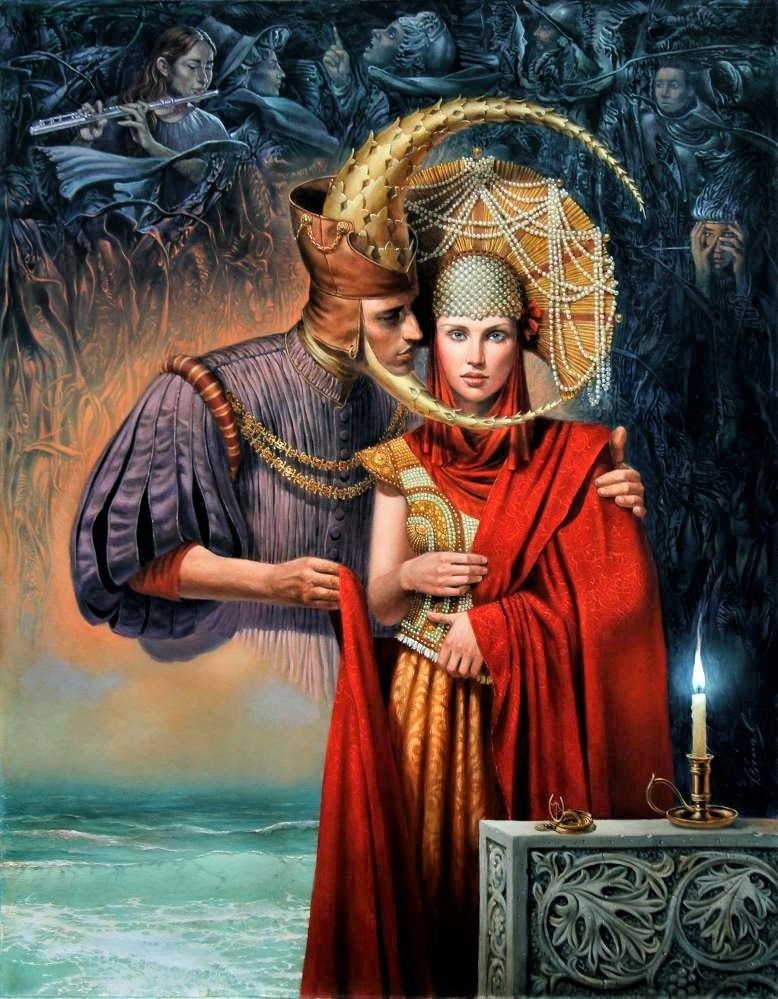
“Men are different from women… To maintain that they are the same in aptitude, skill or behaviour is to build a society based on a biological and scientific lie… It is usually better to act on the basis of what is true, rather than to maintain…that what is true has no right to be so.
“Better, too, to welcome and exploit the complementary differences between men and women. Women should contribute their specific female gifts rather than waste their energies in the pursuit of a sort of surrogate masculinity…
“Men and women could live more happily, understand and love each other better, organise the world to better effect, if we acknowledged our differences… It is time to cease the vain contention that men and women are created the same. They were not, and no amount of idealism or Utopian fantasy can alter the fact.”
Anne Moir and David Jessel, Brainsex: The Real Difference Between Men & Women
(Painting: “Solar Eclipse” [2016] by Michael Cheval)

“Conventional wisdom has it that the woman who returns to modesty is hiding, running away from sex. This is because today modesty is often confused with prudery. But it is not prudery.
“Indeed, promiscuity is really much closer to prudery. Whether she decides to have scores of men or none, promiscuous and prudish women in some sense embrace the same flippant world view, which one might call the nothing-fazes-me world view.
“As types, they represent two sides of the same unerotic coin, which flips over arrogantly and announces to the world when it lands: ‘Ha—I cannot be moved.’ Modesty is prudery’s true opposite, because it admits that one can be moved and issues a specific invitation for one man to try.”
Wendy Shalit, A Return to Modesty
“The first and, indeed, the founding function of society seems to be strictly convivial. Pre-social man could work alone, eat alone, and sleep alone… But he could not enjoy company alone. This required others.
“The impulse driving him to the formation of his first societies was therefore in all likelihood his desire for companionship. This is why terms such as social or society are to this day endowed with both political and convivial meanings; or why such authors as Hesiod or Pausanias, intuitively still close to the beginnings of human development, envisioned the first social gatherings as convivial occasions in which gods and men were joined as table companions…
“As far as the purpose of society is convivial, a membership of from 80 to 100 adults…might therefore be considered as constituting [the] optimum social size.”
Leopold Kohr, The Overdeveloped Nations: The Diseconomies of Scale (1977)
(Painting: “The Feast of the Gods at the Wedding of Peleus and Thetis” [1638] by Abraham Bloemaert)
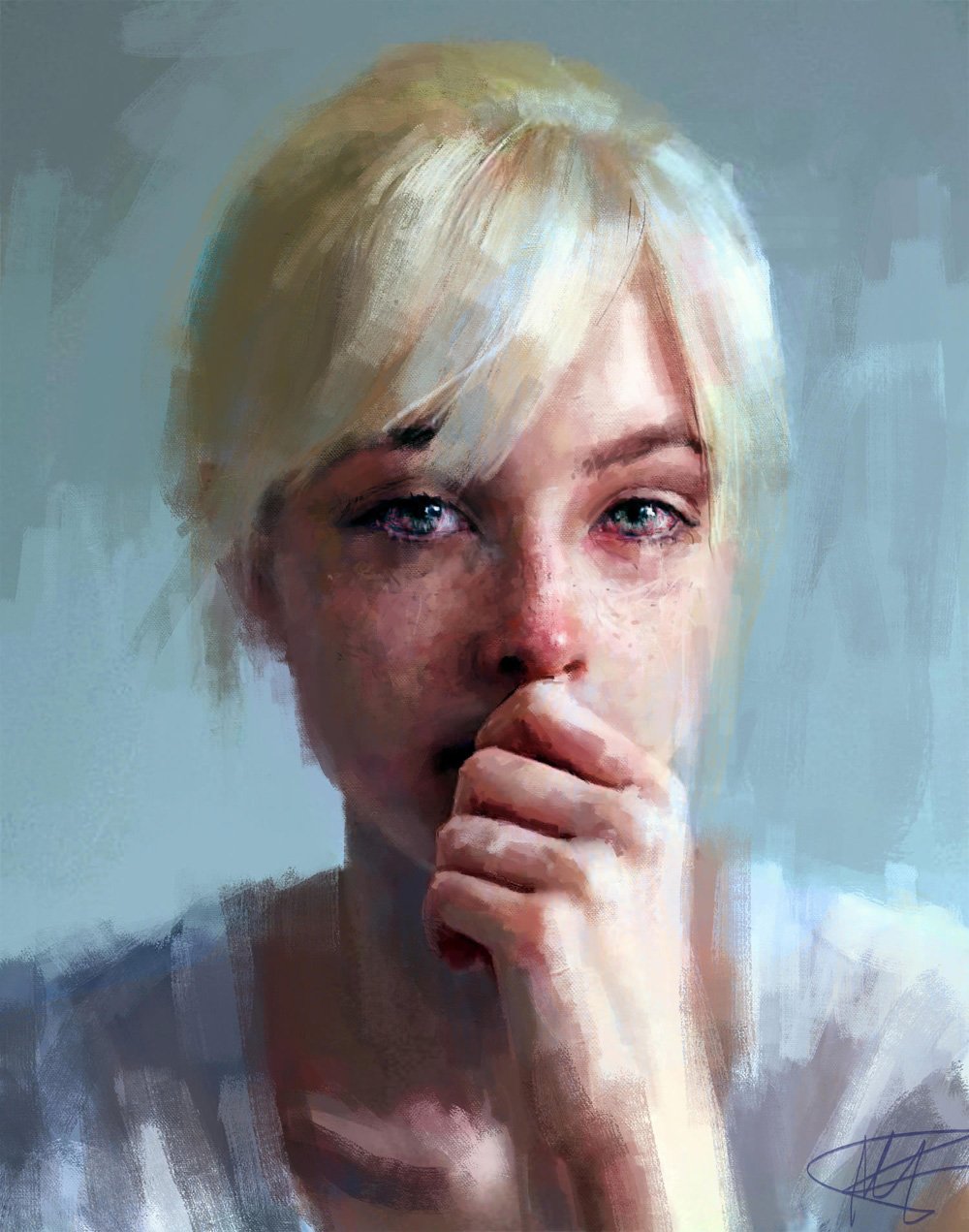
“During a debate in Europe about immigration, an impassioned speech by a young French woman opened my eyes to the fragility of the now decadent postwar consensus.
“She told her listeners that she was middle class and therefore could not afford to live in French-only neighborhoods that have no Muslim immigrants, as the rich French do. So she knows their ways, which include returning to Tunisia or Algeria during the holidays to visit relatives. They are explicit, she said, in how they describe these trips. They are cherished opportunities to ‘go home.’
“Her voice then broke with emotion, and she asked, trembling, ‘If I lose France, where can I go?’ The room was silent. We all felt the piercing anguish of her question, which we knew we could not answer.“
R.R. Reno, Return of the Strong Gods: Nationalism, Populism, and the Future of the West
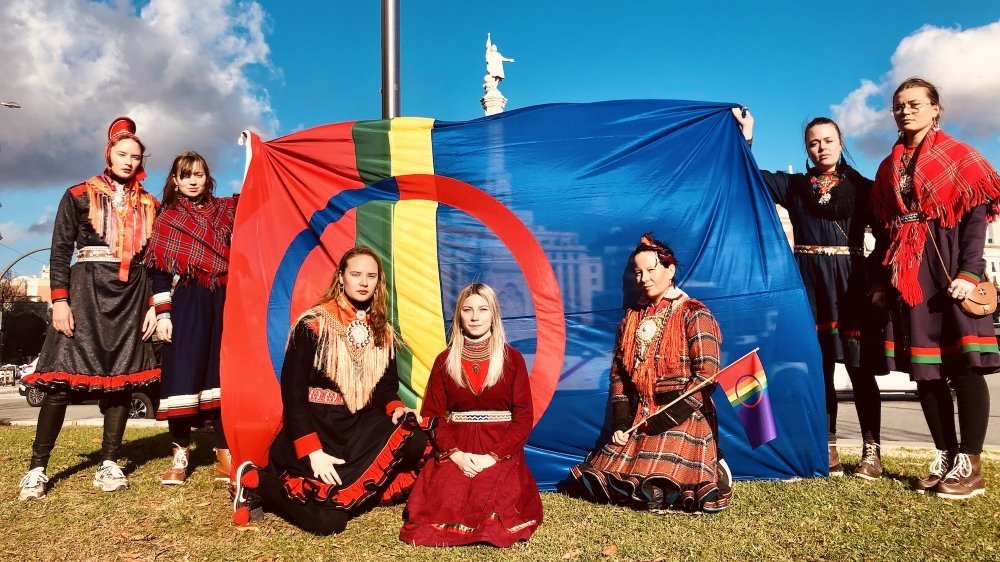
“By ‘nations without states’ I refer to nations which, in spite of having their territories included within the boundaries of one or more states, by and large do not identify with them. The members of a nation lacking a state of their own regard the state containing them as alien, and maintain a separate sense of national identity generally based upon a common culture, history, attachment to a particular territory and the explicit wish to rule themselves.”
Montserrat Guibernau, Nations without States: Political Communities in a Global Age (1999)
(Image: Sámi activists [with Sámi flag] at the 2019 UN Climate Change Conference in Madrid)

“The Amish people are neither relics of a bygone era nor a people misplaced in time. They have reached conclusions different from most moderns about how to live in today’s world. Their past is alive in their present. They are living examples of a different form of modernity.
“Industrialized societies have not absorbed the Amish people in the same way that many subcultures have been assimilated. The experts predicted that the Amish would be assimilated into the dominant society once the vitality of their European customs was exhausted. The predictions have not come true. The Amish population has doubled in the past twenty-five years. Their communities are distinctive and viable.”
John Hostetler, Amish Life (1981)

“He rubbed his hands. For of course, they didn’t content themselves with merely hatching out embryos: any cow could do that.
“‘We also predestine and condition. We decant our babies as socialized human beings, as Alphas or Epsilons, as future sewage workers or future…’ He was going to say ‘future World controllers,’ but correcting himself, said ‘future Directors of Hatcheries,’ instead.”
Aldous Huxley, Brave New World (1932)
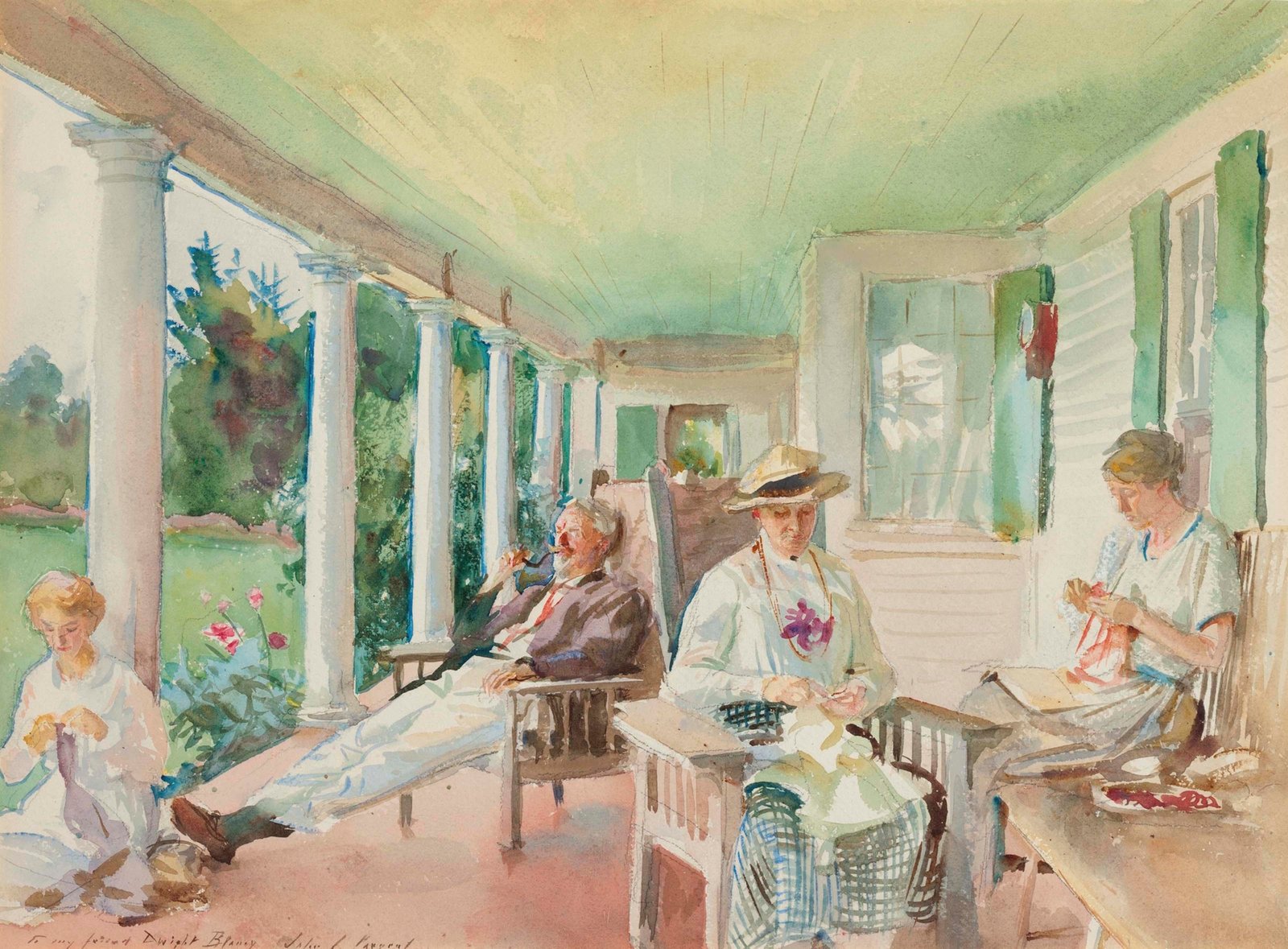
“The evolution of the front porch is a microcosm of the decline of community. In the half-century before World War II verandas were simply de rigueur. They were places for observing the world, for meeting friends, for talking, for knitting, for shelling peas, for courting, and for half a hundred other human activities. The front porch was the physical expression of neighborliness and community…
“When the automobile appeared, however, the slow-motion world of the front porch began yielding to a new pace…Entertainment…moved indoors…[And] air-conditioning…coincided with a general withdrawal into self-pursuit and privatism. It seduced families into retreating behind closed doors and shut windows, making sidewalk society obsolete and altering the country’s character and folkways.”
Kenneth Jackson, Crabgrass Frontier
“[Twentieth-century peoples] are overcome not by the sense of endless possibility but by the banality of the social order they have erected against it. Having internalized the social restraints by means of which they formerly sought to keep possibility within civilized limits, they feel themselves overwhelmed by an annihilating boredom, like animals whose instincts have withered in captivity…
“They tend…to be consumed with rage, which derives from defenses against desire and gives rise in turn to new defenses against rage itself. Outwardly bland, submissive, and sociable, they seethe with an inner anger for which a dense, overpopulated, bureaucratic society can devise few legitimate outlets.“
Christopher Lasch, The Culture of Narcissism (1979)
“The ebbing of community over the last several decades has been silent and deceptive. We notice its effects in the strained interstices of our private lives and in the degradation of our public life, but the most serious consequences are reminiscent of the old parlor puzzle: ‘What’s missing from this picture?’
Weakened social capital is manifest in the things that have vanished almost unnoticed—neighborhood parties and get-togethers with friends, the unreflective kindness of strangers, the shared pursuit of the public good rather than a solitary quest for private goods…Naming our problem, however…is but a preliminary to the tougher challenge.
In a world irrevocably changed, a world in which most women are employed, markets global, individuals and firms mobile, entertainment electronic, [and] technology accelerating…how can we nevertheless replenish our stocks of social capital?”
Robert Putnam, Bowling Alone
“The size of a society…is determined by its function, and its function depends on whether we give it an individualistic or collectivist content. From an individualistic point of view, society must fulfill a fourfold purpose: ensure to its members companionship, prosperity, security, and culture…
“We may therefore distinguish between four individualistic societies—the convivial, economic, political, and cultural society. Each may exist separately, and each has its own optimimum size. To enjoy the summum bonum, however, all four are needed.
“As history has shown and logic suggests, a society numbering from 100,000 to 200,000 members seems sufficient to furnish it… Three factors—technological progress, education, organization—may, however, permit social growth beyond this figure to perhaps 15,000,000 without affecting optimum conditions. With this the outer or absolute optimum limit seems reached.”
Leopold Kohr, The Overdeveloped Nations
(Painting: “A Day of Celebration” [1902] by Fanny Brate)
“For much of the twentieth century the idea that human nature had anything to do with social realities was anathema to historians and social scientists. And that which we lack the means to comprehend we do not see, even if it is staring us in the face.
“Many thinkers…have failed to realize that the space of loyalty and benefit-sharing extending from the individual to humanity is curved rather than even… It has not been clear, nor seriously asked, why the family should play such a favored role between the individual and humanity.
“And the logic behind favoritism of more remote kin or perceived-as-kin circles has remained not only a mystery, but also lacking in legitimacy… The contrast often drawn between supposedly rational civic principles attributed to the modern state and atavistic and irrational kin-ethnic attachments is little more than a philosophical prejudice.”
Azar Gat, Nations: The Long History and Deep Roots of Political Ethnicity and Nationalism (2013)
(Painting: “The Last Farewell?” [2015] by Myron Sahlberg)
“Let us consider a syllogism:
All prejudice is wrong.
The distinction between good and evil can be based only on prejudice.
Therefore, the distinction between good and evil is wrong.
“Let us, however, consider a further syllogism:
The distinction between good and evil is both inevitable and necessary for the exercise of virtue.
The distinction between good and evil can be based only on prejudice.
Therefore, prejudice is necessary for the exercise of virtue.
“Which captures the real human situation better? An effort to do the impossible—to expunge our minds from all preconception—is not merely doomed to failure, but affects our judgment in a baleful way. In order to prove to ourselves that we are not prejudiced, but have thought out everything for ourselves…we have to reject the common maxims of life, common maxims that in many, though not in all, cases preserve civilized relations.“
Theodore Dalrymple, In Praise of Prejudice (2007)
(Painting: “Virtue” by Howard Lyon)
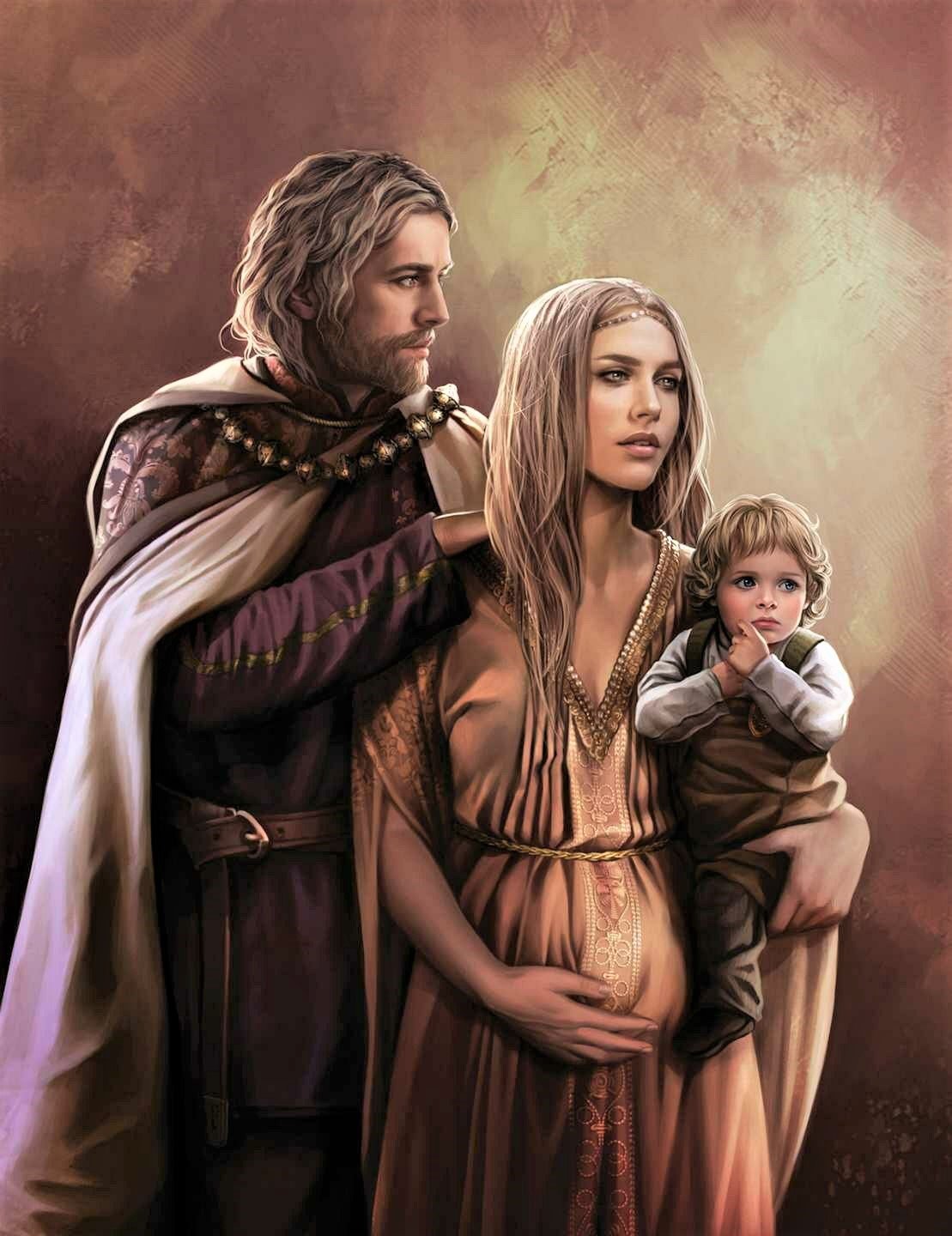
“Sensate man has abdicated his sense of rationality and moral responsibility. In the frenzy of his ever-expanding appetites, he has lost all inner restraint and forfeited his own liberty. Faced by the catastrophe brought about by his misdeeds, he is once more reminded that liberty is not so much external as internal; that it cannot endure without cogent values and moral norms; and, finally, that it demands self control and the punctilious fulfilment of one’s obligations.
“This bitter lesson suggests two alternatives: either to remain enslaved…or to seek for inner ideational freedom… There is hardly any doubt that the second alternative will be chosen…
“When such a transformation has been effected, contractual and familistic relationships will be restored in a context of richer and fuller and less one-sided culture. Any effort to patch up the hollow pseudo-contractualism and still hollower pseudo-liberties of our sensate society are doomed to failure.”
Pitirim Sorokin, The Crisis of Our Age (1941)

“All nations that have yet to be organized around political systems are a singing people: by whatever means their songs come into being, that is how they remain.
“Songs serve as collections for all their science, religion, the ways the soul moves, the characteristics of previous generations, the joys and sorrows of their lives. Nature had entrusted them with the ability to console the heavy burden of human existence with the love of freedom, the pursuit of leisure or of happiness: and where everything more or less converges, that is where we find song. Nature has made humans free, joyful, singing…
“There is more poesy, and there are more poetic sources in folk belief, in fantasy, myth, tradition, language, customs, in the culture of all indigenous peoples living close to nature, than in the poetics and oration of all time.”
Johann Gottfried Herder, Ancient Folk Songs (1774)
“The new upper class has vast resources, both in wealth and in human capital. The modern economy is ideally suited to their strengths. They are doing an excellent job of co-opting the new intellectual talent in each generation…But the new upper class is showing signs of becoming an elite that is hollow at the core…
“At some point in every civilization’s journey, the creative minority degenerates into a dominant minority. Its members still run the show, but they are no longer confident and no longer set the example. Among other reactions are a ‘lapse into truancy’—a rejection of the obligations of citizenship—and ‘surrender to a sense of promiscuity’—vulgarization of manners, the arts, and language—that ‘are apt to appear first in the ranks of the proletariat and to spread from there to the ranks of the dominant minority, which usually succumbs to the sickness of proletarianization.’”
Charles Murray, Coming Apart: The State of White America, 1960–2010
(Painting: “The Sum of Human Knowledge” [2006] by Terry Rodgers)
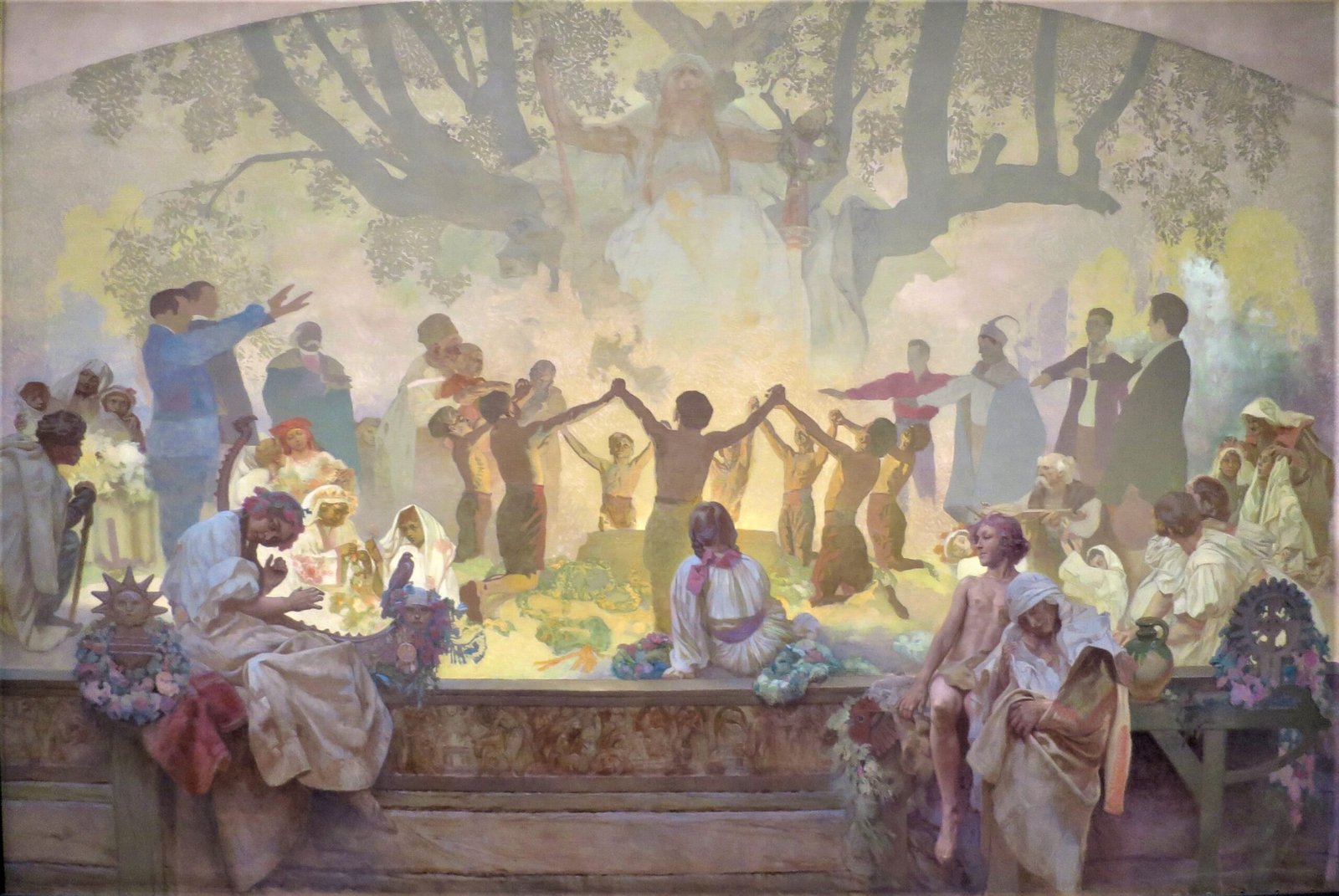
“It must not be forgotten that although a high standard of morality gives but a slight or no advantage to each individual man and his children over the other men of the same tribe, yet that an advancement in the standard of morality and an increase in the number of well-endowed men will certainly give an immense advantage to one tribe over another.
“There can be no doubt that a tribe including many members who, from possessing in a high degree the spirit of patriotism, fidelity, obedience, courage, and sympathy, were always ready to give aid to each other and to sacrifice themselves for the common good, would be victorious over most other tribes; and this would be natural selection.”
Charles Darwin, The Descent of Man (1871)
(Painting: “The Oath of Omladina” [1926] by Alphonse Mucha)